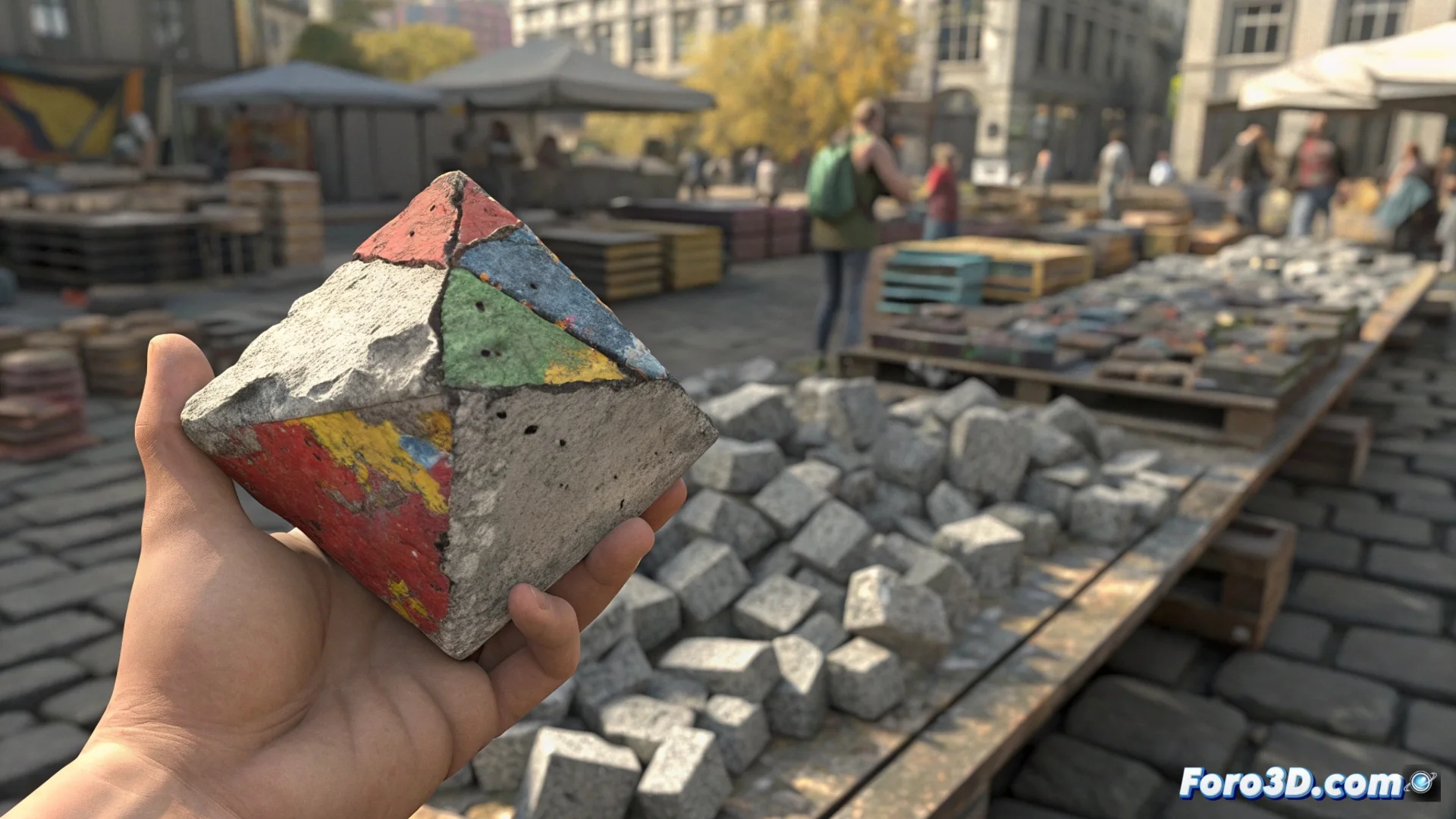
Many Pieces of the Berlin Wall Sold Are Fake
When the Berlin Wall was torn down in 1989, numerous people took pieces as souvenirs. Today, that desire to own history fuels a global trade where imitations abound. 🧱
Challenges in Verifying Authenticity
Recognizing a genuine fragment from one manufactured later represents a major challenge. The original pieces show layers of accumulated graffiti paint and signs of the tools used to demolish it. However, forgers have refined their techniques, copying the wear of time and using old paints. The absence of an official certificate leaves buyers with no real assurance.
Characteristics of an Original Piece:- Features multiple overlapping layers of graffiti.
- Shows marks and fractures characteristic of its demolition.
- The provenance is documented at the time of the events.
Buying a piece of history from a street vendor can be risky; sometimes, the only real thing is the disappointment.
Institutions Preserving Real Segments
Some museums and memorials, such as the Checkpoint Charlie Museum or the Berlin Wall Memorial, preserve sections whose authenticity is confirmed. These institutions obtained their pieces right after the collapse, so they can prove their origin. For those seeking a genuine object, visiting these places is the most reliable option. 🏛️
Places with Documented Pieces:- Checkpoint Charlie Museum in Berlin.
- Berlin Wall Memorial (Gedenkstätte Berliner Mauer).
- Other official historical archives and collections.
The Current Market for Historical Souvenirs
The landscape for collectors and tourists is complex. The market is saturated with items that do not come from the historic wall but are mass-produced to simulate it. This situation makes acquiring a legitimate souvenir outside specialized institutions a lottery. The final recommendation is to inform yourself and go to sources with proven documentation before investing in a piece of the past. ⚠️