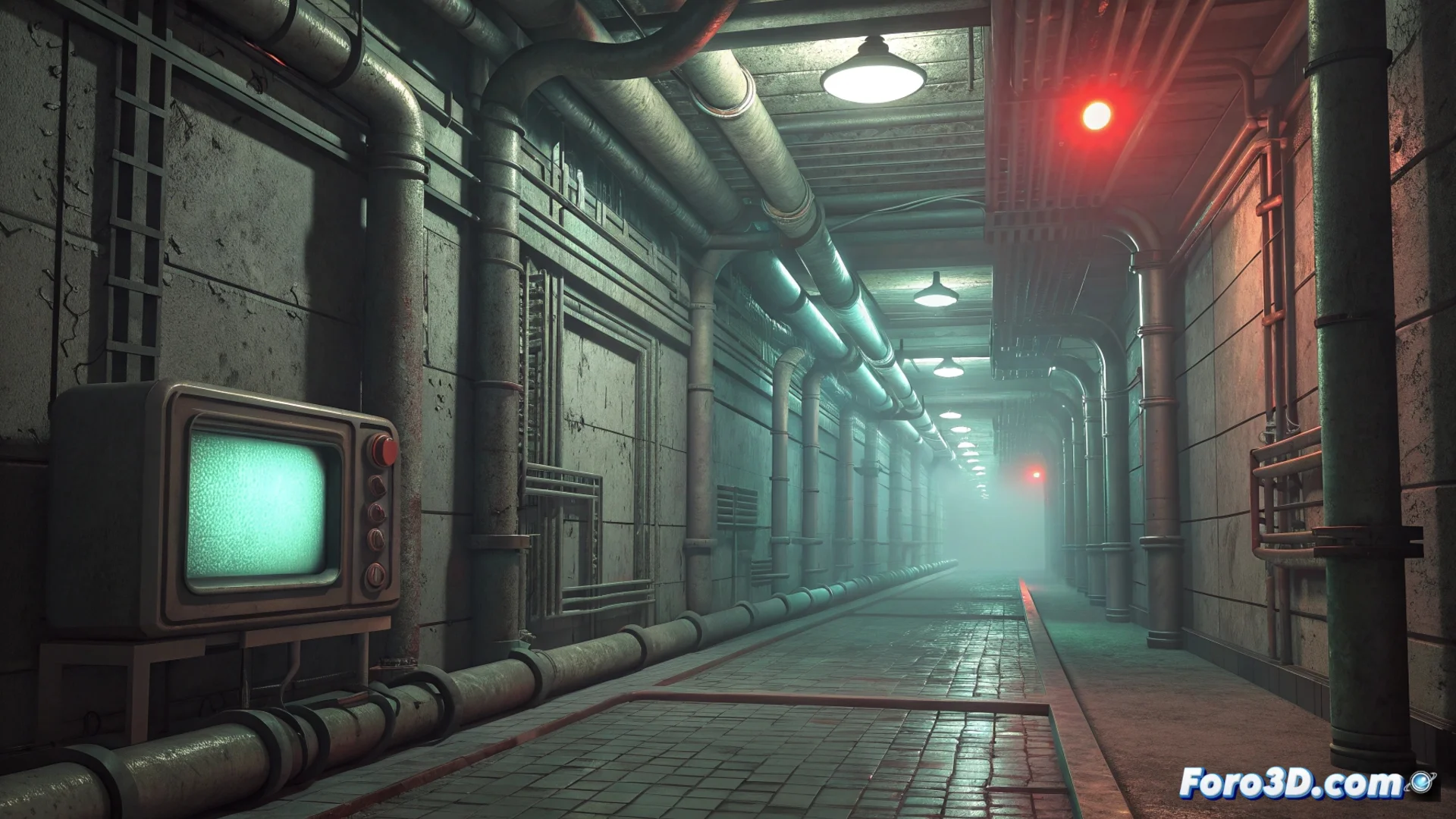
Lethal Company Uses Unity to Build Its Retrofuturistic Horror Atmosphere
The development of the video game Lethal Company relies on the Unity engine. This technical choice does not prioritize displaying advanced graphical realism, but rather enables the effective implementation of a low-fidelity retrofuturistic aesthetic. Technology serves the sensation, not pure spectacle. 🎮
A Low-Fi Visual Aesthetic That Evokes Obsolete Technology
The game's visual aspect is defined by the use of low-resolution textures and simple 3D models. Careful post-processing simulates the characteristic effects of an old CRT monitor, including distortion and scan lines. This deliberate style seeks to evoke a sense of past and obsolete technology.
Key Elements of Its Atmosphere:- Very limited lighting and profuse use of darkness.
- Presence of fog and enclosed environments that increase claustrophobia.
- Tension arises from what is not clearly seen, not from polygonal detail.
"Sometimes, what is not seen and a beep in the darkness are more effective than a 4K model."
Sound Design and Darkness as Pillars of Fear
The horror in Lethal Company is supported by a highly elaborate positional sound design. Ambient noises, footsteps, and creature sounds are precisely located in 3D space, which increases immersion and constant tension. Darkness forces the player to rely on hearing to perceive threats that remain invisible.
Probable Tools in Its Development:- FMOD or Unity's native audio system to manage positional sound.
- Blender for modeling objects, environments, and enemies in 3D.
- The Unity engine to integrate all elements and manage game mechanics.
Conclusion: Effectiveness Over Raw Power
Lethal Company demonstrates how a coherent aesthetic choice and intelligent audio design can generate a deep horror experience without relying on next-generation graphics. Using Unity allows it to build its world and manage its mechanics, focusing on creating an unsettling atmosphere through well-directed technical resources. The result is a testament that in horror, the suggested often impacts more than the explicit. 👻