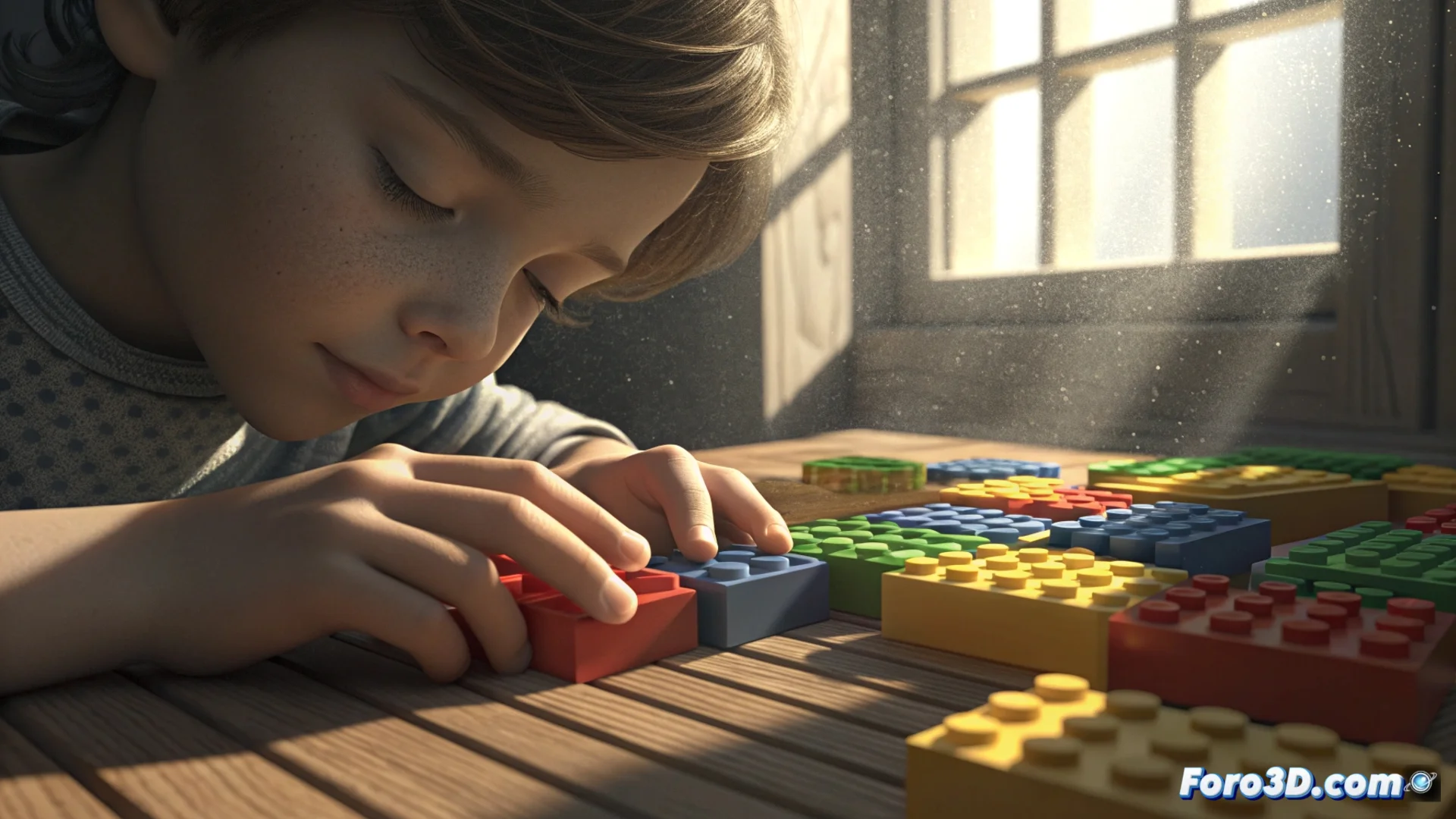
Lego with Textures for Children with Visual Impairments
These specialized versions of building blocks include tactile designs on their surface. These reliefs allow children who cannot see to identify and handle each piece through the sense of touch. The method enables independent play and learning, exploring shapes and compositions. This approach contributes to enhancing their perceptual and orientation abilities. 👆
The Reliefs Replace Visual Stimuli
Each high-relief texture symbolizes a specific shape, digit, or character. Children can distinguish these variations with their fingertips, replacing the need to perceive colors or printed graphics. This not only enables building structures but also assimilating basic concepts. The consistency and outline of each block convey information, making the playful activity accessible and inclusive.
Key Advantages of the Tactile Design:- Represents shapes, numbers, or letters in a specific and recognizable way.
- Allows complete substitution of traditional visual information.
- Turns play into a tool for learning basic concepts.
An elegant solution to a challenge that many did not perceive.
Enhancing Growth and Integration
By using these components, children train their tactile acuity and spatial memory. Entertainment becomes a tool for understanding volumes, symmetries, and ways to connect pieces. It promotes independence and confidence in solving assembly challenges. It is a means that seeks to merge fun learning for anyone, regardless of their visual acuity.
Benefits for Development:- Exercises and refines perception through touch.
- Strengthens memory and spatial understanding.
- Promotes autonomy and confidence in solving practical problems.
A Resource for Real Inclusion
This universal design approach seeks to make fun and knowledge accessible to all. By creating a system where sight is not the primary sense, barriers are broken down and an enriching, equitable play experience is offered. It is a significant step toward creating toys that truly consider human diversity. 🧱