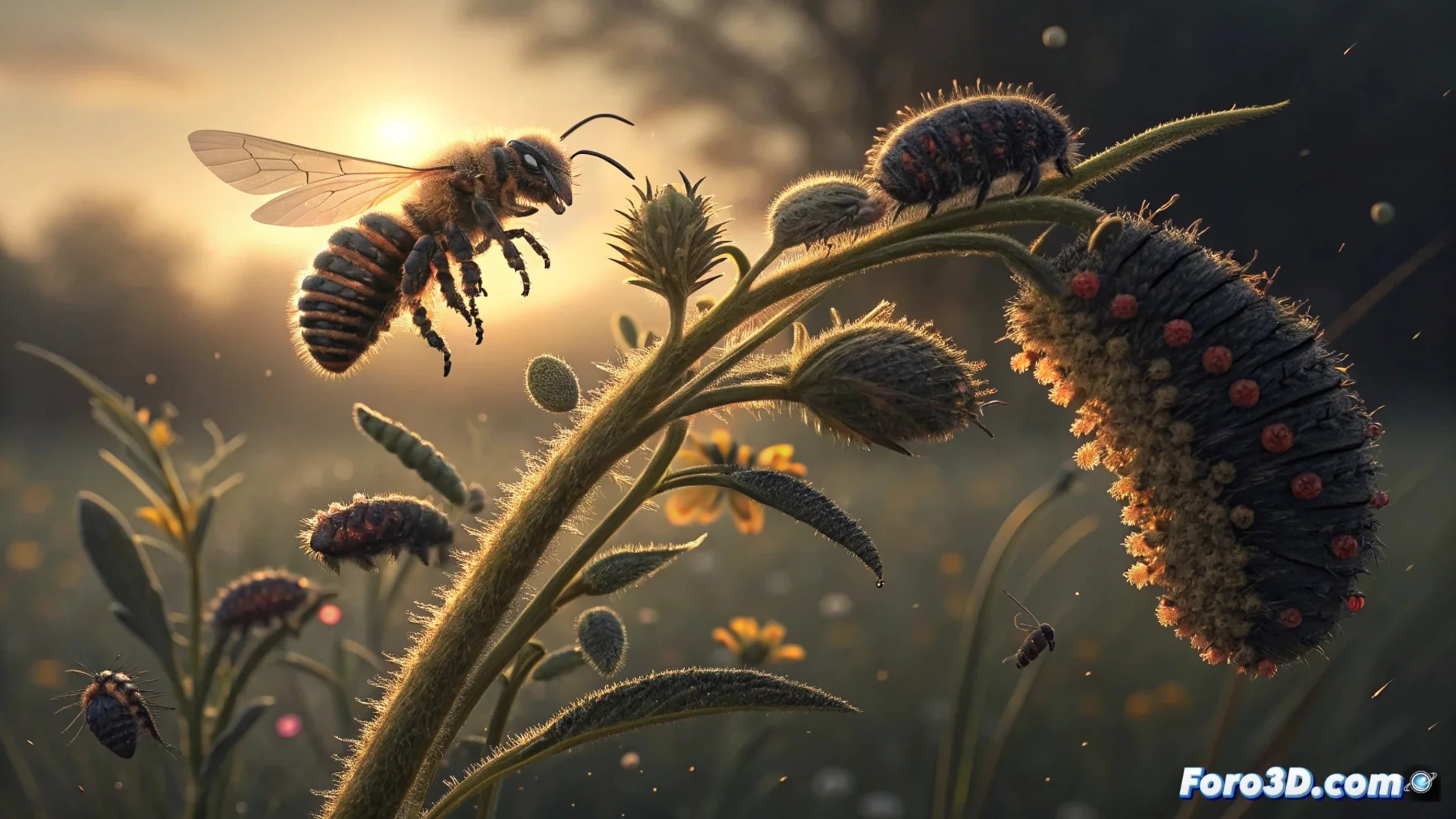
Larvae that Deceive Bees with Floral Fragrance to Travel for Free
Can you imagine a flower that is actually a trap to capture a means of transportation? 🐝 In nature, certain beetle larvae execute this plan with precision. They don't wait for their opportunity, but act to get a free ride.
The Perfume that Attracts Victims
These larvae produce a mixture of aromatic compounds that is indistinguishable from the scent emitted by real flowers. For a bee searching for food, the signal is irresistible. As the pollinator approaches, the larvae move quickly, grouping together and clinging firmly to the hairy body of the insect.
The Sequence of Deception:- The larvae produce a fake floral aroma.
- The bee, attracted, approaches the source of the scent.
- In an instant, the larvae attach themselves to their carrier.
This is a unique case of chemical mimicry, where an animal imitates a plant to exploit the flower-pollinator relationship.
A Journey with a Lethal Destination
The bee, completely unaware of the passengers it carries, returns to its hive. Once inside the honeycomb, the larvae abandon their unwitting driver. Their real goal is not to travel, but to feed. Inside the hive, they consume the bee's eggs, completing their parasitic cycle.
Consequences of the Strategy:- The bee loses its progeny.
- The larvae obtain food and a safe shelter.
- It demonstrates a highly specialized survival tactic.
Nature, the Master of Deception
This mechanism reveals how far survival strategies can evolve. The false advertisement is an ancient and effective tool in the animal kingdom. The next time you see a bee sipping nectar, remember that appearances, and smells, can deceive. 🌿