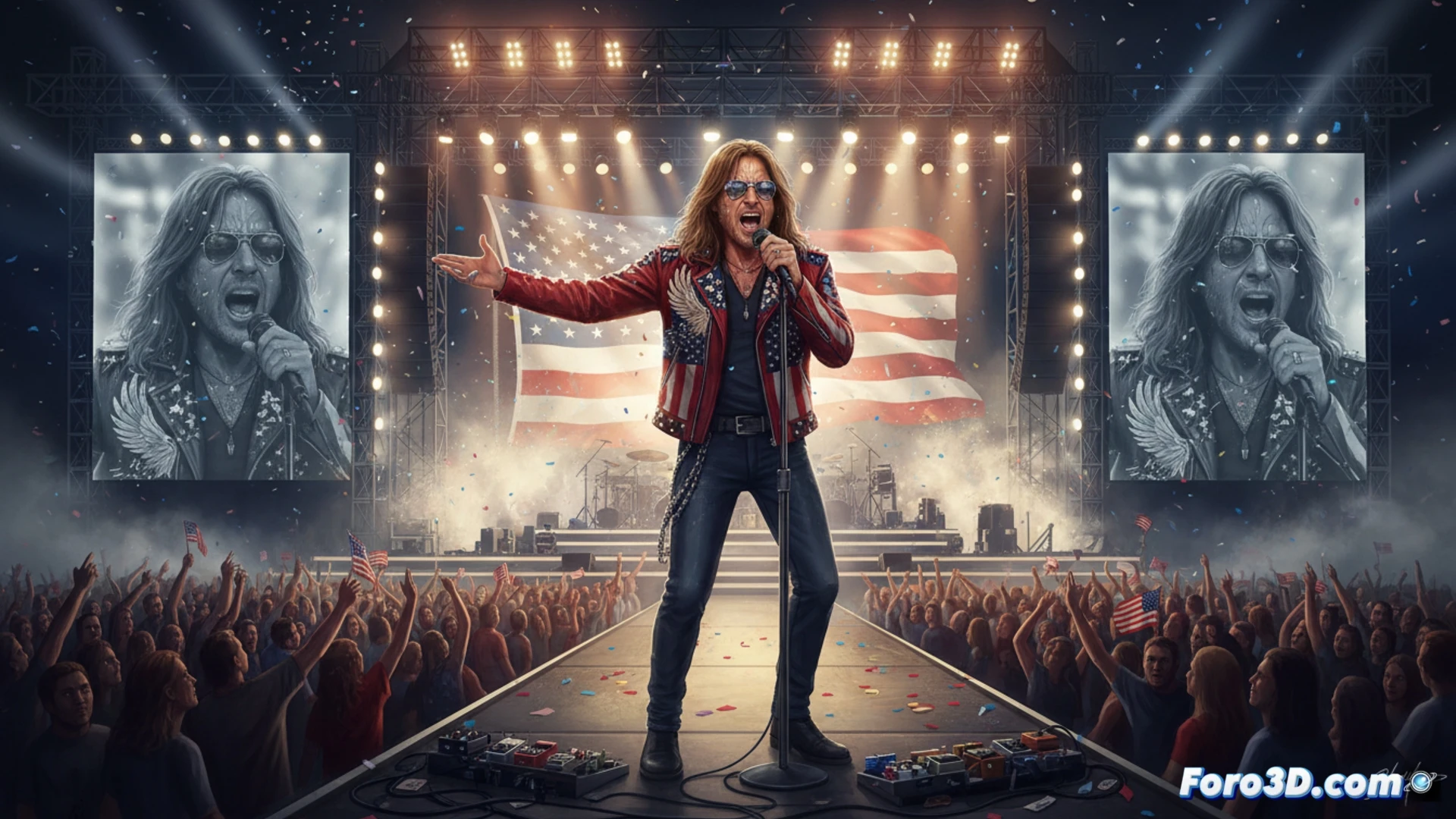
Kid Rock and the Eternal Debate on Lip-Syncing at Concerts
The controversy erupted after musician Kid Rock performed at an event organized by Turning Point USA. Numerous attendees, watching the giant screens, noticed that the movement of his lips did not seem fully synchronized with the voice they heard. Although the artist categorically denied it, the old debate about lip-sync or playback returned to the forefront. This is a classic conflict in big shows, where balancing an impeccable sound with the essence of authenticity becomes a constant challenge 🎤.
The Balance Between Perfection and Reality on Stage
Think about when you try to record audio with your phone at a concert. The result is usually chaotic, with a lot of ambient noise. Now, scale that to a stadium full of people. To solve it, sound teams use backing tracks that strengthen the instrumental base. The problem arises when the lead voice is also part of that recording. Some artists resort to this for very difficult musical sections or to save energy during intense choreographies. In other cases, it is simply used as a safeguard against possible technical failures.
Common Methods for Managing Live Sound:- Backing tracks: Pre-recorded instrumental bases and choruses that play along with the live band.
- Total playback: The lead voice is completely pre-recorded; the artist simulates singing.
- Hybrid mix: Combining a live voice with pre-recorded elements to achieve greater impact.
True art is not in hiding the technique, but in integrating it in such a way that the emotion remains intact.
The Gray Area: the Guide Vocal or "Guide Vocal"
The situation is not simply all or nothing. There is an intermediate practice known as "guide vocal" or reference voice. It works similarly to having a teleprompter for your own song: the performer sings live, but through the audio system, a pre-recorded version of their own is also played at a lower volume. If the singer gets tired, forgets the lyrics, or gets off track, this track supports them. It is a safety net that many use, although if not handled precisely, the audience can easily mistake it for total playback.
Why are these techniques chosen?- Ensure sound quality in acoustically complex spaces.
- Allow the artist to perform demanding choreographed movements without affecting their breathing.
- Cover possible human or technical errors in large-scale shows.
Audience Expectations Versus the Reality of the Show
In short, more than a mere technical discussion, it is about what the audience expects to experience. We pay to witness a "real" and unique moment, even though that reality is often meticulously orchestrated and enhanced with technology. The next time you attend a concert, you can try to detect which microphone is actually active and capturing the voice. It can become a more entertaining game than just watching the performance! 🎭