Japan Extracts Rare Earth Sediments from Six Thousand Meters Under the Sea
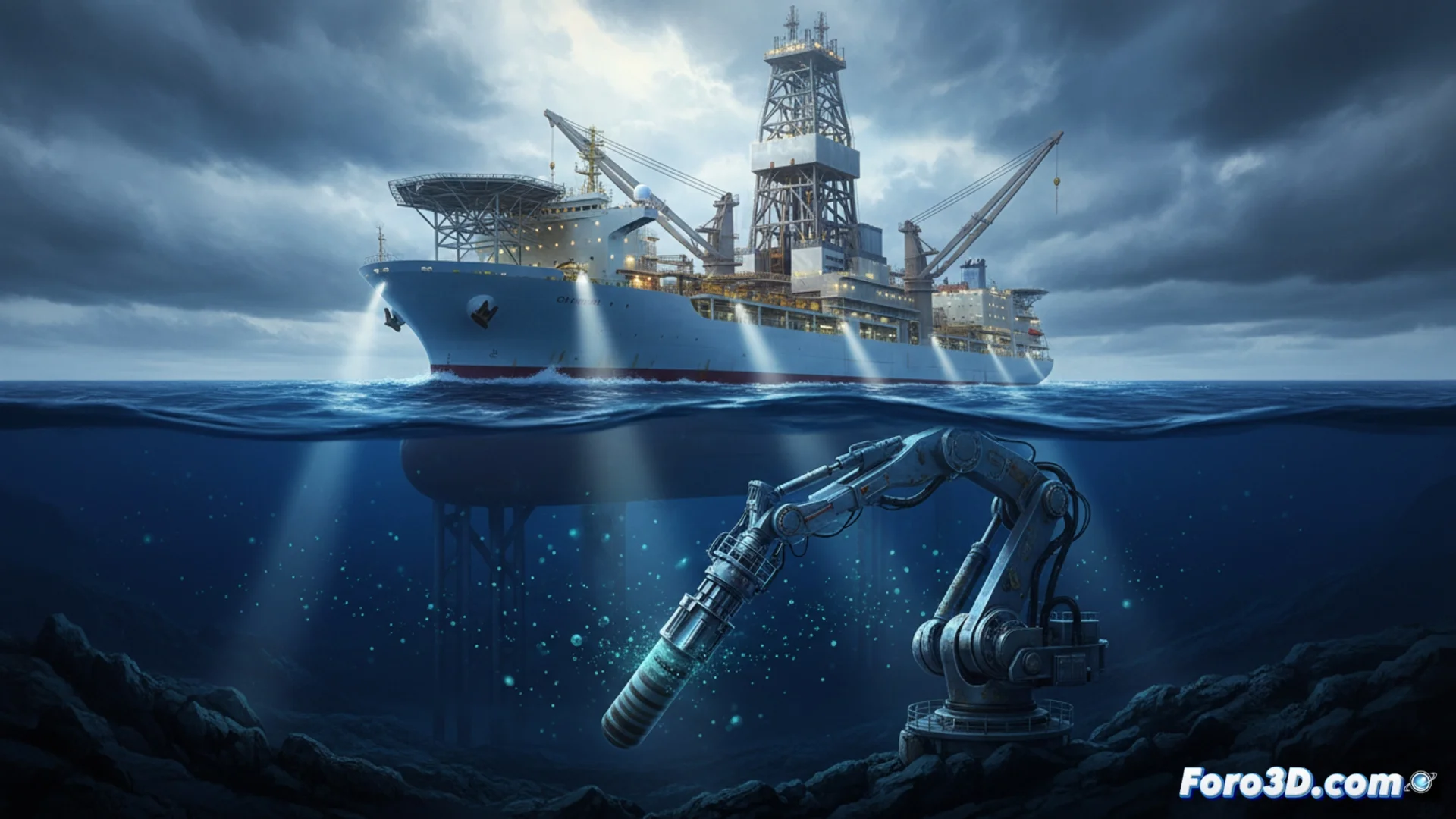
Japanese authorities confirmed that the samples obtained from the ocean floor, in an area nearly six kilometers deep, contain rare earth elements. This achievement is the result of a test mission carried out by the specialized vessel Chikyu, which departed in January toward the remote Minami Torishima island in the Pacific. It is cataloged as the first global attempt to search for these minerals at such a depth, with the clear aim of diversifying the supply and reducing the current dependence on Chinese imports for manufacturing advanced technology. 🔬
An Engineering Milestone in Abyssal Waters
The Chikyu's campaign constitutes an unprecedented technical feat in the field of marine engineering. Operating and drilling at six thousand meters involves overcoming extreme challenges of hydrostatic pressure and logistical complexity. This advance not only strengthens Japan's economic security but also expands its capabilities to explore deposits within its exclusive economic zone. Accessing these resources in deep waters represents a key strategy to secure an alternative and domestic supply source.
Key Mission Details:- Record Depth: The extraction was carried out at approximately 6000 meters, an environment of overwhelming pressure.
- Specialized Vessel: The Chikyu was used, a vessel specifically designed for deep ocean drilling.
- Strategic Location: The operation took place near Minami Torishima in the Pacific Ocean.
It seems that true space mining for now is under the water.
The Analysis That Will Define the Project's Future
The next and crucial phase consists of analyzing in detail the recovered samples. Scientists must precisely quantify the concentration of rare earths present in the sediments and, most importantly, assess whether it is economically viable to extract them. This evaluation process will determine if the deposit can be transformed into a feasible and long-term resource source. The direct result of this analysis will guide Japan's decision on investing more funds in developing the technology necessary to exploit the seabeds.
Next Steps and Considerations:- Concentration Assessment: The exact amount of valuable elements in the sediments will be measured.
- Feasibility Study: The costs and technical challenges of a potential large-scale mining operation will be analyzed.
- Investment Decision: The findings will determine whether the country proceeds with the development of deep-sea mining.
A Race for Future Resources
While some projects aim at asteroids, Japan is already digging in the most extreme depths of our planet, where conditions surpass those of space in many aspects. This test underscores the growing global competition to secure access to strategic materials essential for electronics, renewable energies, and defense. The success of this initiative could redefine the geopolitical map of resources and demonstrate that the greatest reserves of modern technology lie on the seabed. 🌊