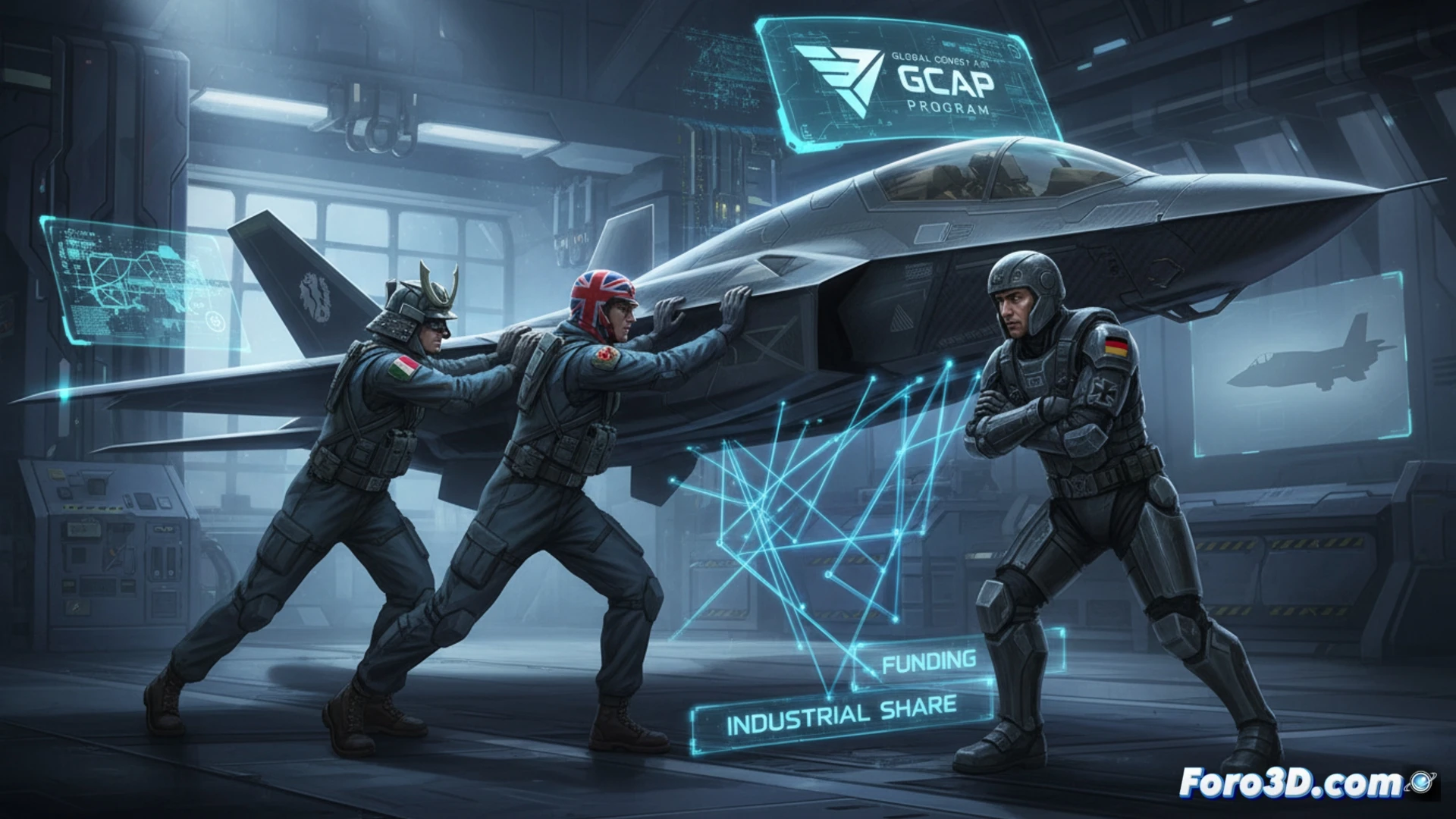
Negotiations to form a bloc for the development of a next-generation fighter jet are intensifying. Italy, the United Kingdom, and Japan are seeking to convince Germany to join their program, with the aim of countering dependence on U.S. projects like the F-35. German reluctance centers on disagreements over funding, industrial sharing, and the definitive scope of the aircraft.
Technological Integration and Interoperability Challenges 🔧
The project aims to merge key developments: the next-generation engine from the British-Italian Tempest program and advanced avionics systems, possibly with Japanese contributions in materials and sensors. The main technical challenge is harmonizing standards and system architectures among three distinct industrial cultures, creating a common platform that meets operational requirements in Europe and Asia.
The Bundeswehr Prefers Bargain Shopping 💰
While its partners debate thirty-year plans, Germany seems to apply the logic of the prudent buyer. Why get involved in a shared development mess sharing costs and technology, when you can wait for others to finish the product and then acquire it at a discount for bulk buying? It's a domestic savings strategy applied to air defense. That said, without the right to choose the cockpit color.