In Italy, a prototype home has been built that marks a milestone: the first 3D-printed house with official certification from the country. The project not only seeks to validate additive construction under regulations but also integrates systems to achieve self-sufficiency in energy and water. This model presents a construction alternative that reduces timelines and waste, aiming for housing solutions with lower environmental impact.
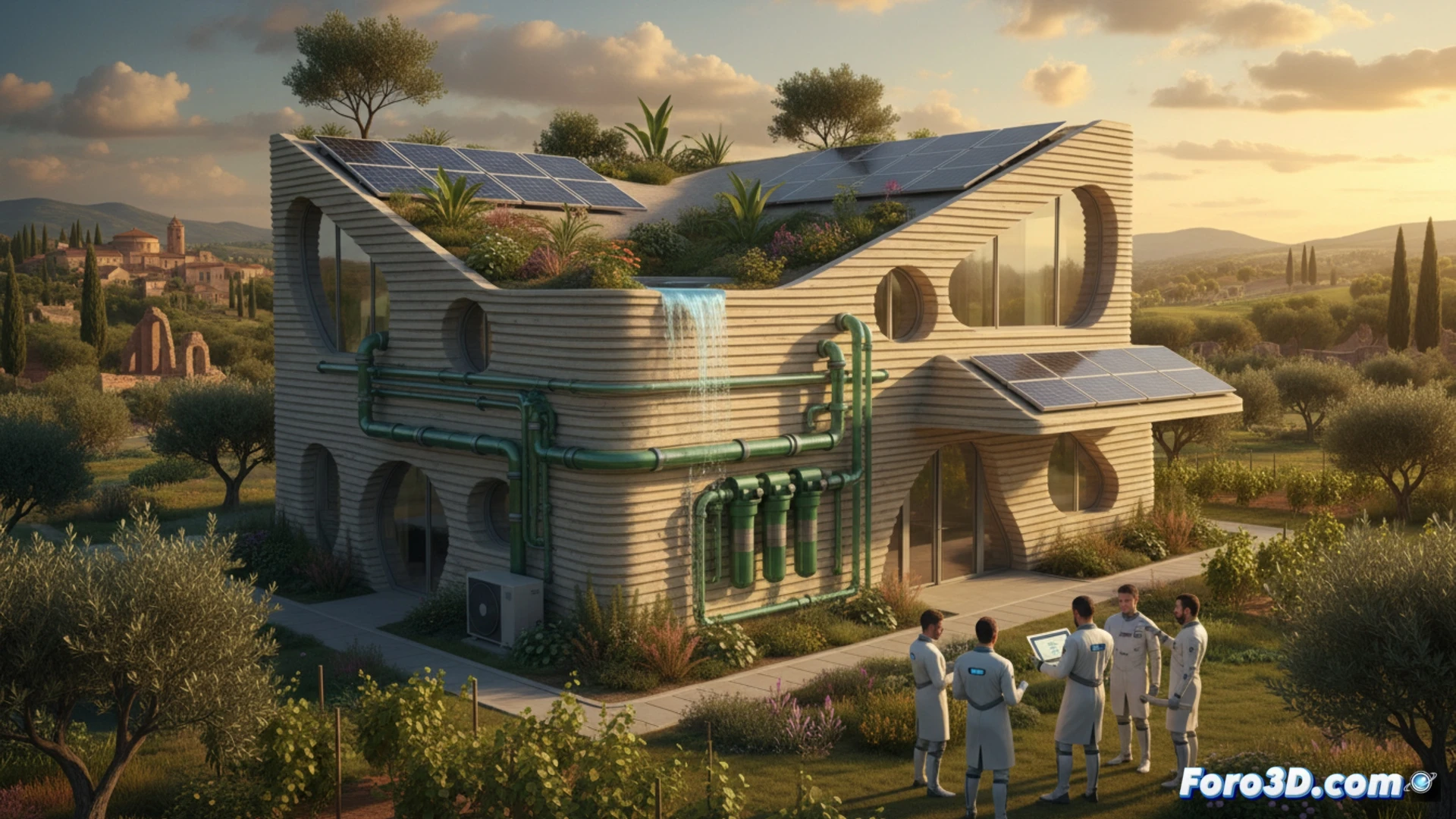
Additive manufacturing and efficient systems for autonomy 🏗️
The main structure was made with a large-format 3D printer, depositing layers of a special concrete. This technique allowed defining the geometry of walls and partitions in a continuous process, minimizing material waste. For self-sufficiency, the house incorporates photovoltaic panels, a rainwater collection and treatment system, and a bioclimatic design that optimizes thermal insulation, reducing energy demand to a minimum.
What about the electricity bill? We send it to the sun ☀️
With this advancement, the concept of community expenses takes on a new meaning. Imagine explaining to the administrator that your biggest contribution to the building is a clear day. The house manages its own resources, so the only sharing that would need to be done is of the rainwater harvest. Those suffering from energy prices could start looking differently at that printer which, apparently, prints independence from utility companies.