Intel Releases Open Image Denoise 3 with Temporal Denoising
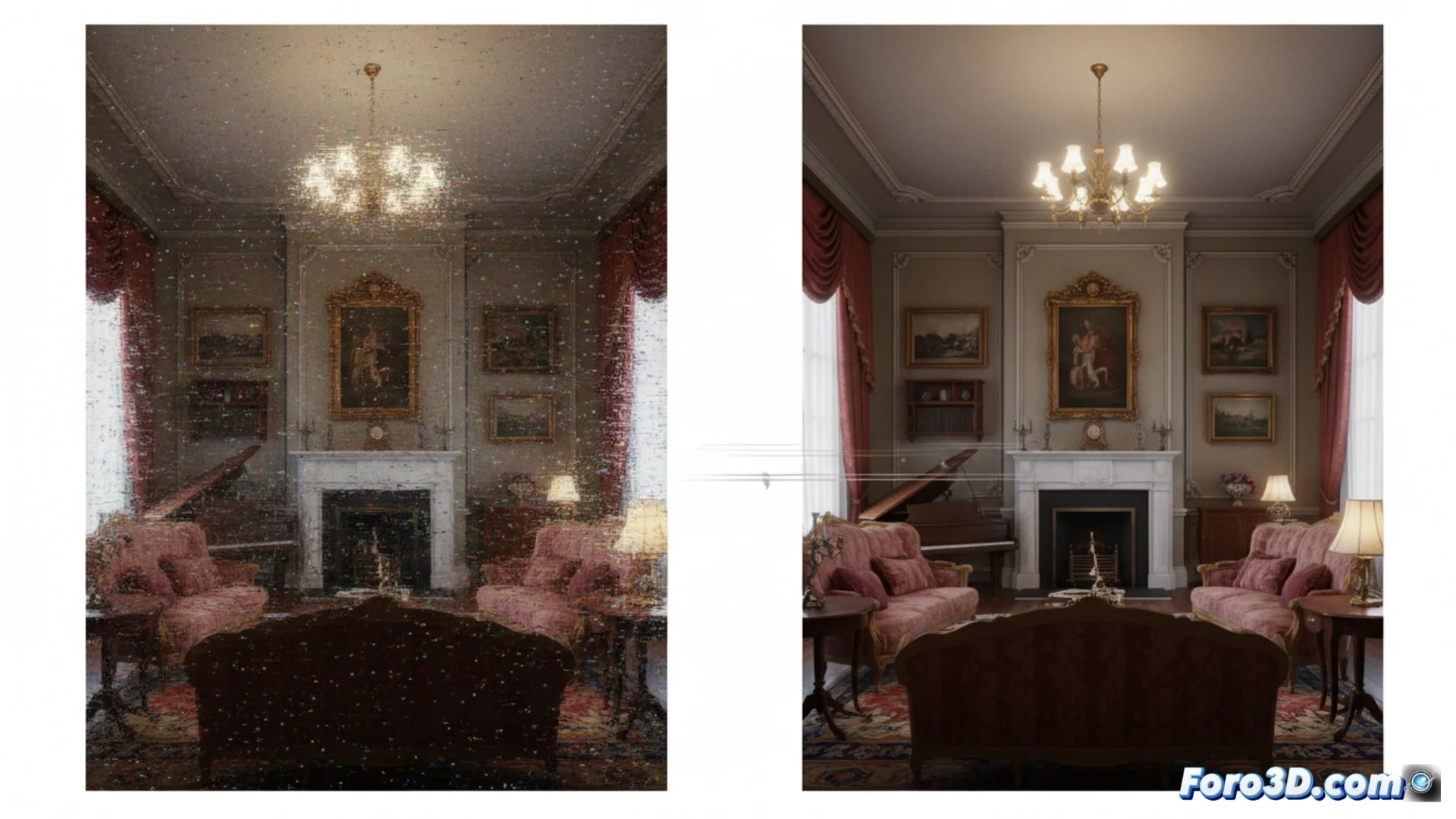
Intel has released the next major version of its well-known open-source library for removing noise from rendered images: Open Image Denoise 3. This update incorporates a highly requested feature by the community: the ability to perform temporal denoising, an architectural change that promises to transform how animations look. 🚀
How Does the New Algorithm Combat Flickering?
Unlike previous editions, which analyzed each frame independently, OIDN 3 can now use data from adjacent frames. To achieve this, the engine employs auxiliary information such as motion vectors and depth maps. This allows it to filter noise with greater stability over time, preserving details and generating a visually uniform sequence. The technology is applicable to both real-time workflows and producing high-quality final renders.
Key Advantages of Temporal Denoising:- Drastically reduces flickering or flickering in ray-traced animated sequences.
- Produces superior visual coherence between consecutive frames.
- Maintains fine details and sharp edges during the cleaning process.
Now artists can animate without their eyes flickering more than the rendering itself, desperately seeking a clean frame amid the noise.
Advances in Image Quality and Efficiency
In addition to the new temporal component, the core algorithm has received substantial improvements. The refined architecture enables noise removal in a smarter way, resulting in better preservation of image elements. Intel has also dedicated efforts to optimizing performance, making the code run more efficiently on compatible hardware, which can significantly speed up final render times.
Other Improvements Included in OIDN 3:- A remodeled denoising core for more precise cleaning.
- Greater efficiency when running, making better use of system resources.
- Consolidated support for modern production workflows.
A Step Forward for Visual Production
With Open Image Denoise 3, Intel offers a powerful tool to solve one of the most persistent problems in ray tracing rendering: noise instability in animations. This evolution brings the library closer to an indispensable standard for any pipeline seeking to produce high-quality animated sequences without the costly render times required by extreme sampling. The future of clean and fast rendering seems more accessible. ✨