Intel plans a significant architectural change. According to a job posting, the company will leave behind its hybrid design of P (performance) and E (efficiency) cores, in place since Alder Lake. The goal is to adopt a unified core architecture, simpler and more efficient. This change is not immediate; it will arrive in future generations, possibly with Titan Lake in 2028.
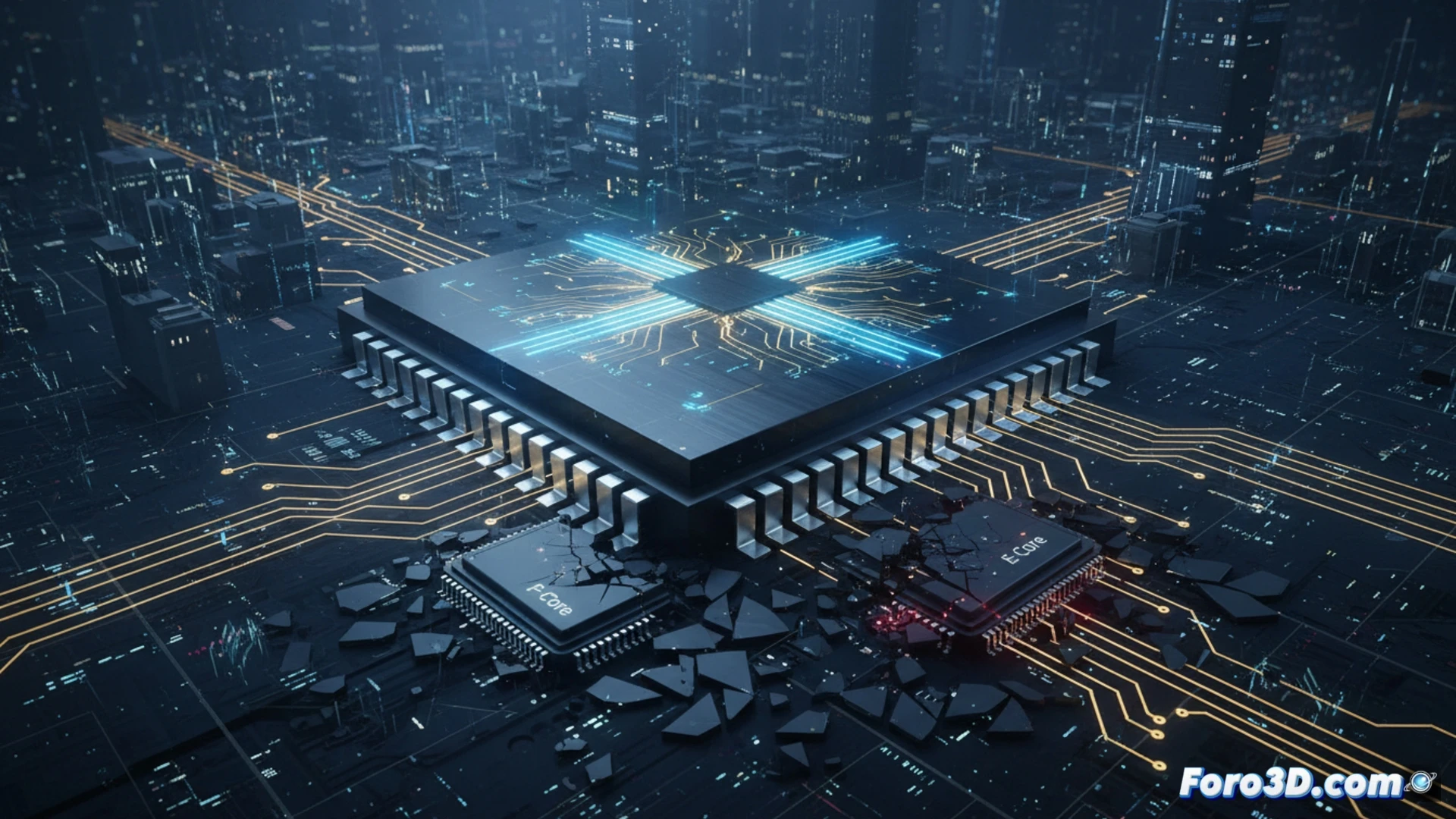
The Complexity of Hybrid Management and the Advantage of Monolithic ⚙️
The current hybrid architecture requires an operating system scheduler (Thread Director) that assigns tasks to P or E cores. This system can generate latencies and imperfect assignments, affecting performance in specific workloads. A monolithic design eliminates that layer of complexity, allowing direct control and more predictable optimization of performance per square millimeter of silicon.
Farewell to Core Mess, Back to One for All 🎯
It seems that the experiment of having to explain to Windows which core to use for each task didn't fully convince. After years of silicon choreographers (Thread Director) trying to make the E and P cores dance to the same rhythm, Intel returns to the philosophy of one core to rule them all. A simple solution to a problem that, perhaps, we didn't need to have. The Windows scheduler will finally be able to rest.