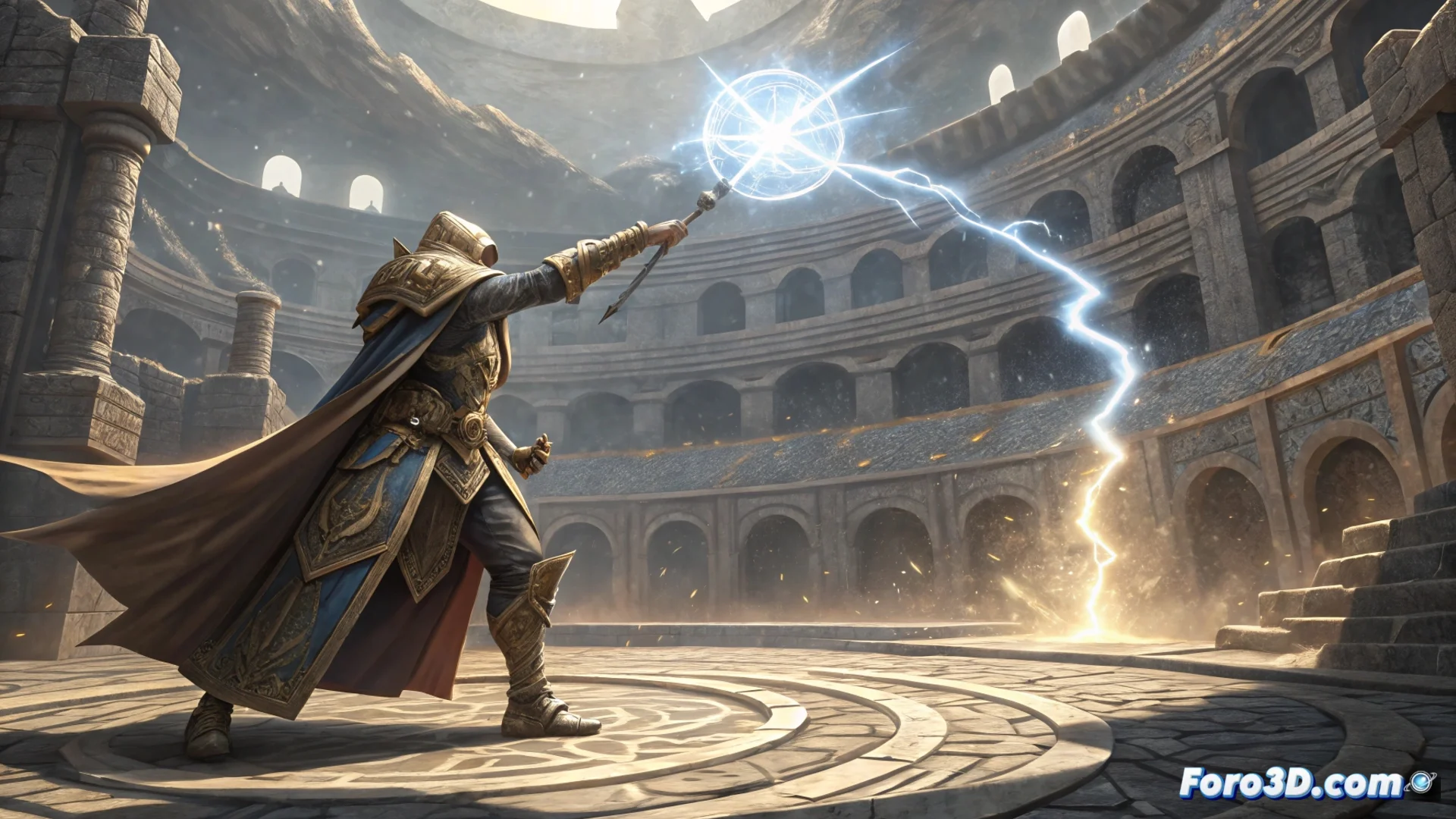
Immortals of Aveum and Its Development with Unreal Engine 5.1
The release of Immortals of Aveum marked a milestone, being one of the first AAA category games to employ version 5.1 of Unreal Engine. The Ascendant Studios team knew how to exploit the capabilities of this engine to build an epic fantasy universe, characterized by intense magical battles and visually rich scenarios. 🎮
The Graphical Technologies That Define the World
To achieve its ambitious vision, the studio integrated two technological pillars of UE5. The Nanite system was in charge of rendering ultra-complex geometry, from gigantic colossi to the smallest architectural details, without penalizing performance. For its part, Lumen provided dynamic real-time global illumination, essential for the flashes and explosions of spells to interact credibly with the environment and characters. ✨
Key Tools in the Development Pipeline:- Maya and ZBrush: Essential software for modeling and sculpting the vast majority of the game's assets and characters.
- Houdini: Used centrally to simulate and generate intricate particle systems and magic visual effects.
- Wwise: Integrated directly into the engine, it allowed designing a soundscape that reacts dynamically to combat.
The development demonstrated that not even a spell to freeze time helps optimize video game delivery deadlines.
A Hybrid and Efficient Workflow
Beyond the graphics engine, the visual and technical success of Immortals of Aveum was supported by a strategic combination of specialized applications. This synergy allowed handling the enormous artistic and technical complexity demanded by its large-scale magical combat proposal. 🧙♂️
Integration of External Software:- The creation of high-quality assets relied on digital modeling and sculpting suites.
- The spectacular magical effects were born from powerful procedural simulations.
- The audio layer was managed with a professionally integrated tool, making sound another reactive element.
A Technical Reference for Future Projects
The case of Immortals of Aveum serves as a practical example of how to push the functions of Unreal Engine 5.1 to the limit in a real commercial project. Its development underscores the importance of complementing the engine with a robust workflow and top-tier external tools to materialize such dense and visually impactful fantasy worlds. The title not only offered a gaming experience but also valuable lessons on producing AAA content with cutting-edge technology. 🏆