Rosalind Franklin's story is well-known: her Photograph 51 was essential for deciphering the DNA double helix, but her role was overshadowed. Her legacy goes beyond the discovery; it symbolizes the struggle for recognition and open collaboration. Today, the problem persists: scientific data locked in private servers, patents that hinder research, and a lack of transparency that she herself suffered.
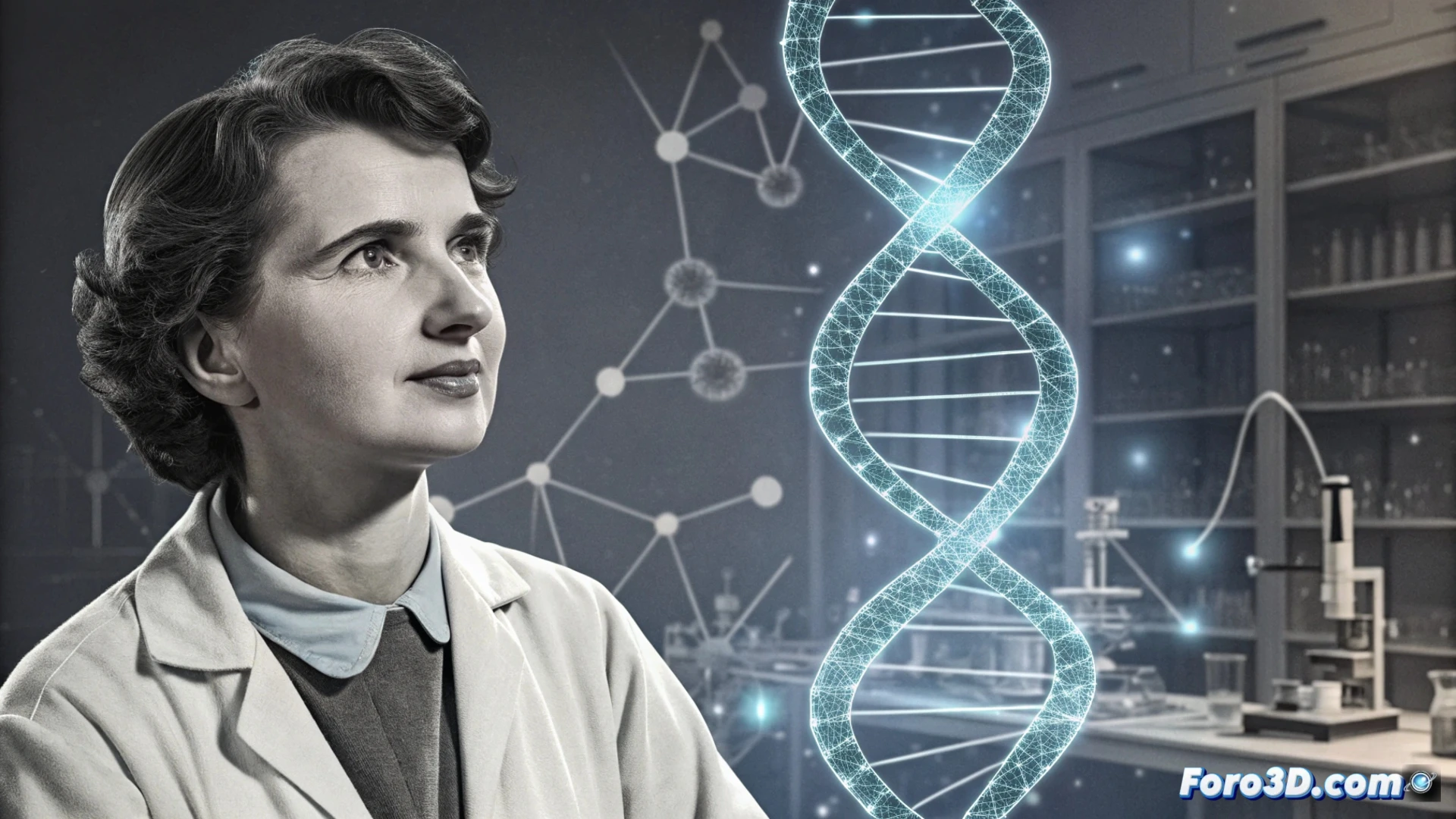
Helix Commons: A Decentralized Scientific Data Layer ⛓️
The solution would be a platform like Helix Commons. It is a global network based on blockchain where researchers can deposit and certify their raw data: genomic sequences, trial results, crystallographic images. Each dataset is registered with a timestamp and a cryptographic hash, ensuring authorship and integrity. The data is accessible under FAIR protocols, allowing verification and reuse, without intermediaries holding them back.
Watson, Crick, and the Lost NFT of Photo 51 🖼️
Imagine the scene: Franklin uploads Photo 51 to Helix Commons. Instantly, it is registered as a scientific asset with her name. Watson and Crick could see it, of course, but their access would be recorded on the blockchain forever. They might even leave a public comment: Interesting diffraction pattern, Rosalind. Do you mind if we make a model? The history of science would have an indelible change log, and the data lenders would have to find another trade.