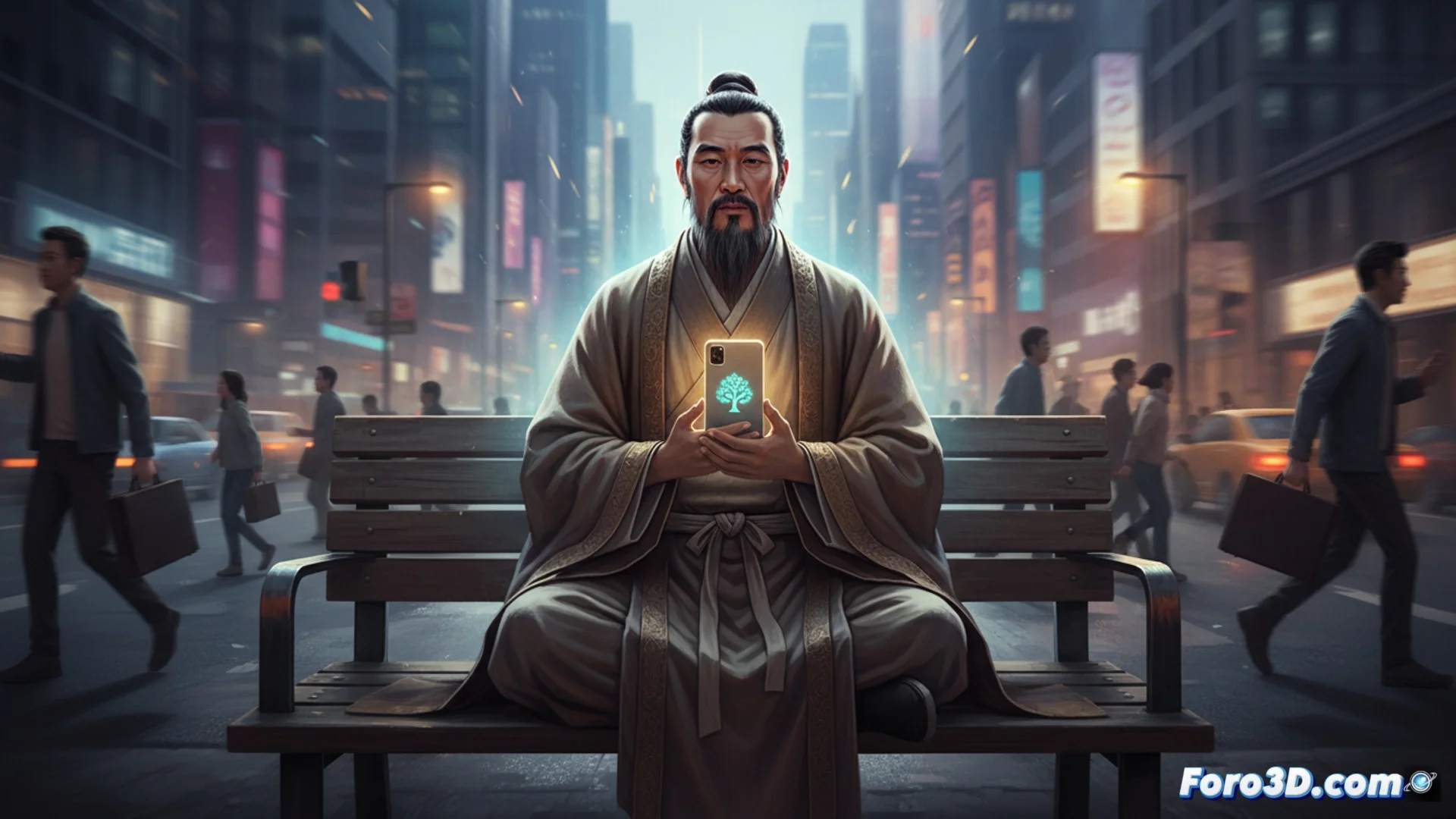
If Lao Tsé Designed an App Against Modern Anxiety
If the Chinese philosopher observed our time, he would surely identify mental noise and perpetual urgency as primary sources of discomfort. His solution would not involve adding more stimuli, but rather creating gaps of silence. Instead of proposing another app that demands your focus, imagine a tool that genuinely helps you disconnect. His digital proposal would seek to recover the natural harmony that Taoism has always promoted. 🧘
The Operation of an App that Schedules Inactivity
This fictional tool, named The Empty Path, would operate contrary to task management apps. It would not organize pending tasks, but rather reserve time in your calendar specifically for doing no activity. It would use geolocation data to indicate green spaces, public benches, or quiet areas nearby. Its main goal is to guard those intervals of pure existence, rewarding the user for remaining in tranquility, without goals to achieve.
Key Features of The Empty Path:- Blocks periods in the agenda dedicated to non-action.
- Suggests quiet places near the user using GPS.
- Symbolically rewards the user for remaining calm.
In a hyperconnected world, the greatest luxury is allowing oneself not to be productive.
Applying the Principle of Wu Wei Through Software
The core of this idea is wu wei, the Taoist concept of acting without effort. The app could automatically disable alerts or play relaxing sound environments during those reserved blocks. The intention is not to direct a guided meditation session, but to make it possible for the person to simply be. This utility would serve as a digital reminder to flow with the present moment.
Functions Inspired by Wu Wei:- Intelligently silences notifications during periods of quietude.
- Displays soft soundscapes or serene images.
- Acts as a passive reminder to let go of control.
The Final Paradox of Conscious Technology
The underlying irony may lie in the fact that we need a program on our device to remind us to turn it off. It is a warning that, sometimes, the most advanced software is that which helps us return to our original hardware: the human being in a state of peace. This tool would be, in essence, a digital bridge to a more authentic and less mediated existence. 📵