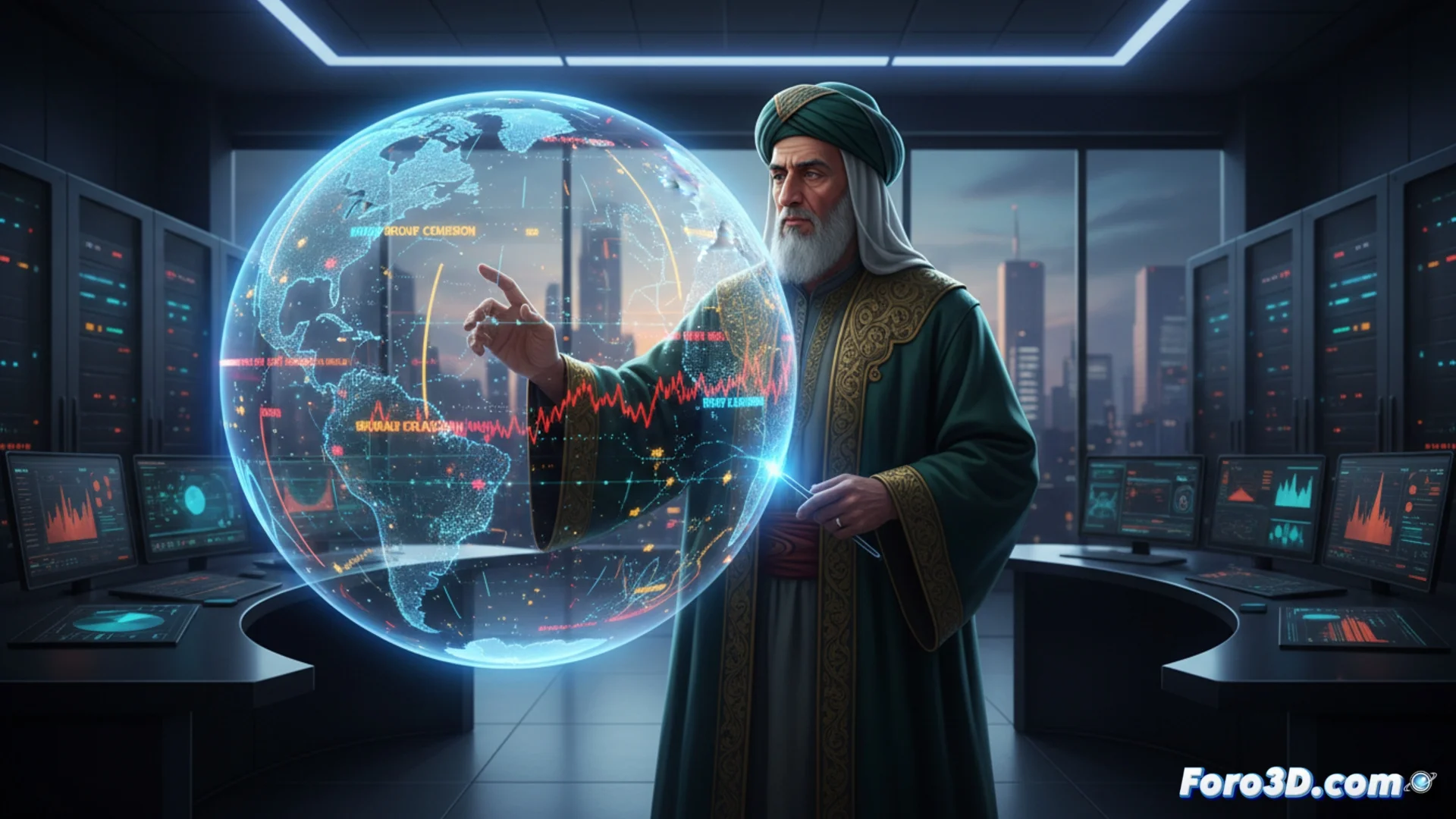
If Ibn Khaldun Lived Today, He Would Use Big Data to Analyze Society
Imagine the historian and sociologist Ibn Khaldun in the 21st century. Undoubtedly, he would adapt his theory of asabiyyah —group solidarity that sustains states— to employ current digital tools. His method would consist of processing immense amounts of information to decipher how human communities transform. 🧠
Asabiyyah in the Age of Big Data
His main focus would be to track patterns in the economy, demographic changes, and digital communication dynamics. The goal would be to measure with precision the level of unity within nations and predict their future. To do this, he would integrate disciplines such as history, sociology, and data science into a single analytical framework.
The Pillars of His Modern Analysis:- Examine trends on social networks to assess public discourse and polarization.
- Analyze real-time economic data to understand the impact on social stability.
- Study global migration flows and their effect on identity and local cohesion.
The strength of a state lies in the strength of its social ties. Today, those ties leave a digital trail that we can interpret.
Developing a Predictive Model: Asabiyyah 2.0
Ibn Khaldun would probably found a research institute to develop what we might call Asabiyyah 2.0. This would be a predictive system that combines artificial intelligence with deep historical knowledge. Its key function would be to identify points of fracture and social tension long before they escalate into open crises, acting as an early warning system. ⚠️
Features of the Asabiyyah 2.0 Model:- Use machine learning algorithms to detect signals of weakening cohesion.
- Create simulations on how certain policies might affect group solidarity.
- Generate reports that alert about risks of internal conflict or institutional collapse.
From Prediction to Action: Evidence-Based Interventions
The ultimate goal of this thinker would not be just to predict problems, but to propose concrete solutions. His model would suggest specific interventions, grounded in data, to restore and strengthen asabiyyah. Thus, he would unite his historical thinking with present-day applied politics. 🛠️
Among the measures he might recommend would be promoting large public infrastructure projects that generate a common purpose, or reforming tax systems to make them seem fairer and strengthen trust in institutions. The contemporary challenge would also include dealing with phenomena like trolls and online disinformation campaigns, which actively undermine digital asabiyyah, a new battlefront for the cohesion of any group.