If Brunelleschi Lived Today: Renaissance Ingenuity for Housing
If Filippo Brunelleschi lived in the 21st century, his analytical capacity and genius for innovation would focus on an urgent social challenge: the shortage of affordable homes. The architect who defied gravity with the dome of Santa Maria del Fiore would not hesitate. He would diagnose that building is a slow and expensive process, and seek ways to accelerate it, make it cheaper, and more environmentally friendly. His goal would be unequivocal: to guarantee a dignified shelter for every person. 🏗️
He Would Integrate Digital Manufacturing and Modular Systems
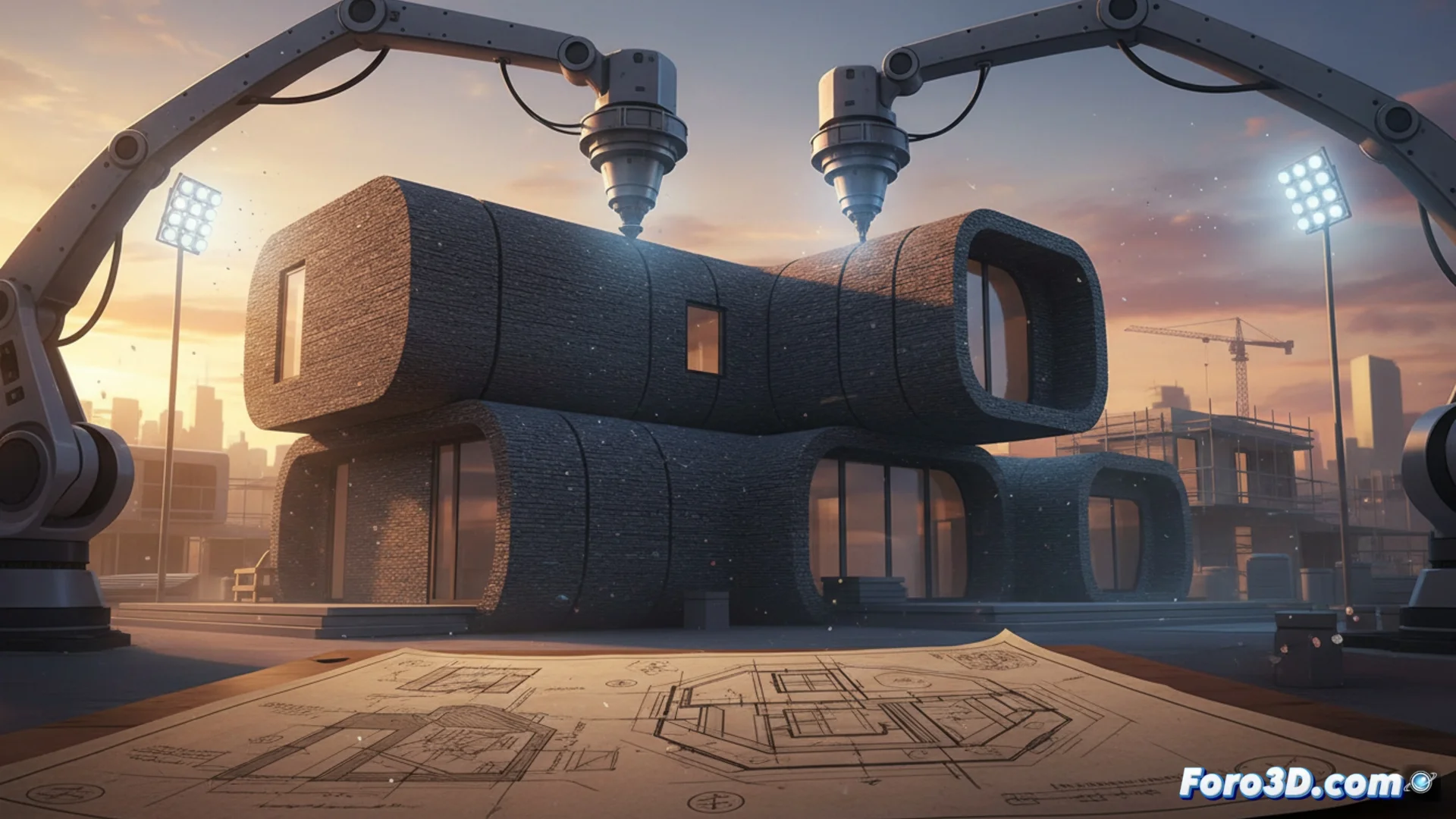
His proposal would surely fuse digital technology and principles of circular economy. Brunelleschi would conceive modular building systems, where each component fit with absolute precision. These elements would be manufactured using 3D printing, employing recycled materials, such as plastics or processed debris. This approach would minimize waste and drastically reduce costs, enabling the generation of essential housing in just a few days.
Pillars of His Construction Method:- Millimetric Precision: Each module would be designed for perfect assembly, eliminating errors.
- Recycled Materials: He would use processed urban and industrial waste as the main raw material.
- Accelerated Production: Digital manufacturing would allow creating entire neighborhoods in weeks, not years.
Affordability would not conflict with quality. The housing would be a dignified, adaptable space.
He Would Focus on Efficiency and Adaptability from the Origin
For the Florentine master, affordability would not mean giving up comfort. His projects would incorporate energy efficiency intrinsically, with integrated insulation and solar orientation studied to maximize natural light and passive heat. The home would be a flexible space, which could grow or transform according to family needs, adding new modules over time. His technical approach would attack the problem at its root.
Key Features of His Designs:- Integrated Thermal Comfort: Insulation in the printed module's own structure.
- Spatial Flexibility: Possibility to easily expand or reconfigure the housing.
- Energy Autonomy: Design that prioritizes solar capture and reduces energy demand.
A Legacy of Innovation Applied to the Future
It is possible to imagine entire districts emerging rapidly, with robotic cranes assembling houses like a large-scale construction game, leaving traditional builders astonished. Undoubtedly, Brunelleschi would enjoy seeing how his ingenuity, applied with modern tools, solves a serious problem in our society. His spirit reminds us that great challenges require bold solutions and a vision that transcends conventional methods. 🧠⚙️