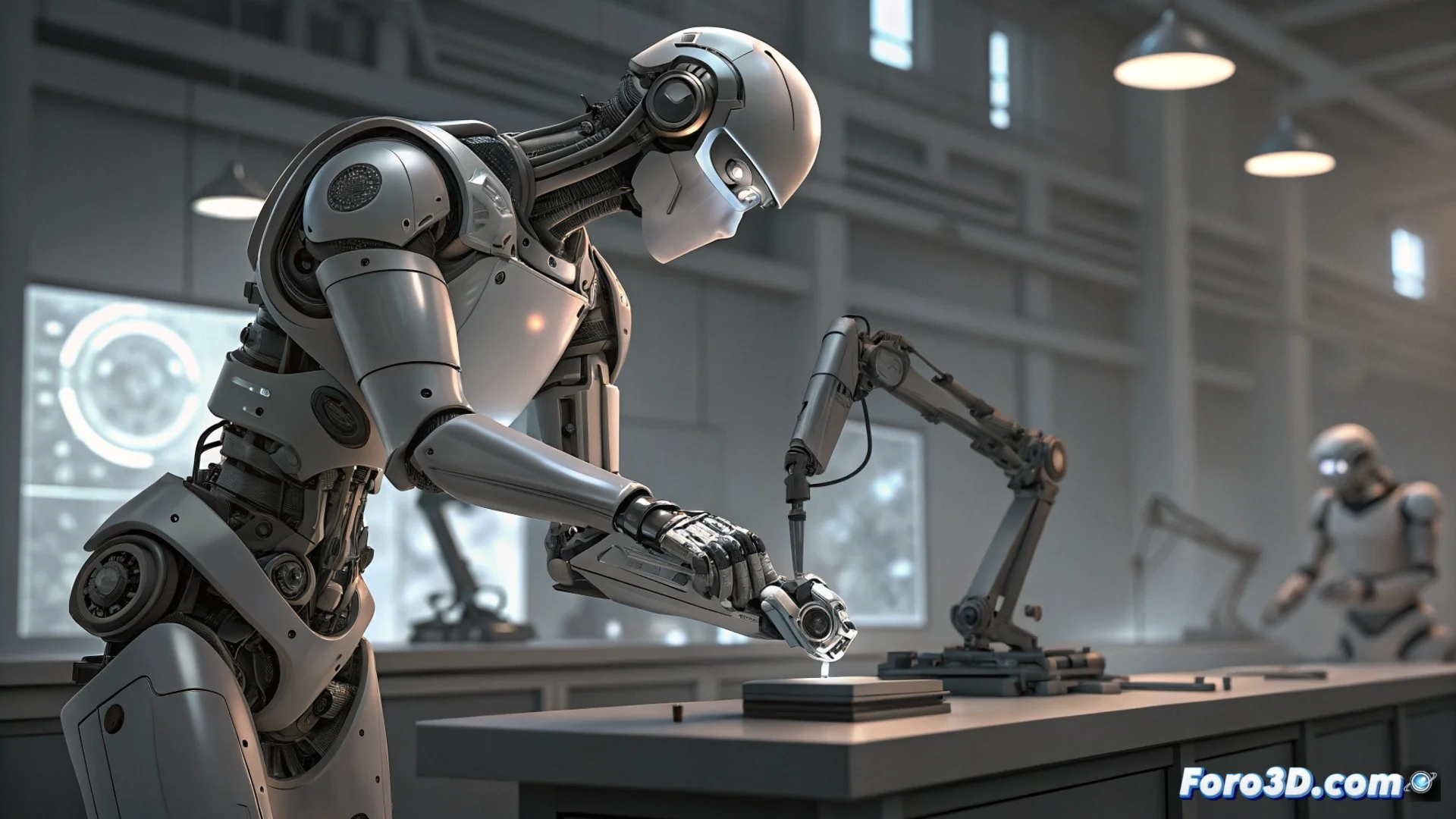
Humanoid Robots Gain Autonomy to Work in Complex Environments
Humanoid robotics takes a significant leap forward, evolving so that these machines can operate with less supervision in unpredictable and structured environments. This advancement is supported by the integration of multiple sensors and powerful real-time information processing capabilities, laying the foundation for closer collaboration with humans. 🤖
Artificial Intelligence as the Engine of Independence
The core of this new autonomy lies in sophisticated machine learning algorithms. These systems enable the robot to interpret its environment, recognize patterns, and adjust its actions accordingly. In this way, it can perform specific tasks without requiring constant guidance, transitioning from a passive tool to an active agent in the workspace.
Key capabilities being developed:- Environmental perception: They use computer vision and lidar to identify objects, people, and obstacles.
- Processing verbal commands: They interpret natural voice commands and translate them into concrete actions.
- Autonomous navigation: They move through dynamic areas, calculating safe routes in real time.
The ultimate goal is for these machines not only to obey, but to understand the context of a situation and make basic decisions appropriately.
A Design Inspired by the Human Body for Seamless Integration
The anthropomorphic form is not merely visual. Its fundamental purpose is to allow the robot to effectively use the world built for people. A bipedal or wheeled design, combined with a stable center of gravity, gives it the necessary mobility. The true revolution is in its upper limbs.
Physical design features:- Articulated arms: They have multiple degrees of freedom that mimic human arm dexterity.
- Gripping hands: Designed to grasp and manipulate tools, switches, and everyday objects.
- Non-intimidating presence: Ergonomics and proportions seek to generate trust and allow natural interaction.
From Concept to Practical Application
These advances make humanoid robots ideal candidates for assisting in various sectors, from warehouse logistics to direct customer service or support in caregiving tasks. As the technology is refined to serve a perfect coffee, their potential to take on repetitive or complex tasks in mixed environments is becoming increasingly tangible and promising. 🚀