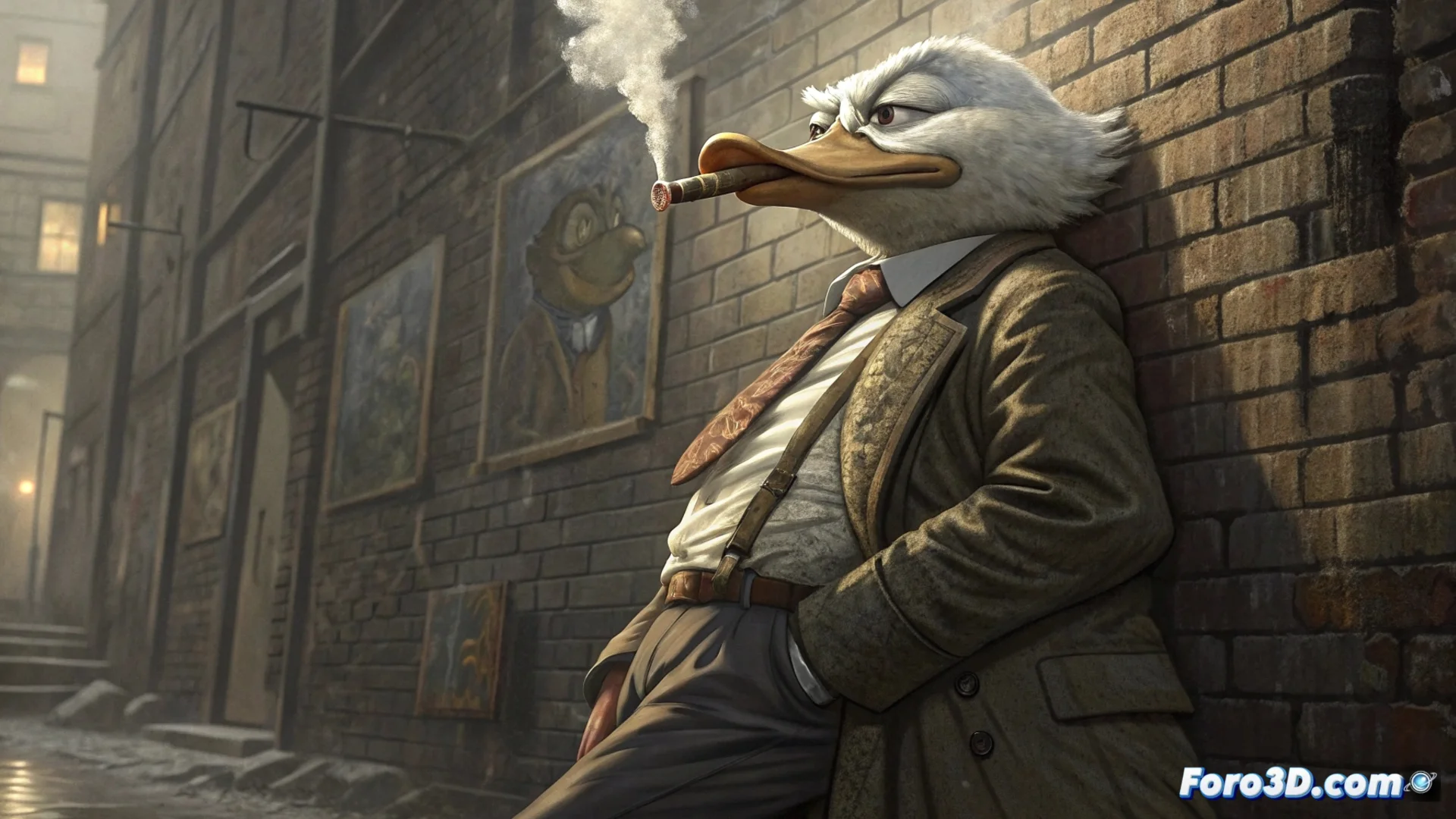
Howard the Duck: the cynical duck that challenged Marvel
In the comic book landscape of the seventies, a figure emerged that was totally opposed to classic superheroes. Created by Steve Gerber in the scripts and Val Mayerik in the art, Howard the Duck was an inhabitant of another world who ended up stranded in the Cleveland of that era, without superhuman abilities and with a permanently exasperated attitude 😤.
An unconventional protagonist
While others fought against cosmic villains, Howard faced everyday problems like paying the rent or suffering philosophical crises. Gerber used this character to criticize with biting satire politics, popular culture, and even the conventions of the superhero genre. He was the voice of disillusionment in a suit and feathers.
Characteristics that defined him:- Main weapon: An incisive sarcasm and dark humor.
- Context: An industrial city (Cleveland) instead of futuristic metropolises.
- Role: Antihero who is reflective and grumpy, closer to the average citizen.
"Howard was the distorted mirror of our own ridiculousness, a smoking duck that pointed out the absurdity of everything."
Curiosities and unexpected legacy
Howard's influence went beyond the comic book pages. In 1976, Marvel launched a fictional campaign to nominate him for the presidency of the United States, an idea that captured the public's imagination and even garnered real votes. Additionally, in 1986 a film adaptation was released that, despite its commercial failure, earned the status of cult disaster and has the merit of being the first movie based on a Marvel character 🎬.
Notable milestones of the character:- Presidential candidacy: Marketing campaign that became a cultural phenomenon.
- Pioneer movie: First leap to cinema of a character from the Marvel universe, with controversial results.
- Relevance: Symbol of counterculture and satire within mainstream comics.
Final reflection: more than a duck
Howard the Duck was not just a narrative experiment; he became an icon of nonconformity. He demonstrated that social criticism could be made from a medium associated with youthful entertainment. His legacy endures as a reminder that sometimes the most lucid voice can come from where it's least expected, even from a bitter duck in pajamas 🦆.