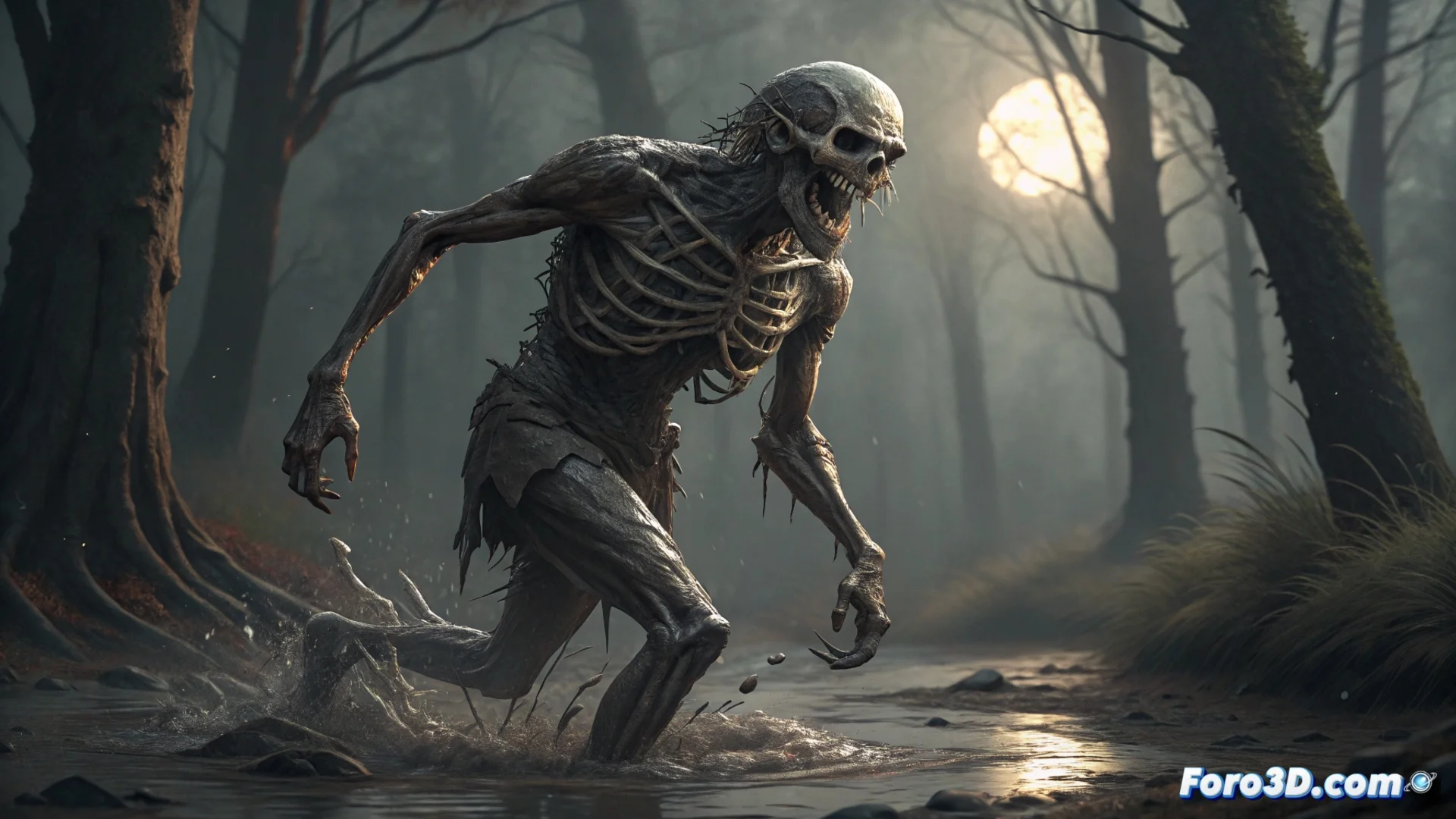
How They Create Such Realistic Digital Monsters for Cinema
Have you ever wondered what makes creatures in modern movies so terrifying? 🎬 The answer lies not only in the idea, but in a complex fusion of artistic creativity and cutting-edge technological tools. A team of artists from Digital Domain recently developed a creepy skeleton for the series It: Welcome to Derry, and the techniques used are truly impressive.
The key: an internal digital system
For a computer-generated character, like this skeleton, to be believable, much more than a well-made three-dimensional model is required. Specialists work in two fundamental areas: rigging and animating. Rigging acts as the virtual skeleton and musculature, allowing the model to flex and move organically. Then, animators infuse it with movement, frame by frame, ensuring that every action conveys the desired emotion, in this case, authentic terror. 😱
Essential elements of the process:- Advanced rigging: Build a control structure that mimics anatomy and allows natural and complex movements.
- Detailed animation: Give personality and intention to every gesture, from a slow walk to a sudden head turn.
- Visual integration: Ensure that the character's lighting and shadows perfectly match the filmed scene.
The real challenge is not just moving the monster, but making it inhabit and alter its world convincingly.
The challenge of interacting with the environment
One of the biggest obstacles is not animating the creature itself, but making it interact plausibly with real-world elements. If the skeleton advances over muddy terrain, the artists must digitally recreate how the bones sink and how the mud spreads and splashes. This is meticulous work that demands patience, where physics and fluid simulations combine with the art of animation so that all elements seem to coexist in the same space and time.
Crucial details in the simulation:- Fluid simulation: To recreate splashes of mud, water, or other liquids realistically.
- Particle dynamics: To simulate dust, debris, or small elements that detach during movement.
- Collisions and deformations: So that the digital character affects and is affected by the objects and surfaces in the scene.
The horror lies in the small details
The next time a movie scene makes you jump out of your seat, think of the team of artists who possibly spent weeks perfecting something as specific as the movement of mud under a skeleton's feet. 🦴 The magic (and fear) of contemporary visual horror is often built on those meticulous and gritty details that, although unconsciously overlooked, are what give authenticity and weight to the most terrifying fantasy.