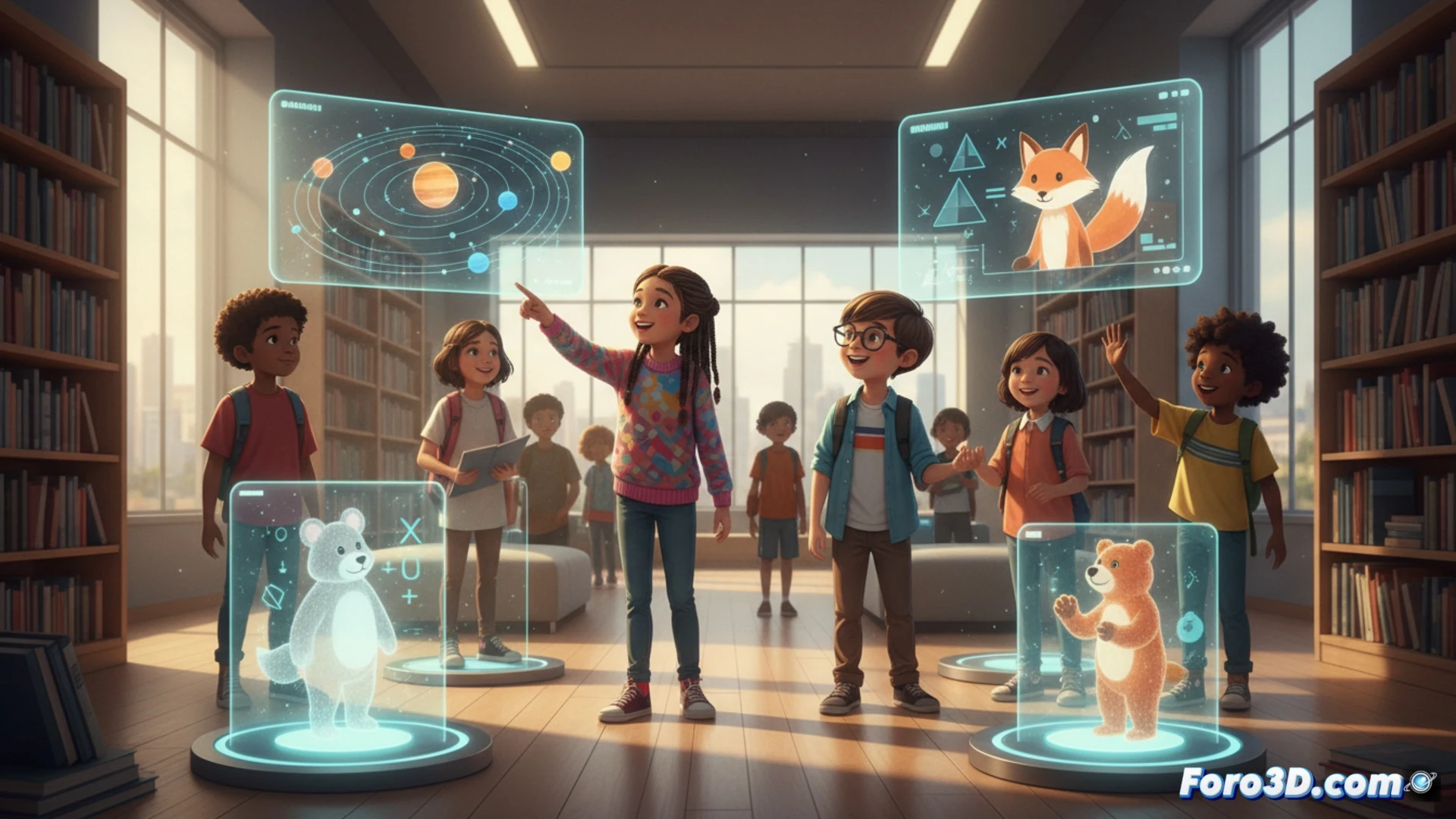
How Our Children Will Grow Up with Artificial Intelligence
Think of an ally that never tires, capable of explaining a concept in a thousand ways and always ready to listen. This vision, analyzed by Telefono Azzurro for 2026, stops being fiction to become a near reality. 🤖
AI as a Support Tool, Not a Substitute
The correct approach is to perceive artificial intelligence as an instrument that enhances human capabilities, similar to how a bicycle amplifies movement. Its main value lies in personalizing teaching, adapting to each student's individual pace, something complex to achieve in traditional educational settings.
Key Functions of AI in Child Development:- Act as a personalized tutor that adapts content and teaching methods.
- Serve as an exploration companion that responds to children's innate curiosity.
- Function as a cognitive scaffold, helping minors to understand and go further.
The real challenge is not the technology, but teaching how to use it with heart.
The Role of Digital Guardian Beyond the Classroom
The applications go beyond the academic. AI systems can analyze patterns in a young person's online activity to identify signs of cyberbullying or emotional distress. This acts as a preventive alert, offering a layer of protection by observing details that adults might not see. 🛡️
Areas Where AI Can Protect and Guide:- Monitor interactions on social networks and gaming platforms to detect risk dynamics.
- Identify changes in communication habits or content consumption that suggest discomfort.
- Alert tutors or professionals to possible situations requiring intervention.
The Balance Between the Machine and Human Connection
The crucial question is how to prepare new generations. Will we teach them to depend only on an algorithm for answers, or to also value empathy and human connection? The future is defined in the present, and the responsibility to guide this technological journey falls on adults. The goal is to integrate the power of AI without losing sight of what makes us essentially human. 💡