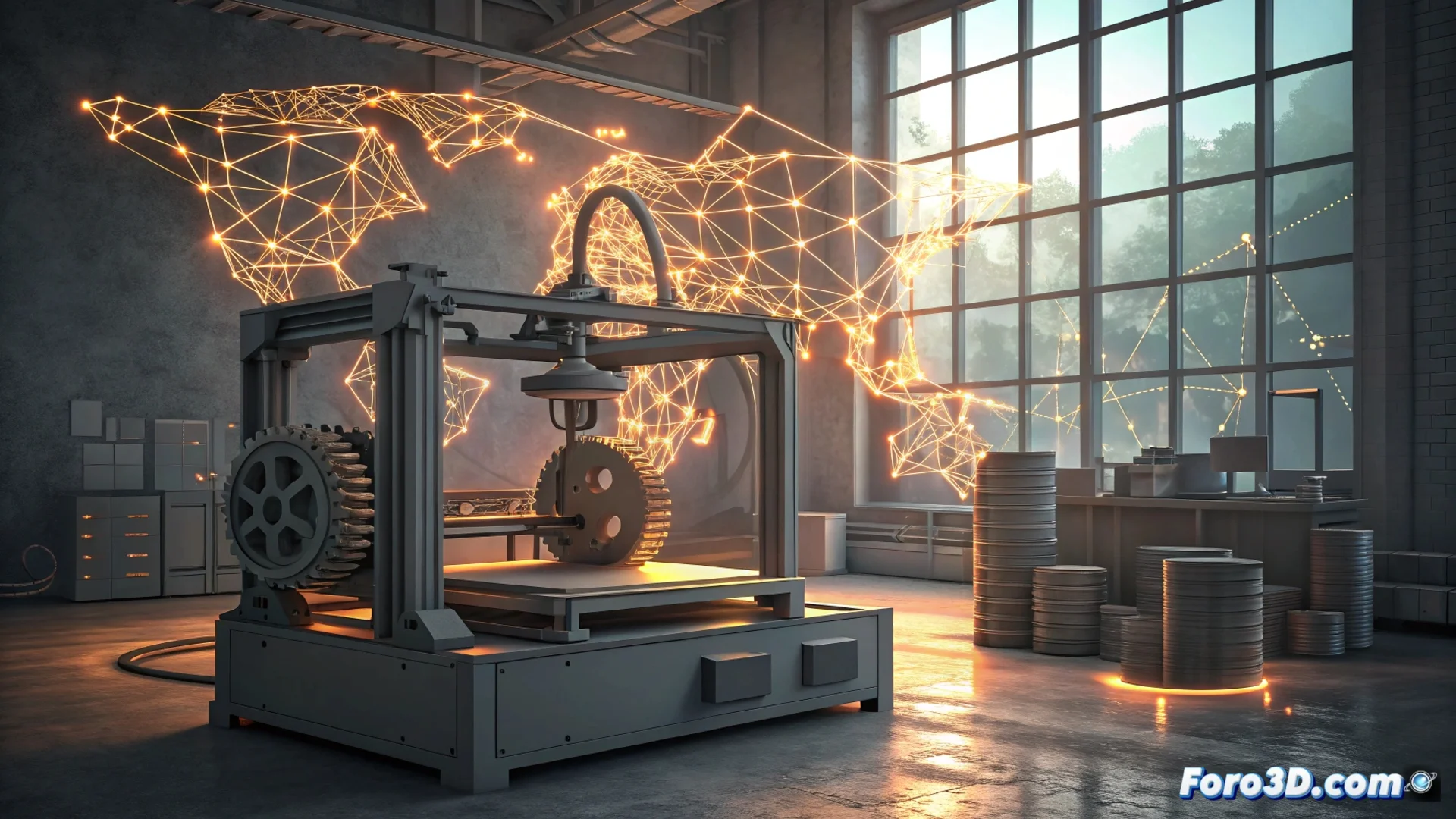
How Additive Manufacturing Transforms Global Supply Chains
Strategies to optimize the global flow of materials are increasingly incorporating additive manufacturing. This technology, which encompasses industrial 3D printers, is highlighted by a recent World Economic Forum analysis as a pillar for producing faster and closer to demand. 🏭
The Strategic Value for Industry
The main advantage lies in shortening lead times and reducing dependency. Instead of managing international shipments that can take months, a plant can manufacture the necessary component on-site in a matter of days. This report, which gathers insights from over 300 executives, presents it as a resilience mechanism against disruptions. It is comparable to having the ability to solve a critical problem without relying on external suppliers.
Key Findings from the Study:- The research went beyond analyzing quantitative data, integrating knowledge from over 100 industry and public sector experts.
- It identifies a paradigm shift: moving from relying on macro-production centers to weaving a network of interconnected micro-manufacturing centers.
- The manufacturing process increasingly resembles transferring a digital file and executing it wherever needed, democratizing access to production.
Additive manufacturing acts as insurance for global operations, enabling agile responses to supply chain disruptions.
Implications for the Future of Logistics
This approach does not necessarily seek to increase production volume, but to do it more efficiently and strategically. Geographic proximity becomes as important a factor as unit cost.
Benefits of Decentralizing Production:- Risk Reduction: Mitigates the impact of port blockages, geopolitical conflicts, or transportation crises.
- On-Demand Customization: Facilitates creating unique parts or short runs without the inefficiencies of traditional mass production.
- Sustainability: Can reduce the carbon footprint associated with long-distance goods transportation.
A Technology that Redefines the Landscape
What began as a tool for prototyping or creating decorative objects is now consolidating as a fundamental element in global logistics. Industrial 3D printing demonstrates that the future of manufacturing lies in being smart, adaptable, and above all, closer. 🔗