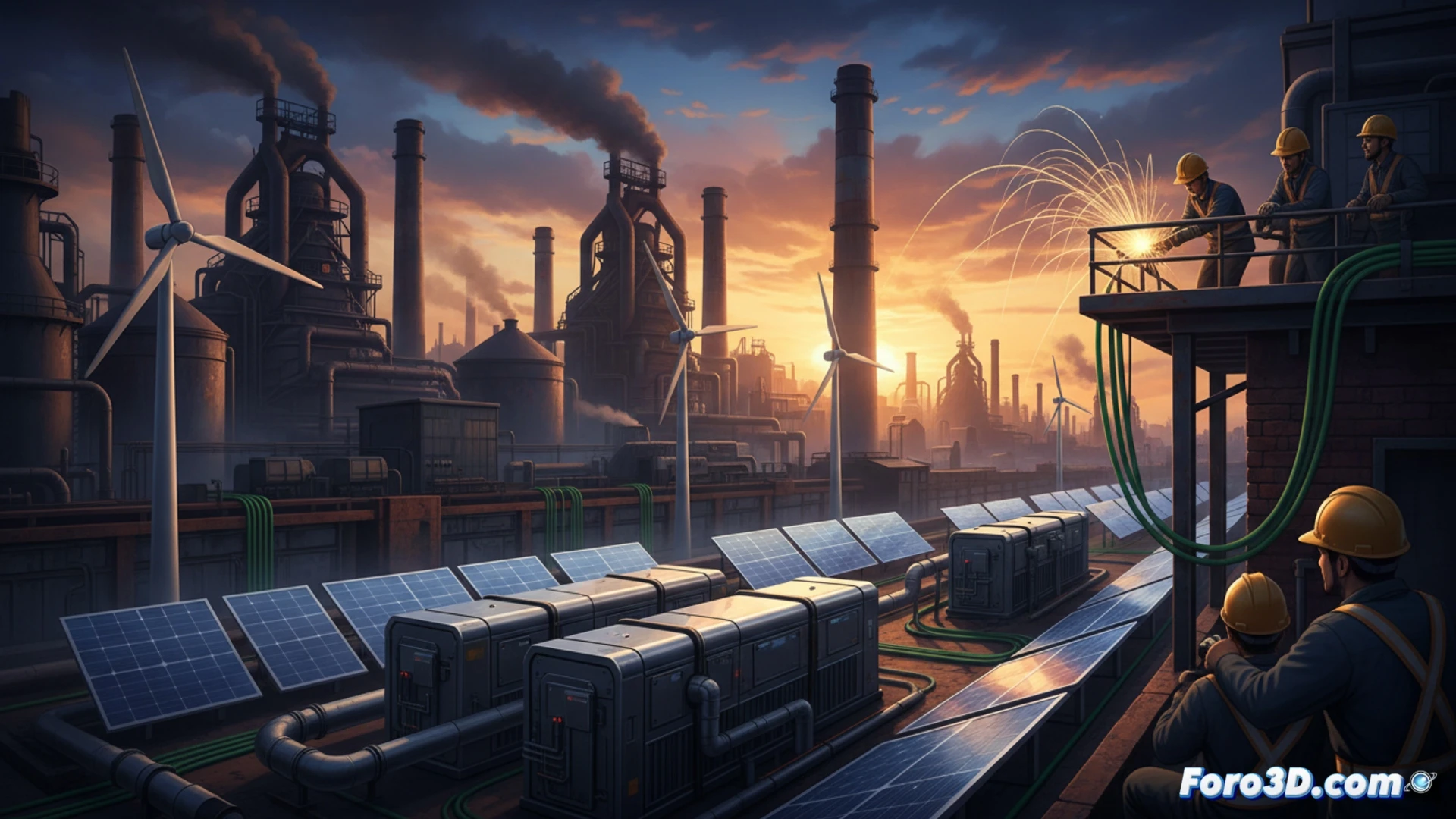
How a Century-Old Steel Factory Reinvents Itself
A massive industrial facility, loaded with history, requires a profound transformation to maintain its usefulness. This is the case of an ArcelorMittal plant in France, where after a long period of uncertainty, an ambitious renovation plan has been confirmed. It is comparable to completely remodeling an old house: it involves considerable investment and disruption, but the final result justifies the effort by achieving an efficient and updated system. 🏭
The Core of the Change: Beyond Updating Machines
The main challenge is not just replacing obsolete equipment. The goal is to produce steel using a significantly cleaner method. The heavy industry, such as steelmaking, is one of the main sources of CO2 emissions globally. This project seeks to integrate green hydrogen and electricity from renewable sources into the process, which would allow for a radical reduction in the carbon footprint. It is similar to switching from a combustion engine vehicle to a fully electric one, but applied to the scale of a giant factory.
Key Objectives of the Transformation:- Replace fossil fuels with green hydrogen in production.
- Power operations with renewable electricity.
- Drastically reduce greenhouse gas emissions.
Modernizing plants like this is essential to maintain our conveniences without excessively harming the planet.
The Invisible Material Present in Everything
The steel produced in these facilities is present in countless aspects of daily life: from automobiles and appliances to the structure of iconic buildings. It is a fundamental material, although its conventional manufacturing process generates high pollution. Updating factories of this type is crucial to reconcile industrial development, job preservation, and environmental protection.
Everyday Applications of the Produced Steel:- Components for the automotive industry.
- Structures and beams for building construction.
- Essential parts in appliances and machinery.
A Necessary Step Toward the Future
This news underscores that even the most traditional sectors must evolve to adapt to the new times. The next time you see a steel structure, consider that in the near future it might be manufactured with a much lower environmental impact. It represents a significant advance for a single plant, but great progress in the collective effort to reduce our carbon footprint. 🌍