Virgen de las Nieves Hospital has brought together patient associations with rare diseases in a sensitization event. The goal is clear: to raise awareness about these complex pathologies and foster social empathy. In our field, where medical and scientific rendering is a common tool, an obvious question arises. 3D visualization has direct potential to explain what words cannot describe.
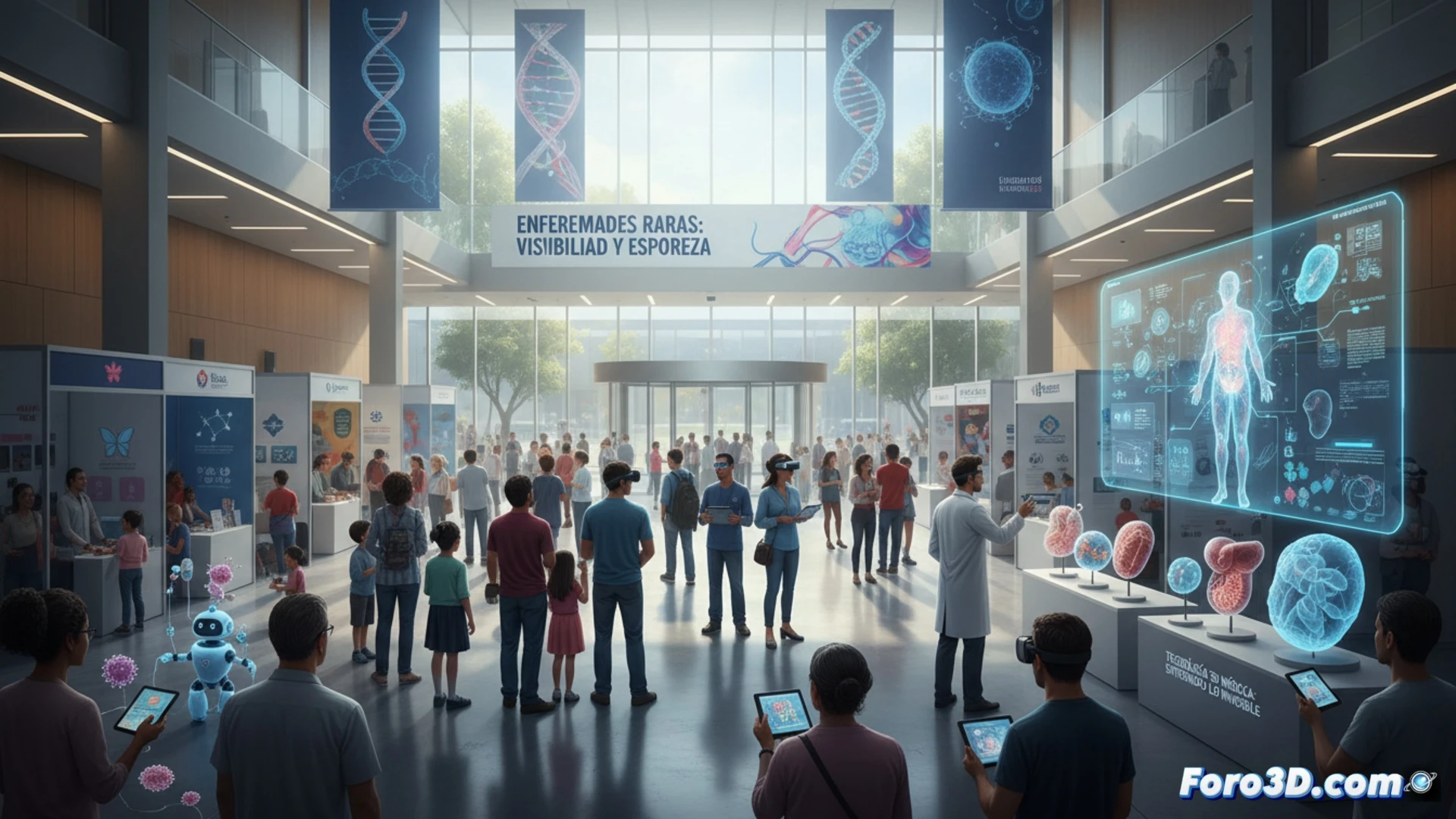
3D Models and Animations: Tools for Clear Medical Disclosure 🧬
An interactive anatomical model or an animation showing the progression of a disease are resources that transform the abstract into tangible. Specialists could use 3D infographics to illustrate genetic mutations or the mechanics of a specific syndrome. Even 3D printable models help plan surgeries or allow patients themselves to understand their condition. Our work in texturing, lighting, and visual narrative is key to creating educational materials that not only inform but also connect.
When Your Biggest Topology Error is a Metaphor for Genetics 🧩
Think about it: we spend hours fighting a model full of non-planar faces, orphaned vertices, and inverted normals. It's a chaos that only we understand. Now imagine explaining a misfolded protein or an altered metabolic pathway to someone without training. Our mesh disaster has more in common with biology than we think. Maybe we should present our failed renders as concept art about congenital errors.