The Japanese skier Ikuma Horishima has won the silver medal in the men's dual moguls final in freestyle skiing at the Milano Cortina 2026 Olympic Games. With this result, the athlete secures his second medal in this edition, consolidating his performance at the Olympic event. The event, which pits two skiers against each other on a parallel circuit of bumps and jumps, demands technical precision and speed.
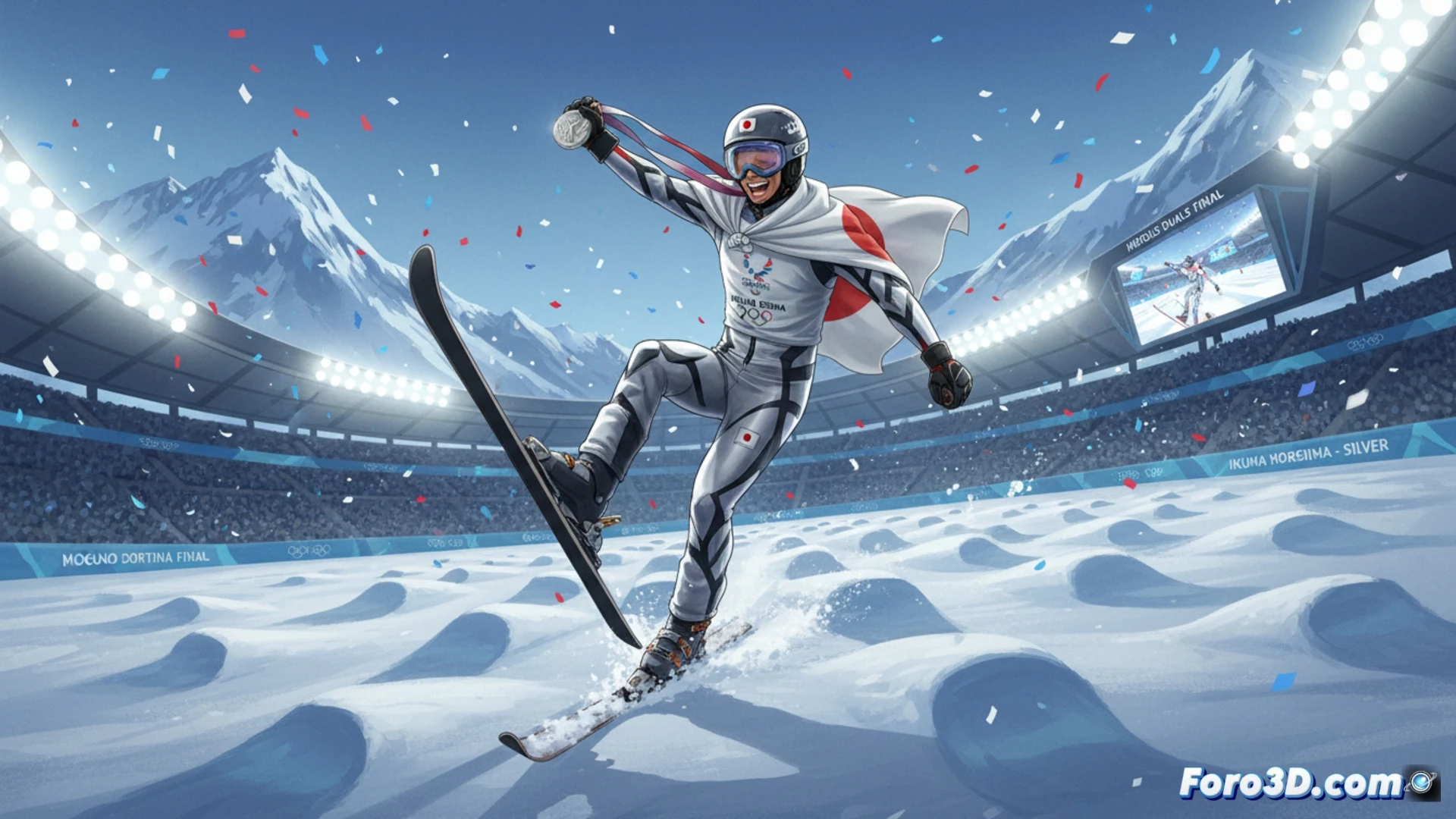
Simulation and data analysis in moguls training 💻
Technical development in this sport relies on computer simulation tools and biomechanical data analysis. Teams use software to model optimal descent lines on moguls profiles, calculating turn angles and impulse points for jumps. Inertial sensors on the skier's equipment collect real-time data, which is then processed to adjust technique, weight distribution, and timing in each phase of the course.
The theory of controlled chaos on two boards 🤯
Watching these athletes descend that track full of mounds provokes a reflection: they master what seems like absolute chaos with enviable calm. While an average citizen trips on a wrinkle in the carpet, they execute millimeter-precise turns and jumps on terrains that resemble a washing machine in spin cycle. Undoubtedly, it is a specialty that reconciles the idea that having the terrain against you is not an obstacle, but a requirement of the spectacle.