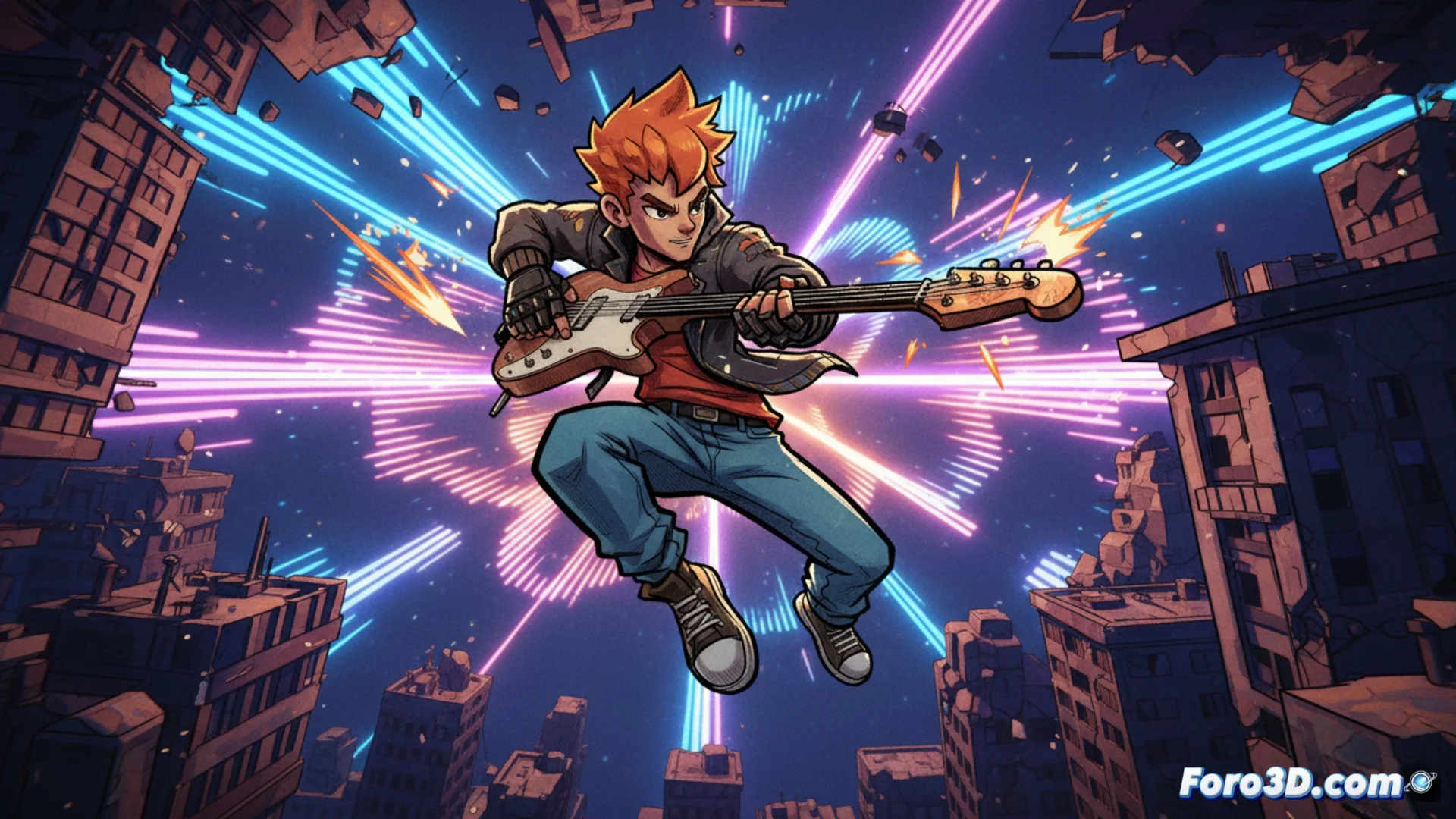
Hi-Fi Rush: how to achieve a cel shading style with Unreal Engine 4
The action title Hi-Fi Rush was built on the foundation of Unreal Engine 4. Its greatest visual merit is a look of cel shading that emulates the aesthetic of classic 2D animation. The creators achieve this optical illusion through specific rendering techniques 🎨.
The technique behind the hand-drawn look
To produce the sensation that the game is hand-animated, the team implemented custom shaders within the engine. These shaders process the lighting and generate the defined outlines that characterize the style. A crucial detail was reducing the animation framerate on selected elements, such as characters and effects, which accentuates the feeling of a frame-by-frame animated production.
Key elements of its aesthetic:- Use of Unreal Engine 4 as the technical core.
- Implementation of custom shaders to control lights and shadows.
- Deliberate animation at reduced frames on specific components.
A game where even an enemy's blink keeps the beat, making missing a rhythm feel like a technical error rather than a skill one.
Music as the backbone of the experience
Synchronization with the soundtrack is the guiding principle of the entire project. Every movement, animation, and visual effect is meticulously aligned with the musical rhythm. This total integration not only defines the gameplay but also unifies the visual and auditory perception 🎵.
Probable tools in production:- Maya or 3ds Max for modeling and animating 3D models.
- Software like Toon Boom or Adobe Animate for sketching and conceptualizing animations.
- The Unreal Engine 4 itself and its scripting tools to integrate sync logic.
An approach that defines the project's identity
The case of Hi-Fi Rush demonstrates that the final look does not depend solely on the chosen graphics engine, but on how it is employed. The application of non-photorealistic rendering (NPR) techniques can become the distinctive seal of a video game. The combination of custom shaders, strategic animation, and absolute integration with audio creates a coherent and memorable experience that transcends mere technique ✨.