The story of Henri Dunant shows how a traumatic experience can catalyze global change. After witnessing the abandonment of the wounded at Solferino in 1859, this Swiss businessman documented the need for a neutral relief protocol. His proposal, materialized in the International Committee of the Red Cross and the Geneva Conventions, laid the foundations of modern humanitarian law.
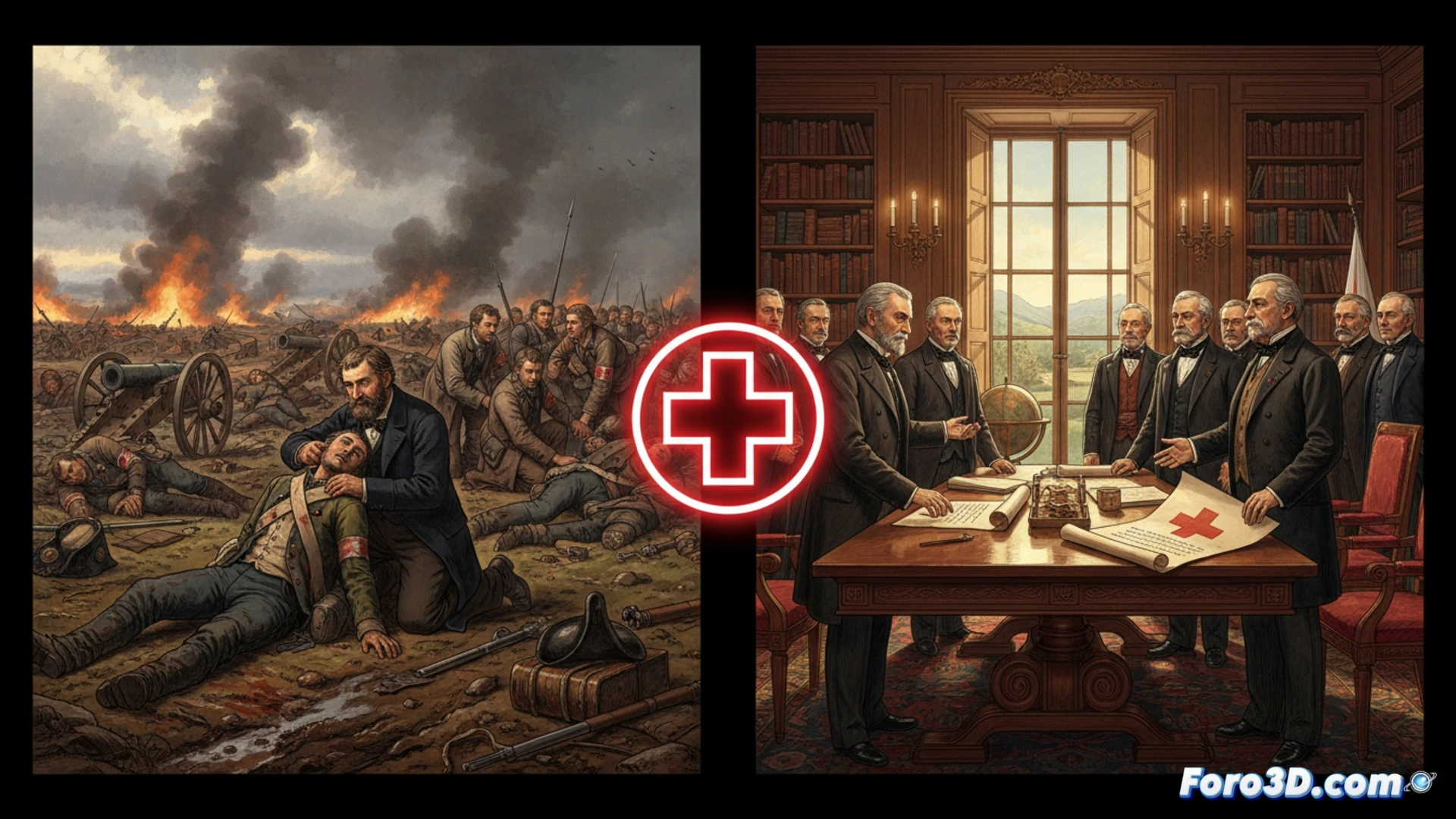
Dunant and the engine of neutral aid: architecture of a global protocol ⚙️
Dunant's idea operated like an interoperability standard in a chaotic environment. He proposed a decentralized architecture: national societies (nodes) under a common emblem (presentation layer) and consensus rules (the Conventions). This protocol defined a safe humanitarian space, independent of the operating system of the conflict. Its effectiveness lay in its simplicity and neutrality, allowing deployment in any scenario.
The humanitarian MVP: when your side project ends up defining the rules of war 🚀
Imagine you go on a business trip, encounter a disaster of integration between warring systems, and instead of writing an incident report, you decide to draft the specifications for a new international framework. Dunant did that. His white paper, written almost like urgent feedback, became the technical documentation for the largest humanitarian aid API. He went from guru to forgotten, but his build, after a few patches, is still in production.