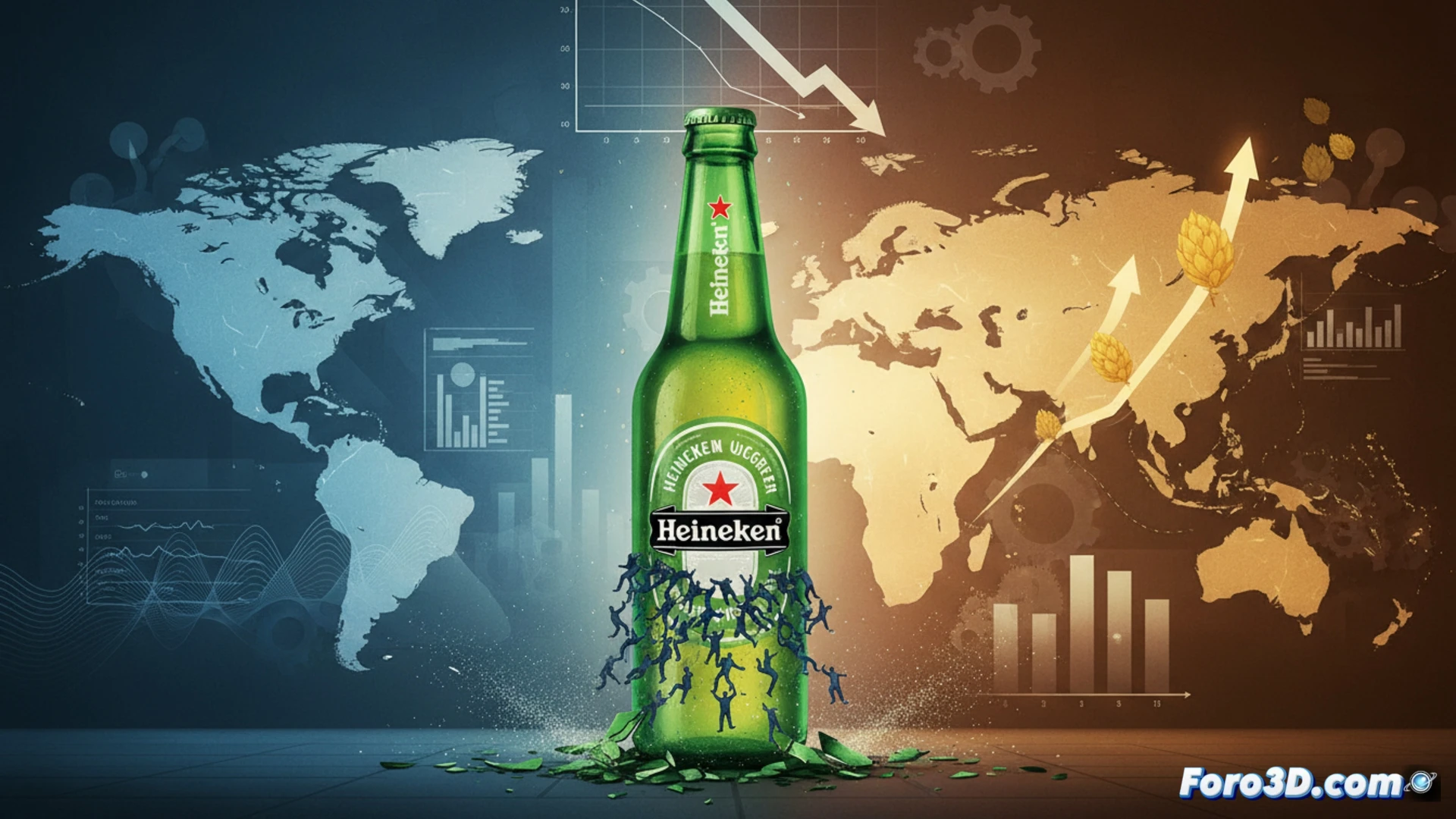
Heineken, the world's second-largest brewer, plans to eliminate between 5,000 and 6,000 jobs. The decision responds to a context of weak demand in its key markets, Europe and the United States, combined with upward pressure on costs. This move seeks to generate significant savings. Paradoxically, the global beer market, valued at more than 880 billion dollars, maintains its growth in regions like Asia and South America.
Automation and data analysis as levers of efficiency 🤖
In a sector with tight margins, technology is key to restructuring. Automation of packaging and logistics lines, along with AI-driven inventory management systems, reduce reliance on operational labor. Additionally, advanced analysis of consumption data enables optimization of production and distribution, adjusting it precisely to real demand and avoiding overcosts. These tools are critical assets for maintaining competitiveness.
The final solution? A beer that serves itself 🍺
With so many cuts, one might think the next logical step is to develop a product that doesn't need the consumer at all. Imagine a can with AI that analyzes your mood and decides for you whether you should drink it, while a robotic arm brings it to you. This way, the company would save on salespeople, waiters, and finally, on customers. The virtuous circle of efficiency: when the market contracts, the most sensible thing is to make the beer drink itself.