In the forum, where technology and creativity meet, the figure of George Washington Carver resonates strongly. This African American agricultural scientist transformed the economy of the U.S. South in the early 20th century. Faced with lands exhausted by cotton, he proposed a solution based on observation and innovation: crop rotation with legumes like peanuts.
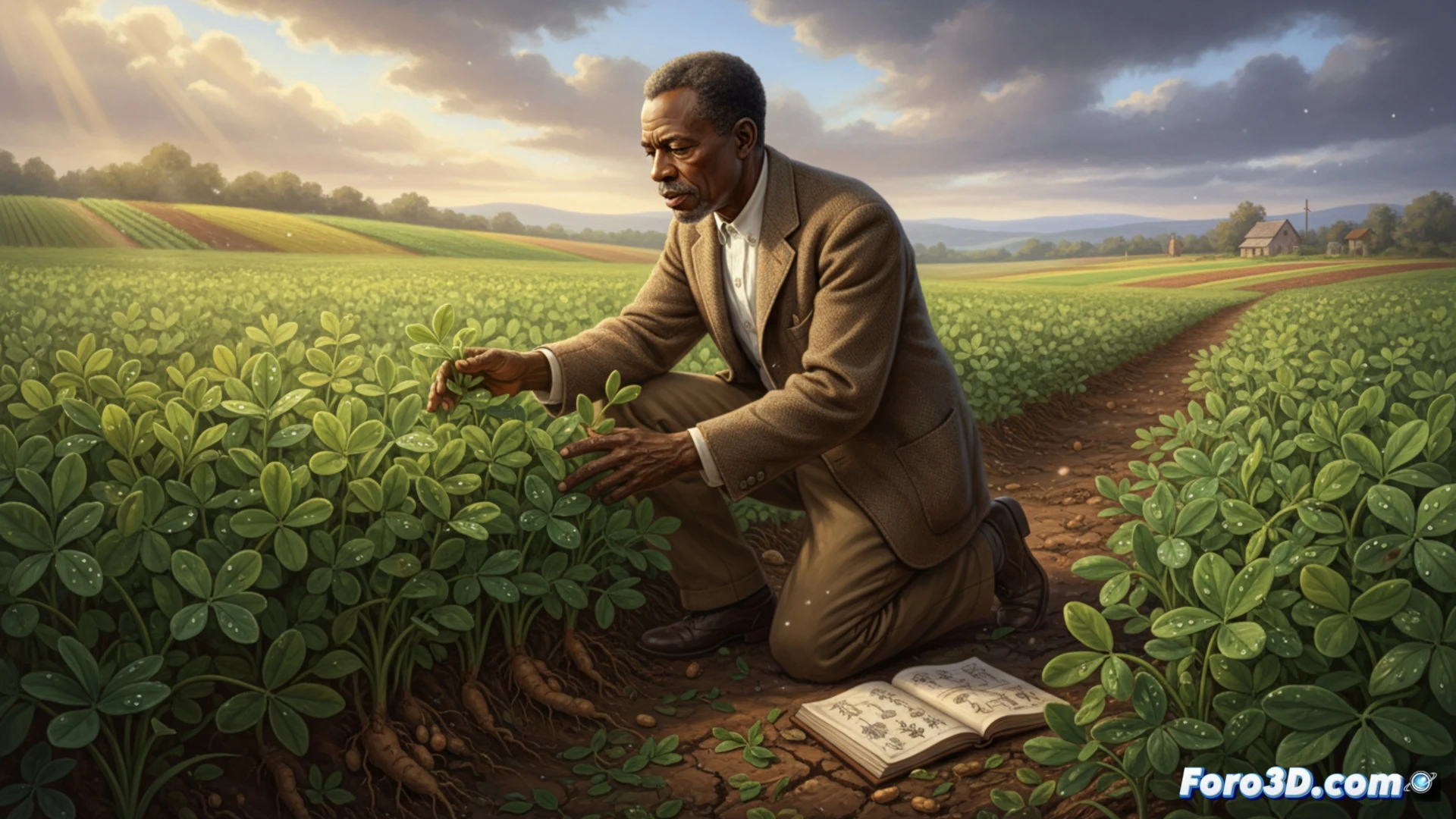
From one fruit to 300 derivatives: processing as an economic engine 🧪
The core of his work was the development of industrial applications for new crops. In his Tuskegee laboratory, he applied basic chemistry and biochemistry to break down and recombine raw materials. From peanuts, he extracted oils, created flours, and isolated compounds to manufacture everything from paints and plastics to cosmetics. This R&D process, meticulously documented, turned an agricultural product into a versatile platform, giving farmers solid arguments to change their practices and access to new markets.
If your SSD fails, plant a peanut 🥜
In the era of planned obsolescence, Carver's philosophy feels refreshingly strange. Imagine one of his tutorials: Step 1: If a component doesn't work, don't force it. Step 2: Bury it next to a legume. Step 3: Speak kindly to the soil. Step 4: Wait for nature to recycle it into something useful, like soap or insulation. His laboratory was the antidote to the use and throw away mentality; every sweet potato peel was an open hardware project waiting to be debugged by a chemistry poet.