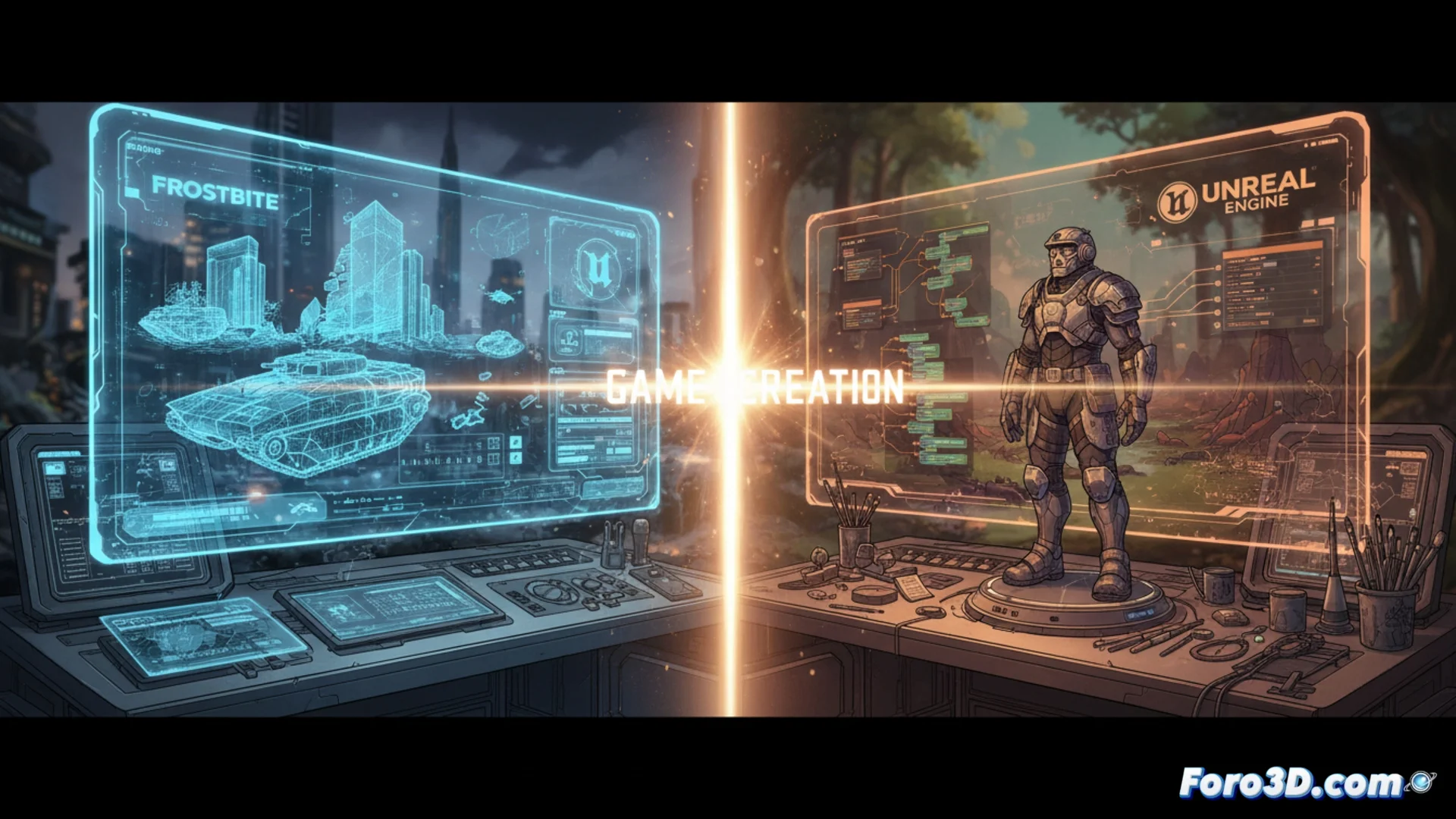
Frostbite vs Unreal Engine: Clashing Development Philosophies
In the universe of video game creation, two graphics engines stand out for embodying almost opposite visions: Frostbite and Unreal Engine. The first is a private tool from Electronic Arts, forged to power its main sagas. The second is an open platform from Epic Games, built to serve creators of any scale. Choosing between them defines how a game will be built. 🎮
Two Radically Different Paths
The essence of Frostbite lies in its specialization. It was designed to handle huge worlds and simulate destruction with spectacular detail, optimized for genres like shooters or racing. Its use is almost limited to EA's internal studios. In contrast, Unreal Engine stands as a universal ecosystem. Its licensing model and vast asset marketplace allow everything from indie studios to AAA giants to build projects of any type, democratizing access to cutting-edge technology.
Key features of each philosophy:- Frostbite: Private engine focused on achieving extreme visual fidelity in specific genres, requiring teams with specialized knowledge.
- Unreal Engine: Public and multi-platform platform, famous for its versatility and the complete set of tools it offers to any developer.
- Community focus: Unreal has extensive documentation and a global community, while Frostbite evolves according to the internal needs of its parent company.
Choosing the ideal engine is like deciding between a precision scalpel and a multi-tool knife: both are cutting tools, but each dominates in a completely different scenario.
Tools and Learning Curve
The workflow offered by each engine makes an abysmal difference. Unreal's suite, with its visual editor Blueprint, is backed by thousands of tutorials and forums where the community resolves doubts. This greatly accelerates the process of prototyping and developing games. Frostbite, being a proprietary tool, adapts to EA's flagship projects, which can make learning to use it more complex for new members, although it is tremendously efficient for the purposes it was created.
Key aspects of the development workflow:- Documentation and support: Unreal Engine provides massive learning resources. Frostbite prioritizes the needs of its internal teams.
- Entry barrier: Unreal's open model reduces the initial cost of creation. Frostbite maintains restricted access.
- Specialized efficiency: When a project fits Frostbite's purpose, the engine offers optimal performance and integration.
Conclusion: Specialization versus Universality
The dilemma between Frostbite and Unreal Engine goes beyond the technical and delves into the production philosophy. There is no absolute winner. The final choice depends on the type of game to be made, the team's resources, and the long-term strategy. While one offers absolute control and raw power for specific purposes, the other provides unlimited creative freedom and a community that supports every step. The perfect tool is the one that best fits the creator's vision. ⚙️