CERN has approved the study for the Future Circular Collider (FCC), a successor to the LHC. This project, which would not see protons colliding until 2070, raises a reflection on scientific planning on a secular scale. How do you financially and politically sustain research whose fruits will take decades? It is an exercise of faith in knowledge and in the stability of our institutions.
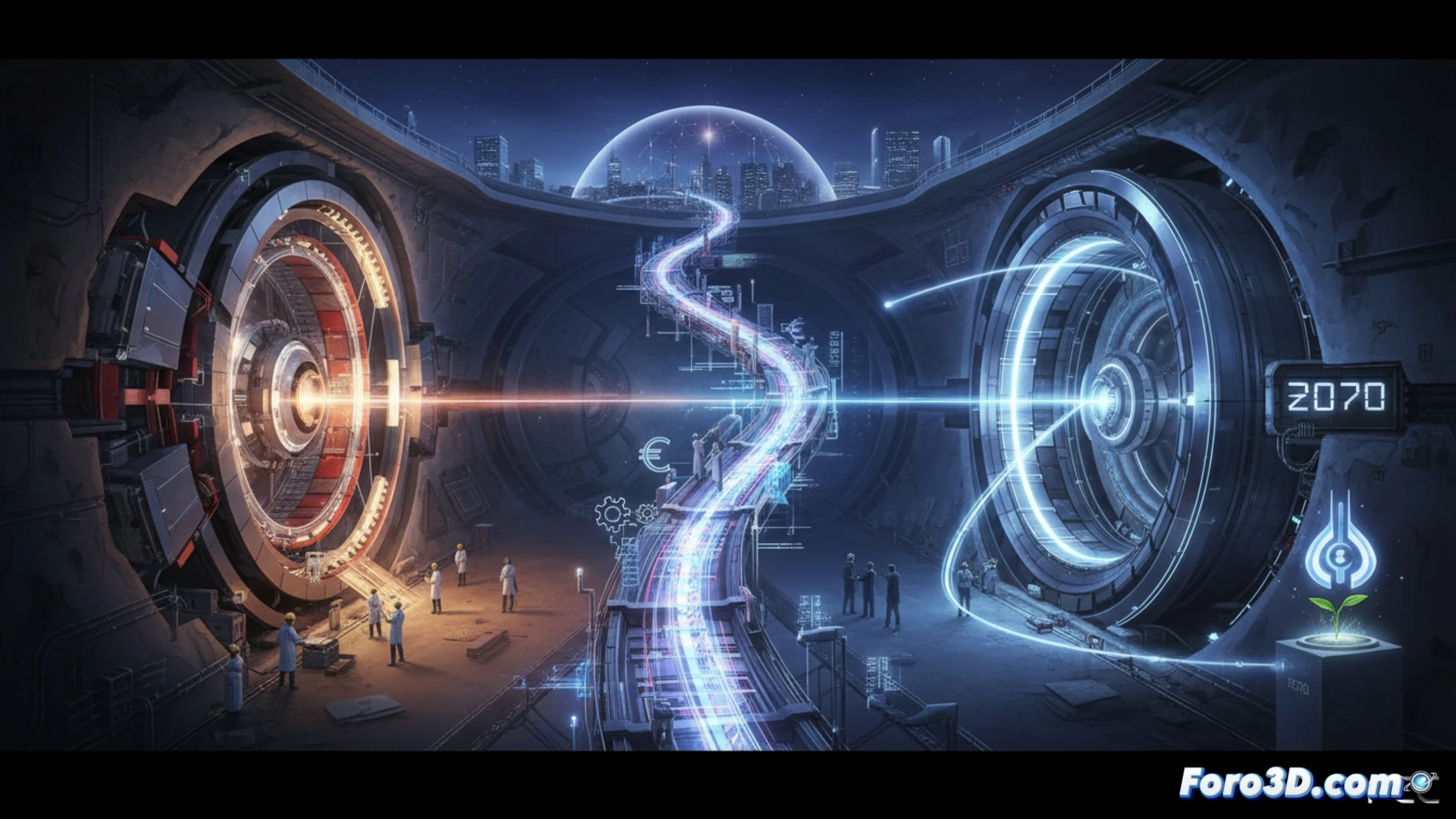
Frontier technology for a 91 km tunnel ⚙️
The FCC proposes an underground ring of 91 kilometers, almost four times the LHC. Its goal is to reach energies of 100 TeV, requiring superconducting magnets with fields of 16 Tesla, a considerable technical leap. The development of these magnets, along with more efficient cryogenics and advanced vacuum systems, constitutes the core of the engineering challenge. Much of the initial investment will be allocated to R&D to create technologies that do not exist today.
Planning for our great-grandchildren to enjoy 👨👩👧👦
It is comforting to know that, while we debate annual budgets, there are scientists drawing lines on maps for a machine that will turn on when many of us are no longer here. A project with a time horizon that exceeds the lifespan of most governments and mobile phones. Perhaps the greatest discovery will not be a particle, but the formula to maintain interest and funding for five decades, a mystery that not even the Higgs could explain.