Following Russia's invasion of Ukraine, Europe accelerated its disconnection from Russian pipeline gas, reducing that dependence by two-thirds. However, this transition has led to a new and significant dependence: liquefied natural gas (LNG) from the United States. By 2025, it is estimated that this supply will represent more than half of Europe's LNG imports, sparking debates about the continent's strategic autonomy.
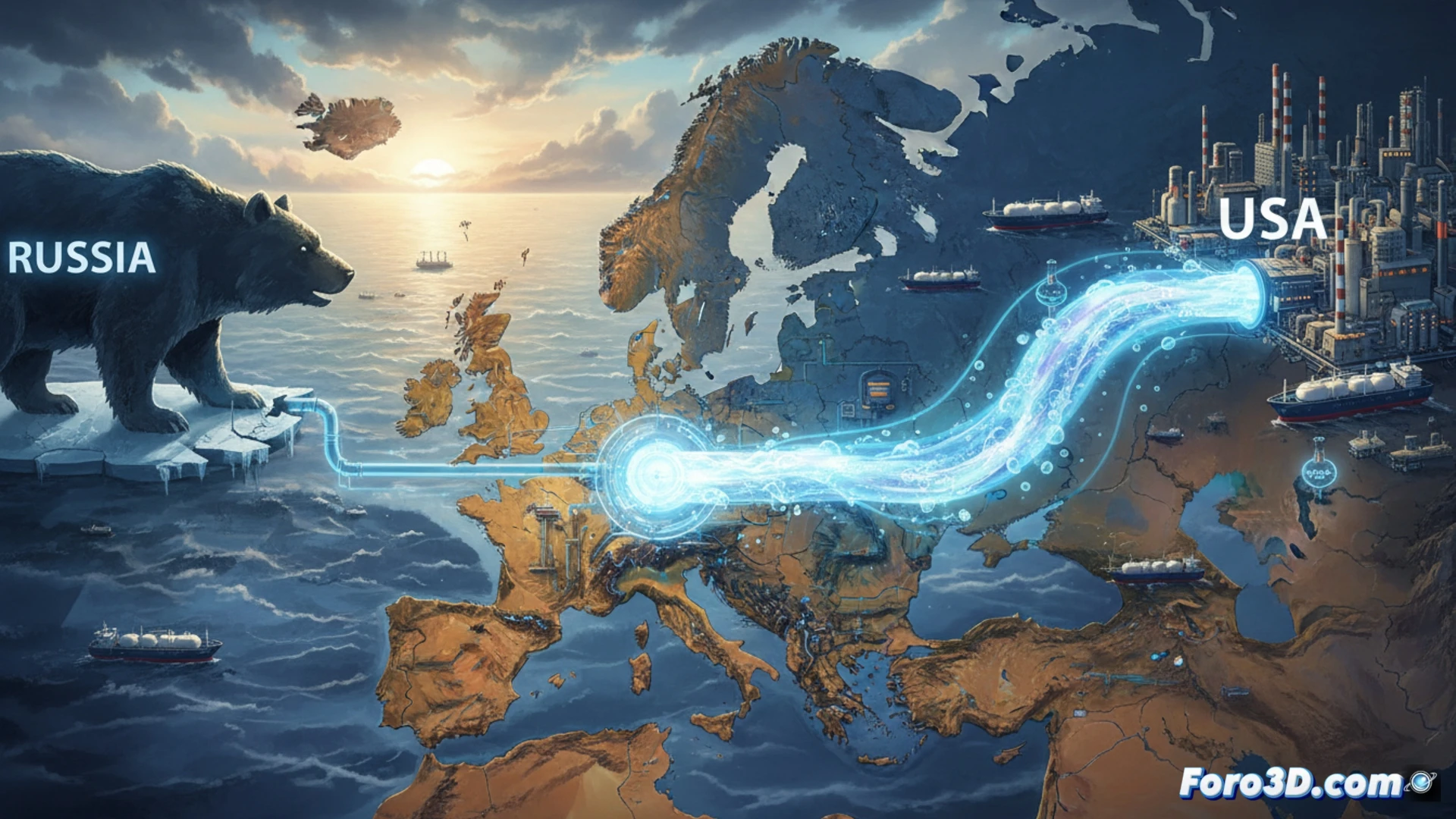
Critical Infrastructure: The Race for Regasification Terminals ⚙️
Replacing Russian gas required a rapid deployment of infrastructure. Several EU countries accelerated the construction and adaptation of regasification terminals to receive LNG by ship. These terminals, such as the one in Wilhelmshaven in Germany or Eemshaven in the Netherlands, allow for unloading, storing, and reconverting the liquefied gas to gaseous state for injection into the grid. Europe's LNG import capacity has grown remarkably in a short period.
The freedom gas: From Vladimir to Uncle Sam? 🇺🇸
It seems the geopolitical lesson was only half-learned. We swapped dependence on gas that arrived through pipelines from the east, subject to political whims, for dependence on gas that arrives by ship from the west, subject to market dynamics and transatlantic policies. Energy independence becomes a game of musical chairs where, when the music stops, you always end up sitting on the lap of a superpower. At least now the cuts come with the logo of a company with a catchy slogan.