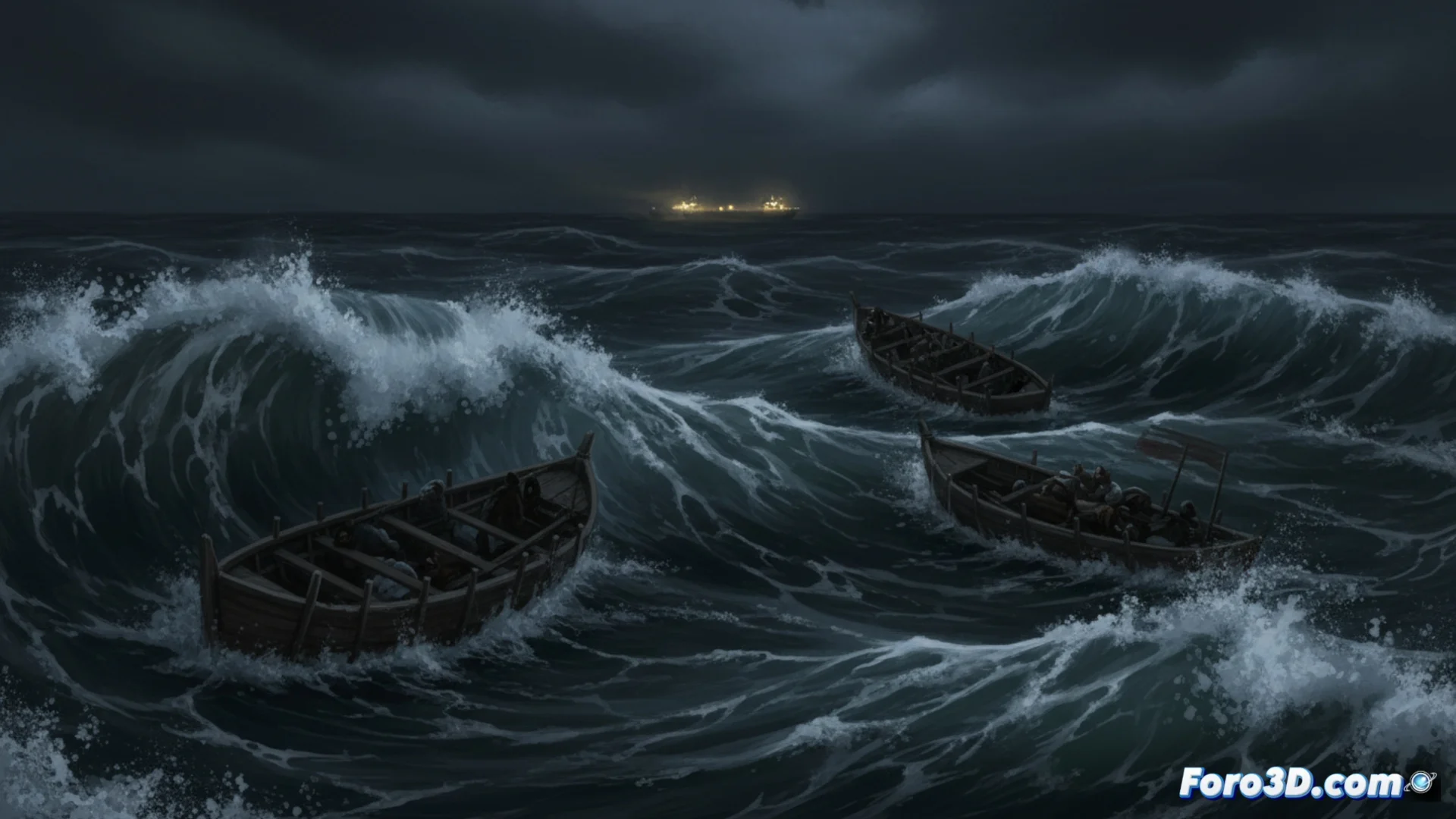
Eight boats with migrants disappear in the central Mediterranean
During a critical week in January 2026, eight boats carrying migrants that set sail from the Sfax area in Tunisia were lost in the waters of the central Mediterranean. The sea, with its extreme winter conditions, has turned any rescue attempt into an almost impossible mission. According to reports from the Italian coast guard and humanitarian groups, nearly 380 individuals are feared missing, presumed to have mostly perished. This event marks another silent tragedy on this route to Europe. 🌊
The lack of data hides the true magnitude
A serious informational silence makes it difficult to understand the real scope of the events. This void results from combining adverse weather, which hampers operations, with certain limitations imposed by authorities in the area. Entities monitoring this maritime route indicate that this blackout is frequent and serves to hide the real human cost of crossing the sea.
Factors worsening the situation:- Severe winter weather: Strong waves and freezing temperatures drastically reduce survival options for the fragile boats.
- Restrictions on NGOs: Policies from several European countries that limit or prevent non-governmental organizations from carrying out search and rescue tasks.
- Increased risk: This scenario multiplies the danger of dying for those fleeing poverty and conflicts during the coldest months.
The sea seems to guard its secrets with a deeper and more effective silence than that of any government.
A pattern of opacity and danger
The central Mediterranean route is consolidating as one of the deadliest in the world. The impossibility of documenting every incident does not mean they do not occur, but that they happen away from the eyes of public opinion. The humanitarian crisis continues, aggravated by a winter that offers no respite and by legal frameworks that, in practice, leave people at the mercy of the waves.
Immediate consequences:- Mass disappearances: Hundreds of lives are considered lost without possibility of confirmation, leaving families in uncertainty.
- Difficulty in rescuing: Rescue operations are hindered both by nature and by political decisions.
- Normalization of tragedy: The recurrence of these events threatens to turn them into just another statistic, dehumanizing the drama.
The sea as a mute witness
Beyond the figures and reports, the image persists of a stormy sea that swallows the hopes of those seeking a better future. Institutional indifference and the force of nature ally to create an almost impassable barrier. Until policies change to prioritize saving lives, the central Mediterranean will continue writing its grim history, chapter by chapter, without reliable witnesses to fully recount it. ⚓