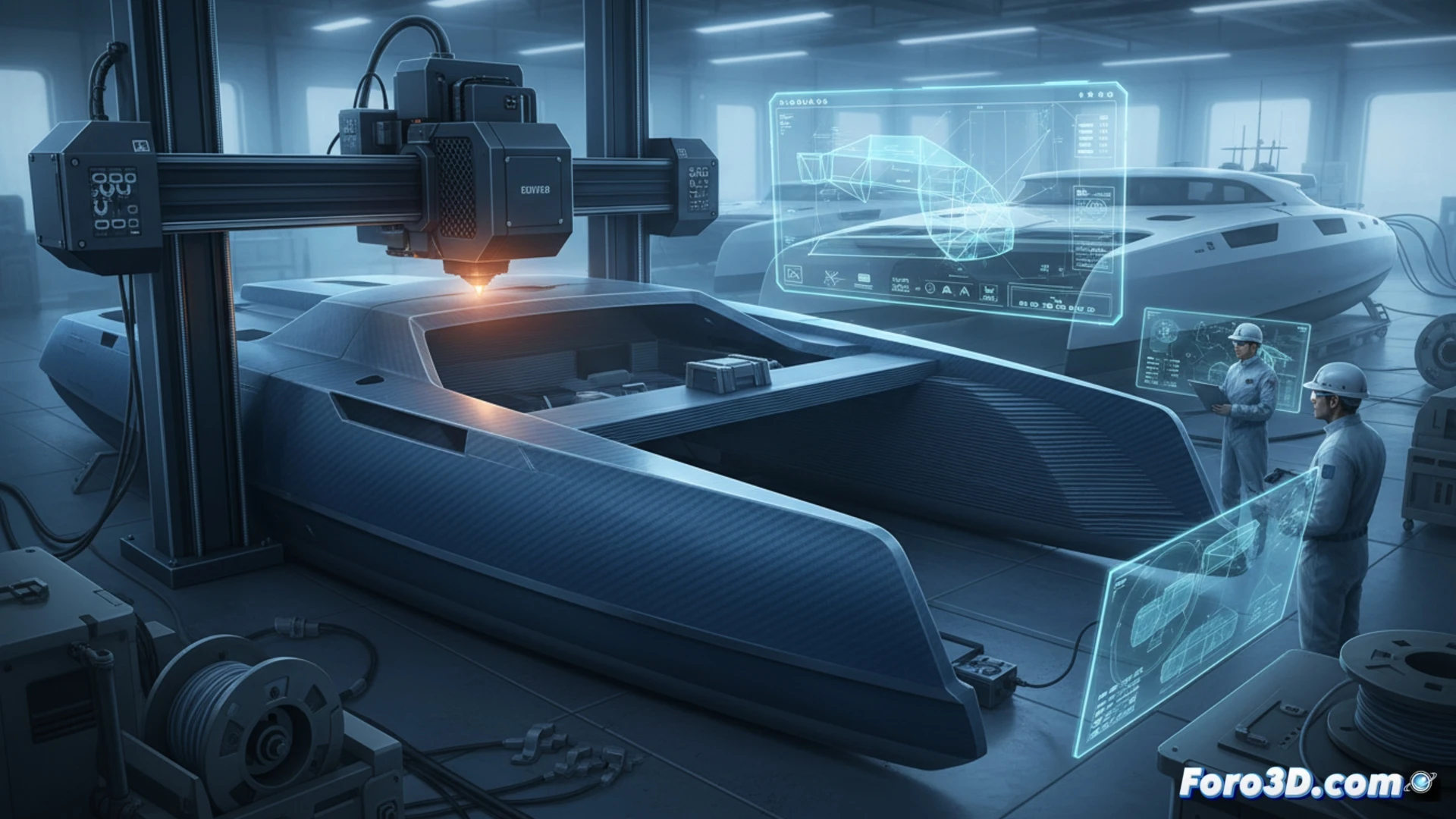
The Miami-based company E-Force Marine is changing its nautical development process. For its upcoming electric catamaran, they have invested in industrial 3D printing to manufacture the hull mold. This digital method replaces the traditional construction of physical prototypes, seeking greater iteration speed and hydrodynamic geometry adjustment.
From Digital to Mold: Modularity and Geometric Adjustment ⚙️
The strategy is based on printing modular sections of the main mold. This allows modifying the design in software and quickly producing the updated mold parts, facilitating the optimization of hydrodynamic efficiency. The goal is to refine the hull to maximize the range of electric propulsion. Prototype manufacturing plans are set for 2026.
Goodbye to Wood and Putty: Now the Problem is the Printer's Buffer 😅
With this system, engineers will no longer spend weeks hand-modeling or dealing with resin and fiber smells in the first mold. Their new nightmare will be waiting for a room-sized printer to complete a module, while checking a progress bar on a screen. That said, design errors are corrected with a click instead of a hammer.