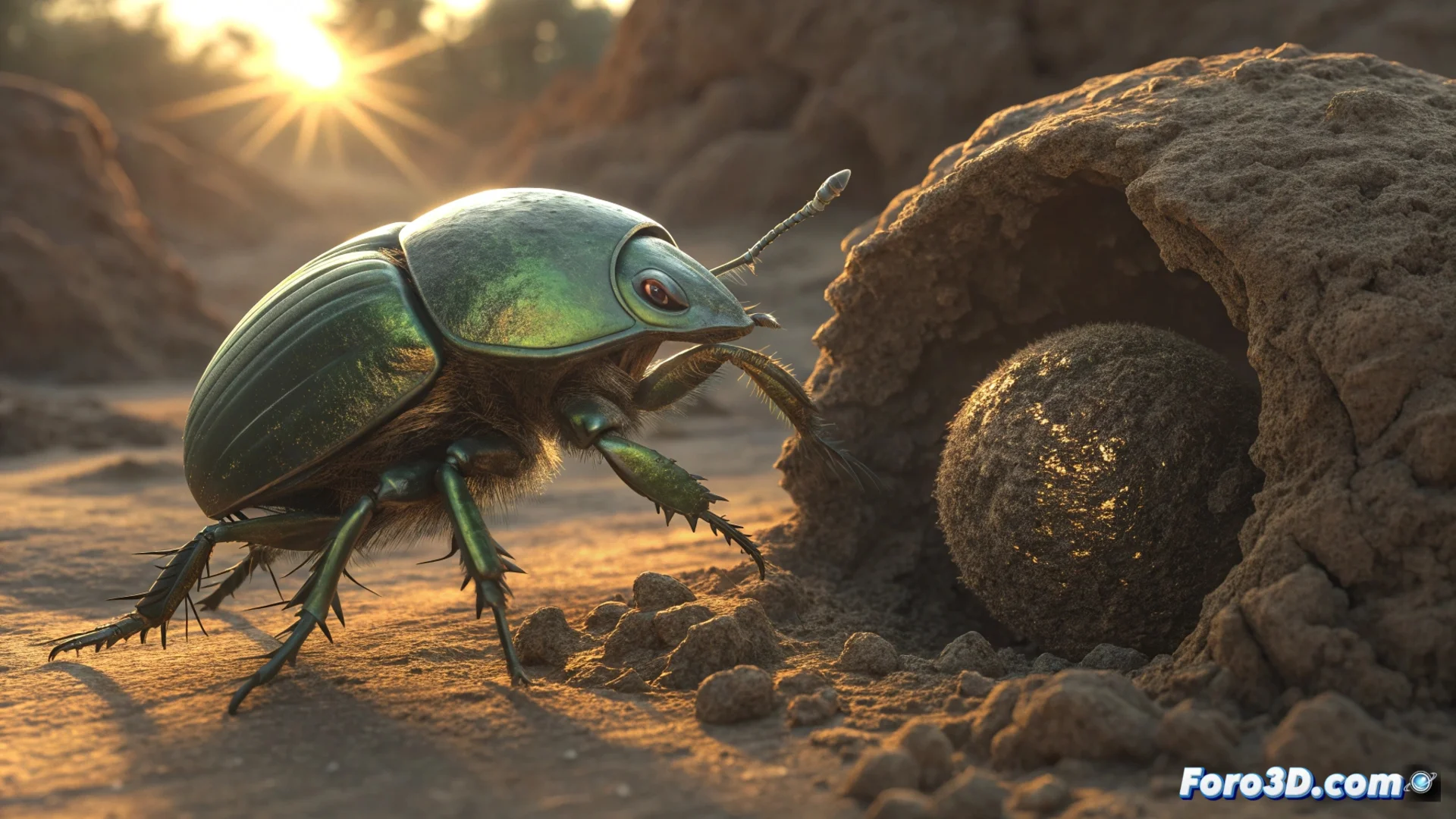
Dung Beetles Dig Deeper to Combat the Heat
Think of a dung beetle, an essential worker that recycles nutrients. Its main task is to bury a ball of dung so its offspring can grow safely. However, with a warming planet, its traditional method fails. The solution, according to research cited in Science News, is as simple as it is brilliant: dig deeper 🐞.
The Strategy of Building an Underground Shelter
Facing scorching heat, these insects from temperate climates do not freeze. They opt to make deeper tunnels. It's comparable to seeking the coolness of a basement on a sweltering day. By placing their vital resource farther from the surface, the larvae grow in an environment with stable temperature, which dramatically increases their chances of survival. It's a direct and highly effective behavioral change.
Key Details of This Adaptation:- The beetles actively modify the depth of their nests in response to heat.
- Deeper soil acts as a natural thermoregulator, protecting the offspring.
- This behavior is an immediate response to environmental thermal stress.
Nature teaches us lessons in resilience from the humblest foundations.
The Vulnerability of Tropical Dung Beetles
The most intriguing finding shows that this behavioral flexibility is not universal. Dung beetles inhabiting tropical regions, where heat is constant, do not adjust the depth of their burrows. They maintain a rigid strategy, which could put them at serious risk from more intense and frequent heat waves.
Critical Differences Between Populations:- Temperate species: show behavioral plasticity, adapting by digging deeper.
- Tropical species: have a fixed behavior, do not change their nesting habits.
- This contrast defines their potential to survive climate change.
A Lesson in Adaptation from Underground
In the struggle to persist, even the smallest ecosystem engineers deploy ingenious tactics. While some evolve their behavior, others risk being left behind. This phenomenon underscores how global warming impacts life's networks in complex and unequal ways, even beneath our feet 🌍.