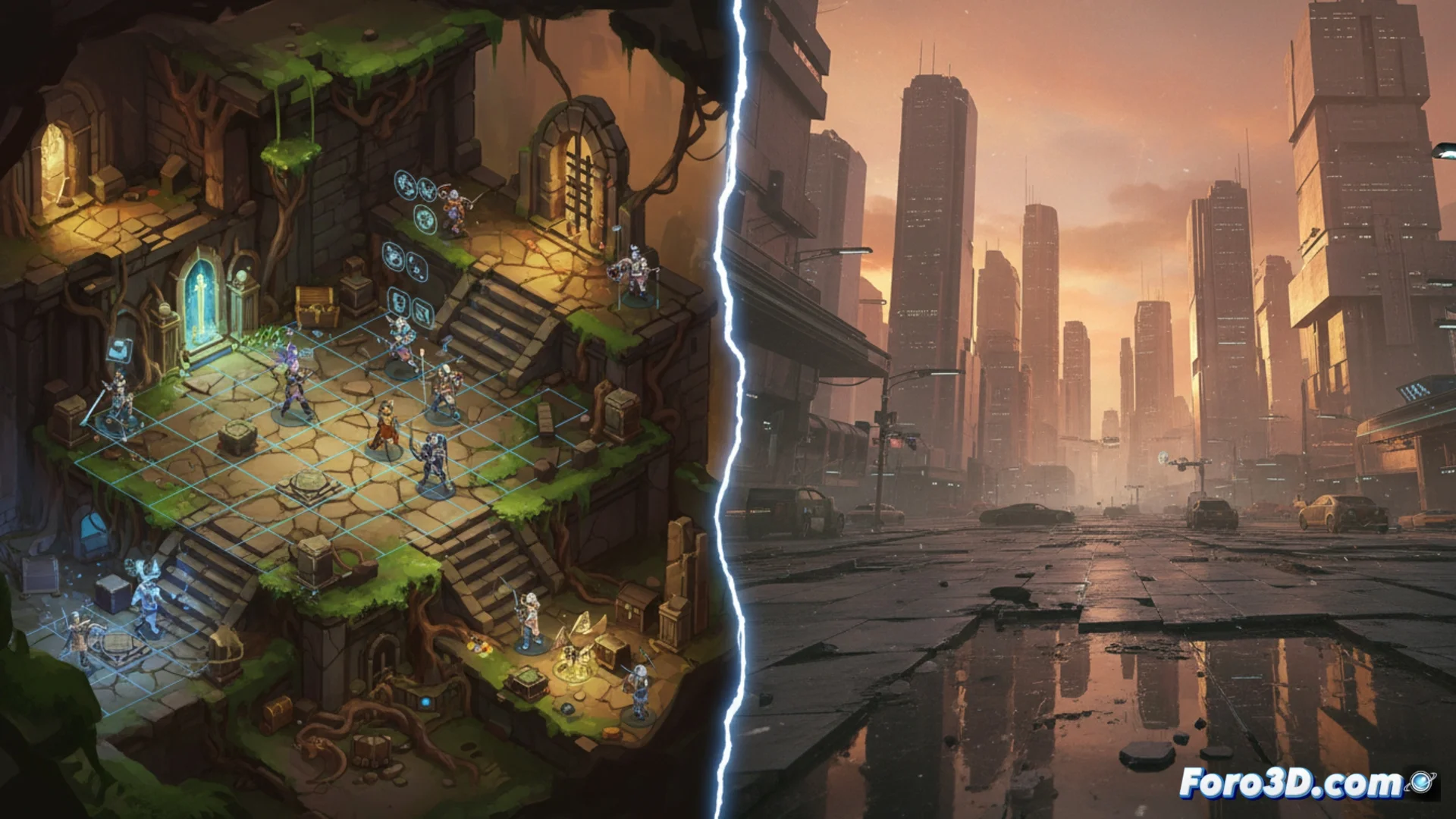
Divinity 4.0 vs Unreal Engine: engines for different purposes
In the world of video game creation, choosing the base technology is a crucial decision. Two names that often come up in the conversation are Divinity 4.0, Larian Studios' internal engine, and Unreal Engine, Epic Games' giant. Although both serve to build interactive experiences, their philosophies and applications are radically different. 🎮
Divinity 4.0: a specialized engine for role-playing adventures
Larian Studios has built and refined Divinity 4.0 over years, specifically to power its titles, such as the acclaimed Baldur's Gate series. This engine does not aim to be a universal solution; instead, it focuses on simulating complex interactive worlds with enormous density. Its architecture is designed to masterfully handle turn-based combat systems, detailed physics for every object in the environment, and deep narrative logic that connects every player decision to the world. It is optimized to produce isometric role-playing adventures where almost any element can be interacted with.
Key strengths of Divinity 4.0:- Simulation of complex systems: Efficiently manages the interconnection between narrative, combat, and environmental physics.
- Focus on one genre: Offers tailor-made tools for developing and polishing tactical isometric role-playing games.
- Advanced narrative logic: Allows weaving story branches that react coherently to user actions.
Choosing an engine is like choosing a tool: there's no point in having the shiniest hammer if what you need is a screwdriver.
Unreal Engine: the general-purpose platform
Developed by Epic Games, Unreal Engine represents the opposite standard: a broad and modular platform that seeks to serve the entire industry. Its greatest power lies in the graphics department, with cutting-edge tools for real-time rendering, such as the dynamic global illumination system Lumen and Nanite, which allows using virtually unlimited geometry. Its flexible architecture adapts to a huge range of genres, from first-person shooters to vast open worlds. This ecosystem is complemented by an extensive asset store and a licensing model that makes it accessible.
Main features of Unreal Engine:- Next-generation graphics: Integrates technologies like Lumen and Nanite for impressive visual fidelity.
- Modularity and adaptability: Its base allows building experiences of any genre, but requires configuring game systems from scratch.
- Robust ecosystem: Features a large community, asset marketplace, and comprehensive multi-platform support.
Which one to choose? The decision depends on the project
Comparing these engines directly makes no sense, as they respond to opposite needs. Divinity 4.0 is a specialized and fine-tuned solution for a very specific type of game, which can accelerate and optimize development within that niche. Unreal Engine offers enormous flexibility and cutting-edge graphical resources, but demands that the team build or adapt many systems starting from a more generic base. The final choice for a developer boils down to one question: do you prioritize the efficiency of a tailor-made technology for a specific genre, or do you value the freedom and resources of a general multi-platform engine more? The right tool totally depends on the job at hand. ⚙️