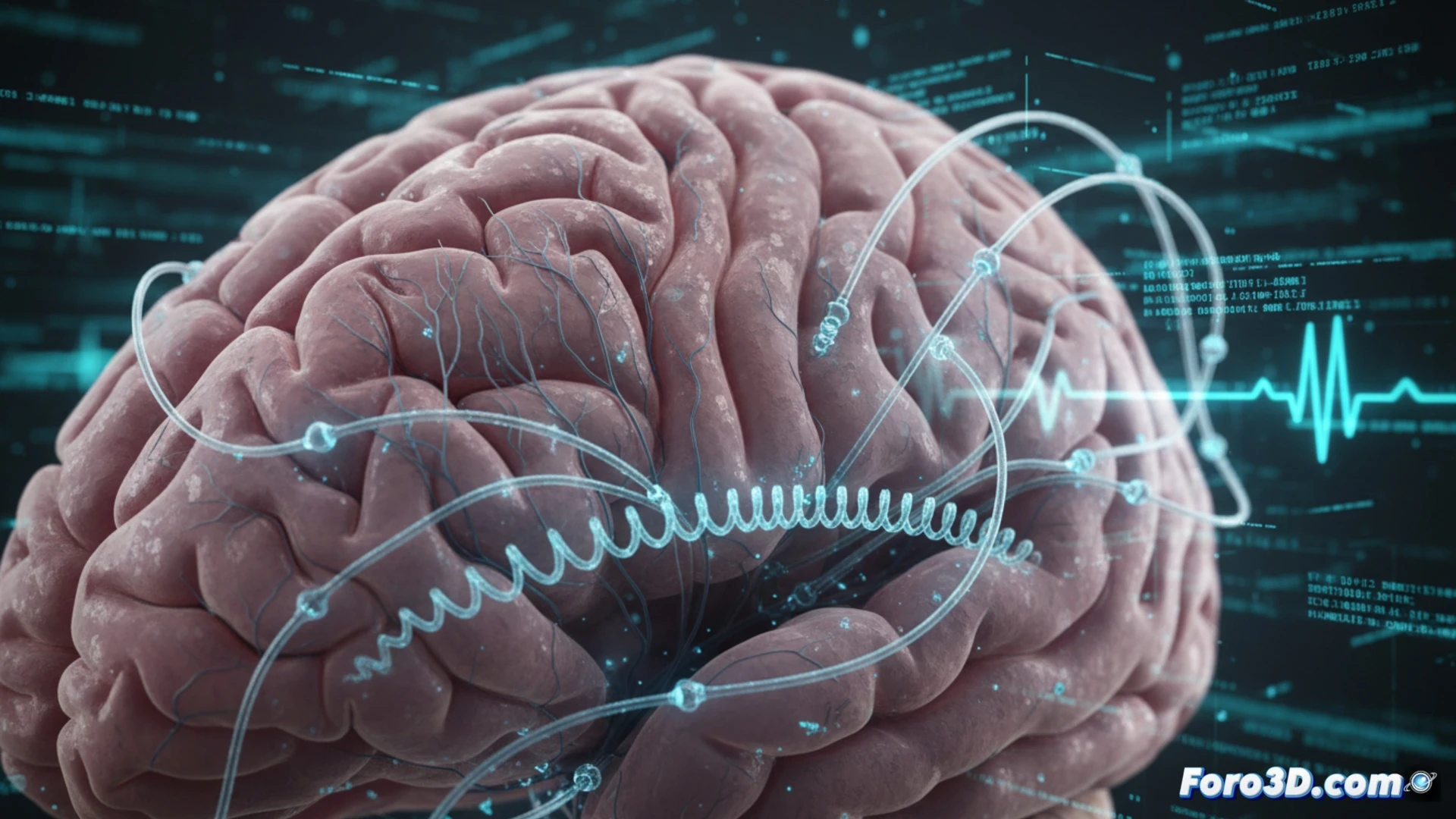
Direct Brain Connection: Flexible Electrodes to Link Mind and Machine
What if we could link our brain directly to a computer to cure diseases or control artificial limbs? 👨⚕️🧠 What seemed like science fiction, a team of scientists in China has brought it closer to reality with a crucial advance in safety and efficacy.
The Challenge of Rigidity in a Dynamic Environment
The main obstacle has always been the materials. Conventional microelectrodes are thin but inflexible structures. Our brain, on the other hand, is a malleable organ that pulses with every heartbeat and respiratory cycle. Introducing a rigid element is comparable to inserting a rod into a gel: it generates friction, stretches the tissue, and ends up damaging neurons or disrupting electrical communication. The Chinese innovation lies in creating electrodes that are flexible and stretchable, similar to a microscopic elastic band, capable of adapting to natural movements without causing damage. 🤯
Key Data on BCIs:- Brain-computer interfaces or BCIs are no longer a theoretical concept; they are actively used in laboratories to study pathologies like epilepsy or Parkinson's.
- This technical progress addresses the main impediment for these systems to be stable long-term.
- It could enable a person with reduced mobility to operate a robotic arm precisely for prolonged periods, without the sensors becoming misaligned and corrupting the signal.
The essence of connecting the mind with technology does not always lie in the ability to process data, but in ingenious solutions like making components elastic.
Impact Beyond the Laboratory
This technological leap goes beyond basic research. By solving the problem of mechanical biocompatibility, it opens doors to revolutionary clinical applications. The possibility of implanting devices that monitor or stimulate neural activity continuously and safely changes the paradigm for treating neurological disorders. 🚀
Key Features of the New Electrodes:- Dynamic Adaptability: They deform along with the brain tissue, minimizing the inflammatory response.
- Stable Conductivity: They maintain a reliable electrical connection despite constant movements.
- Increased Durability: Their design reduces degradation due to mechanical fatigue, promising a longer lifespan.
Conclusion: Flexibility as the Engine of Progress
It is revealing that the determining factor for merging mind and machine is not just creating more powerful algorithms, but engineering physical components that adapt to biology. Sometimes, the most significant technological advances come from observing nature and learning to imitate its plasticity. This development brings us closer to a future where interacting with devices through thought will be an everyday and safe tool in medicine and rehabilitation. 💡