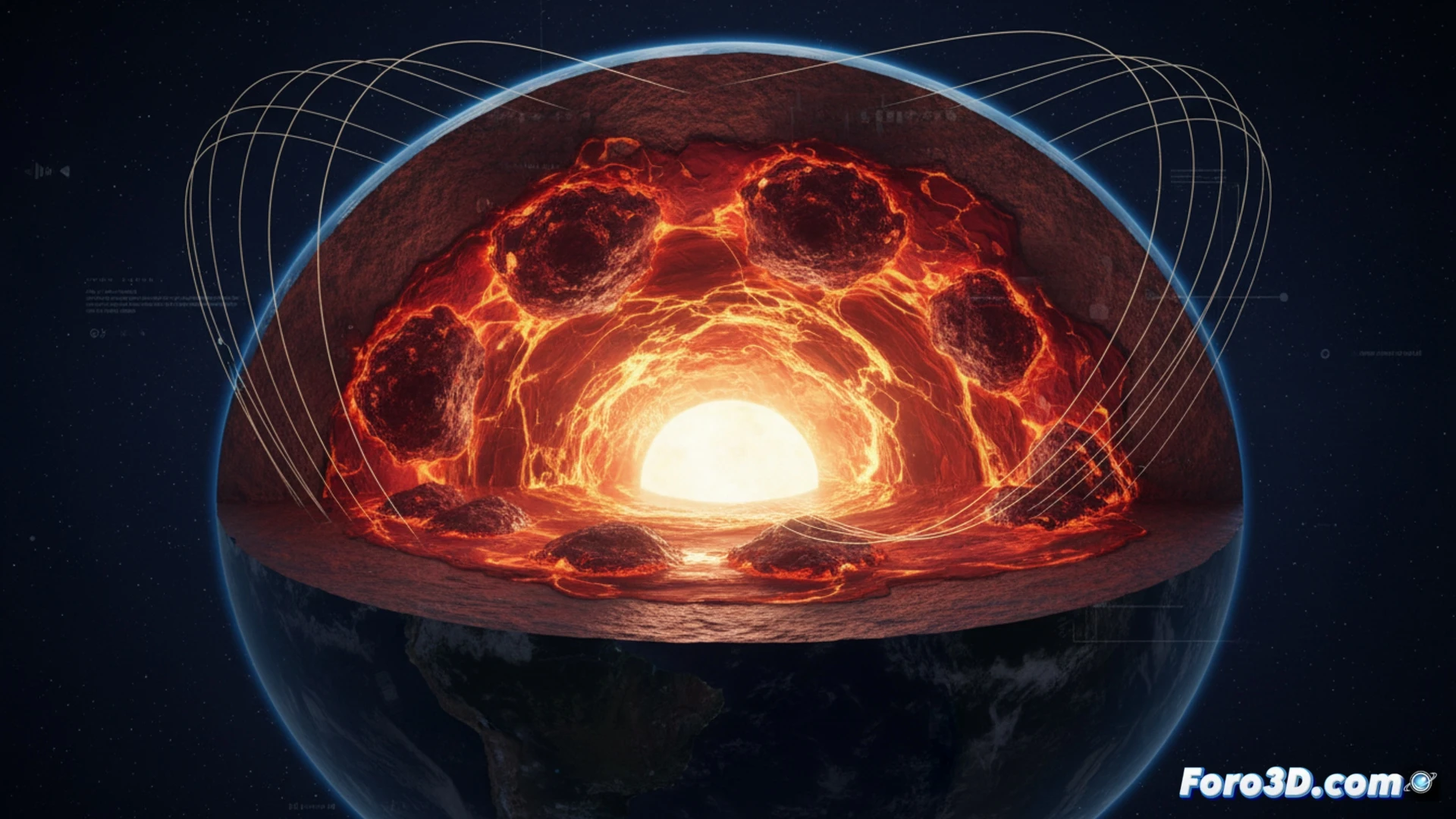
Recent research points to large thermal anomalies at the core-mantle boundary, known as hot spots, which may have influenced the behavior of the Earth's magnetic field throughout geological history. These structures, linked to deep mantle plumes, would alter the heat flow in the outer core, affecting the dynamo that generates the field. This offers an explanation for certain anomalies detected in paleomagnetic records.
Computational Modeling and Paleomagnetic Data Analysis 💻
The study of this phenomenon is based on the combination of seismic tomography, which reveals deep structures, with numerical simulations of the Earth's dynamo. Computational models incorporate these thermal anomalies as asymmetric boundary conditions, simulating their effect on core convection. By comparing the results with data on past magnetic reversals and excursions, correlations are sought to validate the hypothesis.
The Earth's Core Has Its "Hot Days" and It's Noticeable 🌡️
It seems that the planet's heart also suffers from hot flashes. When those thermal plumes decide to act up, the internal dynamo gets disrupted like an engine with a loose wire, and the Earth's compass starts doing weird things. One thinks the magnetic field is a stable shield, and it turns out it has its whims, caused by what amounts to a heat stroke 3000 km deep. Good thing these episodes are geologically brief; otherwise, we'd have to learn to navigate with a map that changes every millennium.