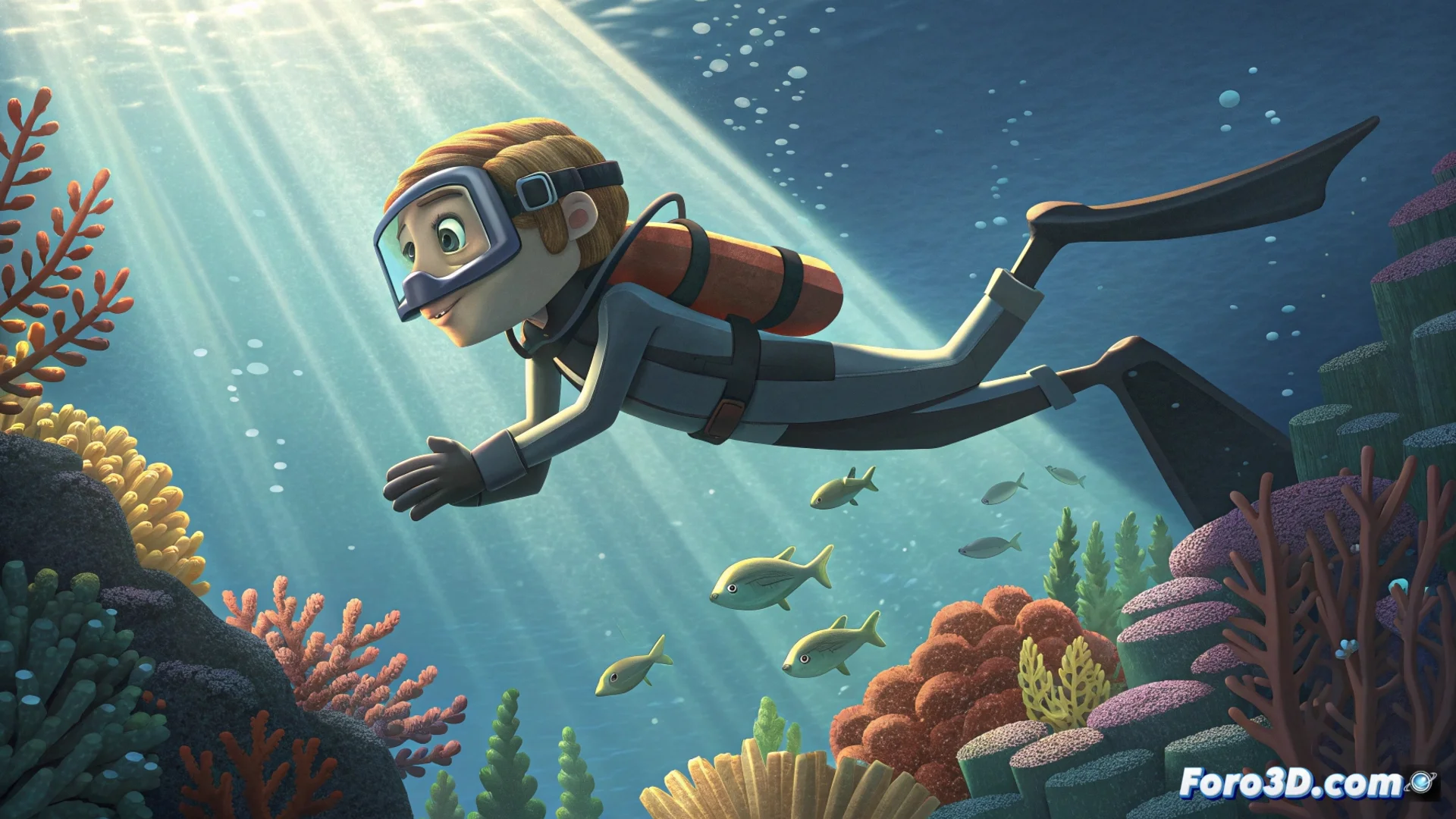
Dave the Diver: how Unity fuses 2D pixel art with 3D elements
The development of the acclaimed video game Dave the Diver relied on the powerful Unity engine. This technical choice was key to handling all the game logic, its physics system, and the coherent integration of the graphical components. 🎮
The strategic choice of the graphics engine
The development team bet on a main visual style in 2D, but with an innovative twist: it subtly incorporated scenarios and objects modeled in three dimensions. This decision was not casual; it sought to enrich the visual experience by adding a sense of depth and layers, without distorting the retro aesthetic that defines the project.
Advantages of this combination:- Efficiently manage logic and physics using Unity's tools.
- Create backgrounds with volume that visually separate different planes of action.
- Maintain the pixel art identity while adding visual complexity.
The fusion of 2D sprites with 3D backgrounds demonstrates that visual innovation does not always require abandoning classic artistic roots.
The detailed art of pixel art
The graphical aspect stands out for using 2D sprites made with a high-definition pixel art technique. The animations are notably fluid, and the characters convey a wide variety of emotions. Although the style imposes a limited resolution, the inclusion of three-dimensional components in the scenarios helps give more richness and context to each scene. 🖌️
Characteristics of the visual style:- High-quality pixel art with a carefully selected color palette.
- Expressive and fluid animations for all characters.
- Backgrounds that use 3D geometry to improve composition and depth.
Tools to bring pixels to life
To draw and animate the pixel art sprites, it is very likely that the artists used the specialized software Aseprite. This tool is a favorite in the industry for projects that require this very particular style. Once finished, all these graphical resources were imported into the Unity project, where the programmers assembled the game, coded the behaviors, defined the interactions, and optimized the final performance. ⚙️
A curious detail is that the protagonist faces marine creatures whose pixel design can show more detail and personality than some generic three-dimensional models from other titles. This underscores a powerful idea: a well-placed pixel can have more expressive power than a soulless polygon.