Czech authorities have launched a pilot project to evaluate the feasibility of increasing the speed limit on highways. On a 50 km stretch of the D3, between Tábor and České Budějovice, driving at 150 km/h is permitted when conditions are favorable. The system uses variable signs that adjust the limit to 100 or 130 km/h based on weather, traffic, and visibility. The goal is to analyze the impact on safety before considering an extension.
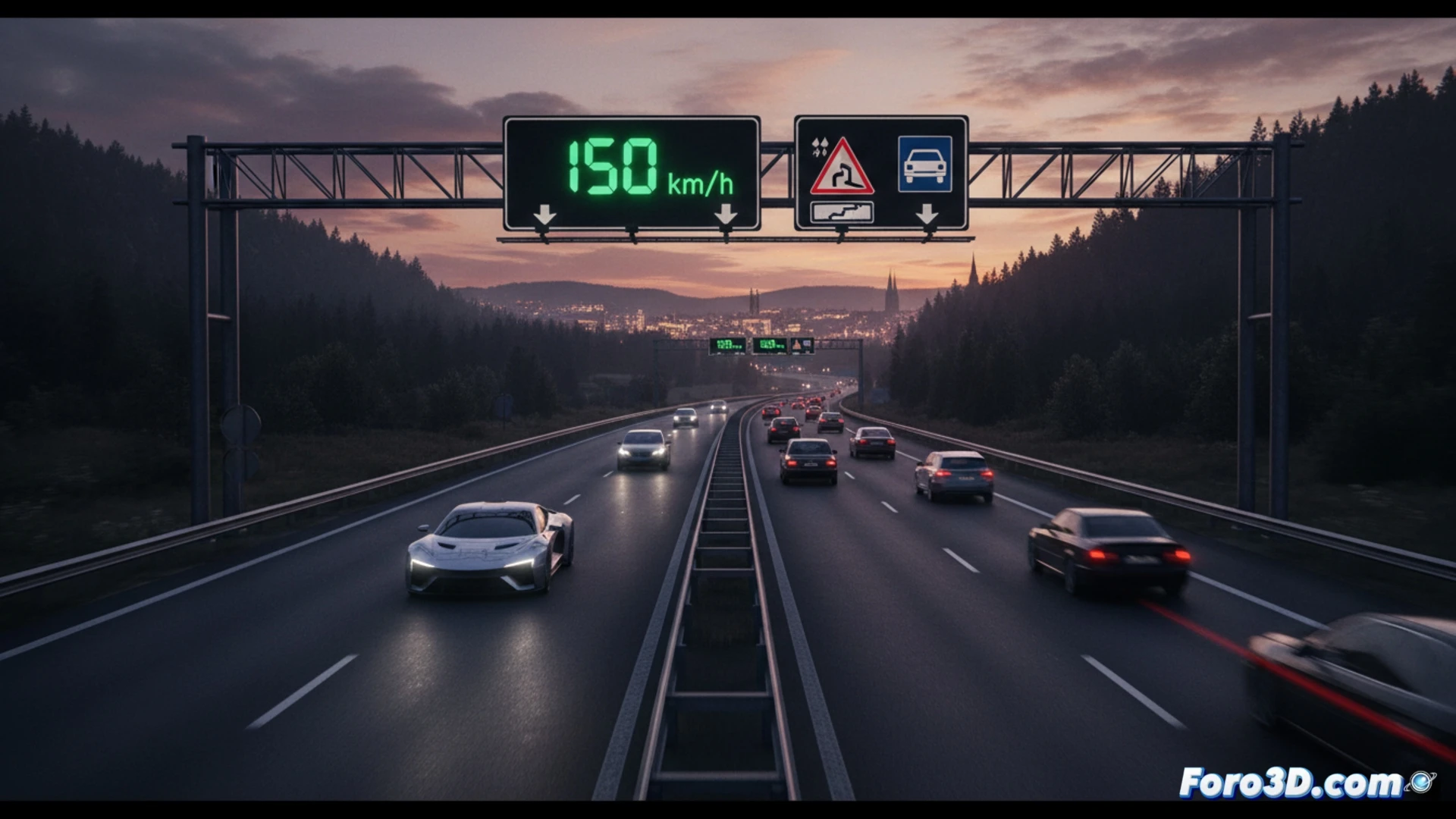
A Dynamic System that Adapts the Limit in Real Time ⚙️
The core of the project is a network of sensors and variable speed signs connected together. These devices collect data on traffic intensity, precipitation, visibility, and road surface condition. A control center processes the information and automatically modifies the limits displayed on the panels. This technology aims to maintain flow under optimal conditions, while reducing speed preventively when risk factors increase, attempting to balance mobility and safety.
Is the Future Going Faster... Until Your GPS Starts Stuttering? 🗺️
Imagine the scene: you're enjoying 150 km/h, feeling like you're on a racetrack, when suddenly the sign flashes and orders you to drop to 100. Your navigator panics, recalculating the arrival time every two seconds. It's the new Czech adaptive driving exercise, where the only constant overtaking is that of your own patience. A system so smart that it might even suggest rolling down the window to check if it's raining, in case the sensors fail.