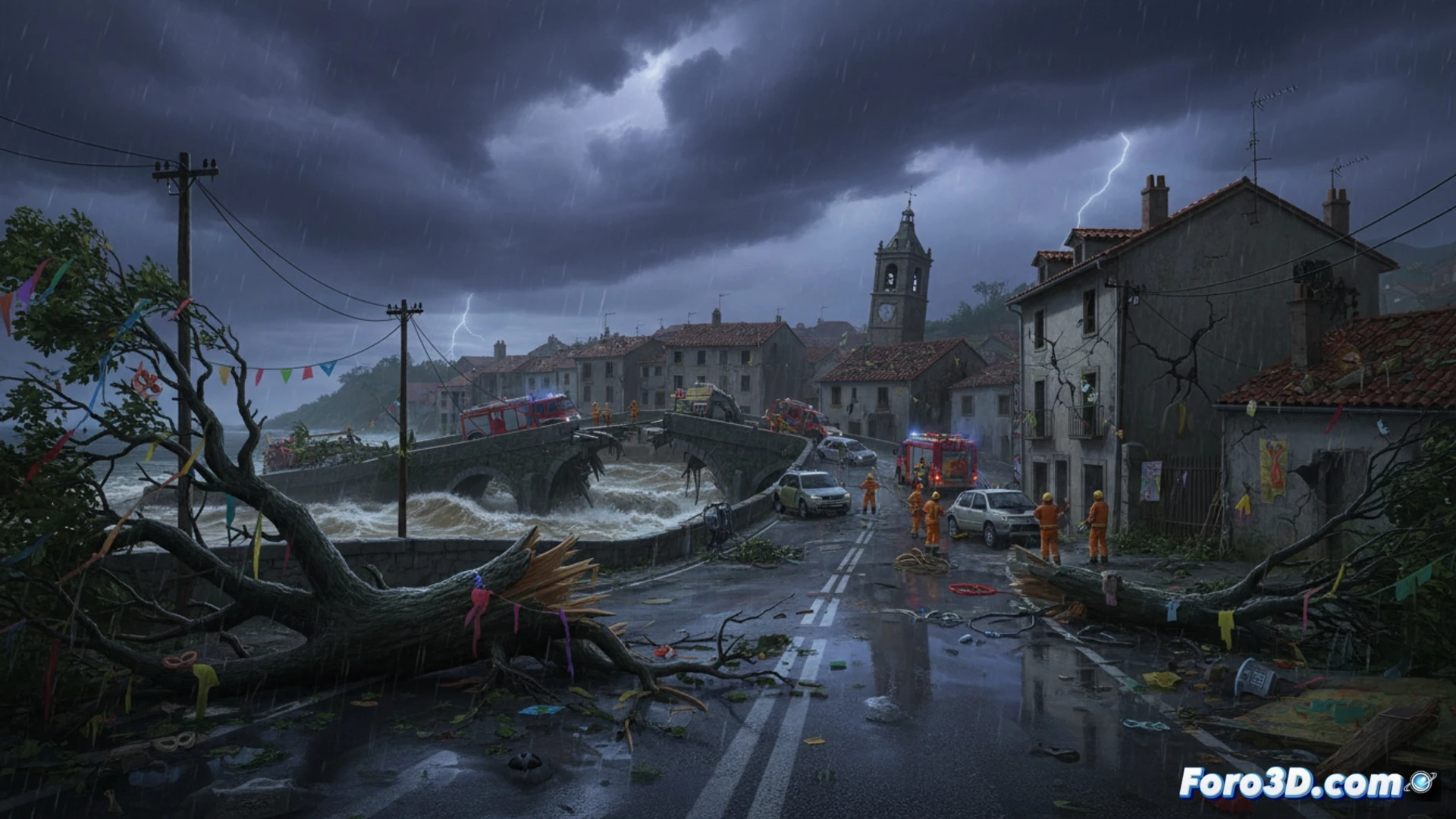
At the end of the carnival festivities, Cantabria faced a severe weather episode. A cyclone with strong winds and persistent rains hit the region, generating a scenario of multiple incidents. Emergency services worked on resolving road cuts, fallen trees, and damage to infrastructure and buildings. The event disrupted normality and forced the suspension of festive acts, evidencing the effects of these phenomena.
Meteorological modeling and early warnings in extreme phenomena ⚠️
The prediction of these events is based on numerical models that process data from satellites, ocean buoys, and ground stations. Current computing power allows running prediction ensembles, varying initial conditions to estimate probabilities. However, the orographic complexity of regions like Cantabria requires high-resolution models. Systems like MeteoAlerta or AEMET-Web issue warnings, but effective communication to the population remains an operational challenge.
The wind took more than the costumes 💨
After the carnival, where the only planned chaos was fun, the cyclone decided to impose its own afterparty. The trees that didn't dance chirigota ended up doing a handstand in the middle of the road, and some tiles opted for sudden freedom, emancipating themselves from the roofs. Nature, in a clear excess of zeal, interpreted the phrase spring cleaning too literally. A reminder that, sometimes, the wildest party is thrown by the atmosphere.