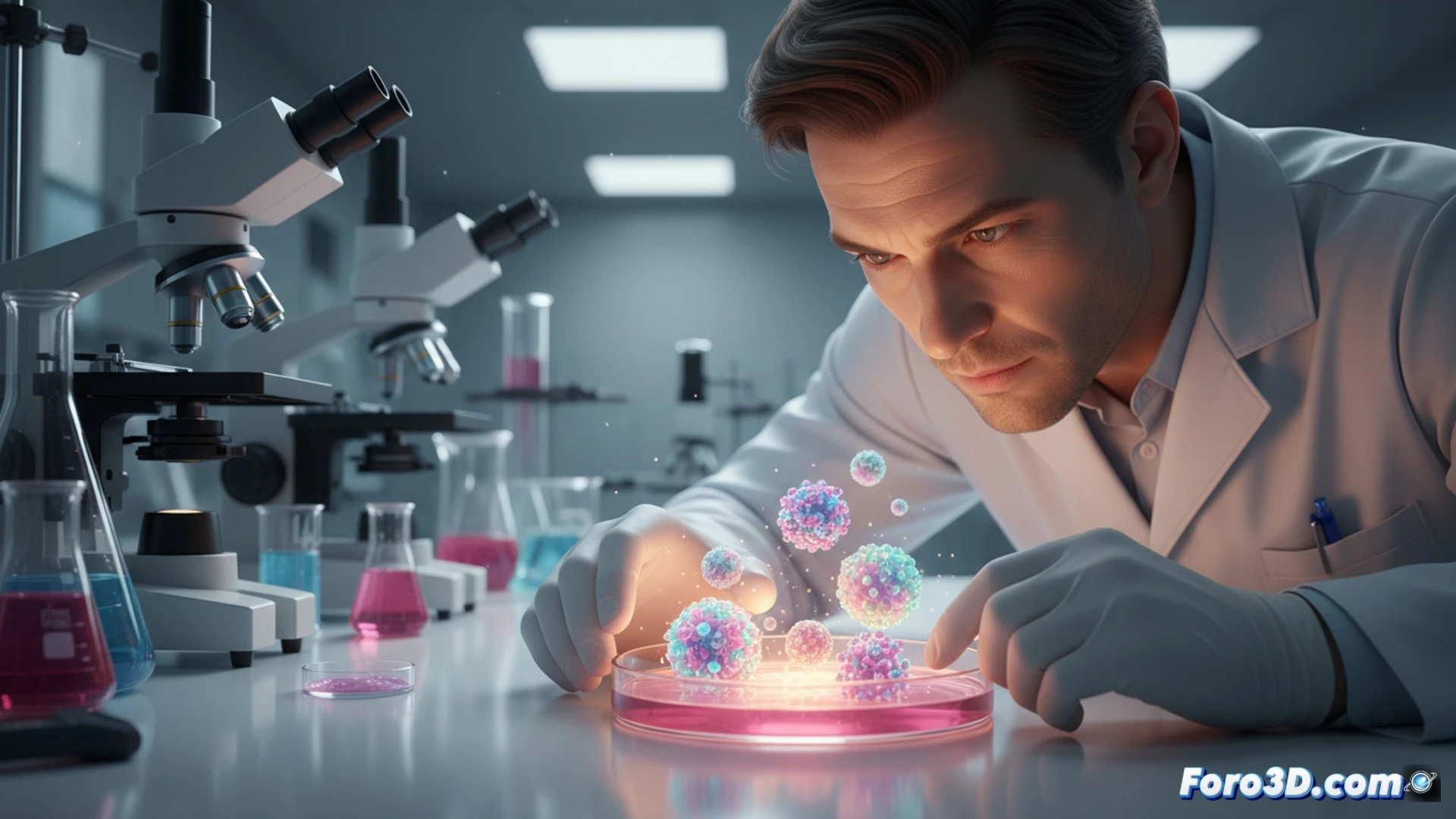
Growing Miniature Organs: Science or Science Fiction
Can you imagine being able to study human tissues without relying on animal models? 👩🔬 At the University of León, this is no longer a hypothesis, but a reality taught in a specialized course. Participants learn to produce spheroids and organoids, three-dimensional cellular replicas that mimic the function of our organs.
From the Laboratory to a Functional Model
The process is fascinating: instead of using a rodent to test a compound, it can be evaluated in a human "mini-intestine" created from cells. Participants manipulate both human and mouse cell lines to build these living architectures. It's like assembling with biological blocks, but with a specific medical purpose.
What advantages do these 3D models offer?:- They allow testing drugs in a more specific way for our species.
- Their creation helps drastically reduce the number of animal experiments.
- They provide more reliable results for understanding how human tissues respond.
The future of biomedical research not only lies in chemistry, but also in mastering the art of growing small cellular universes.
Applications Beyond Teaching
These methods are not limited to classrooms. Research projects in
- Research on complex diseases and development of personalized therapies.
- Evaluating the safety of new chemical and cosmetic compounds.
- Studying infection mechanisms and tissue regeneration.
A Microscopic Impact with Great Implications
It seems that the course of medicine is changing. It will not advance only with pills or scalpels, but also thanks to these micro-organs grown in a Petri dish. Who would think that something so small could transform the way we understand and cure the human body. 🔬