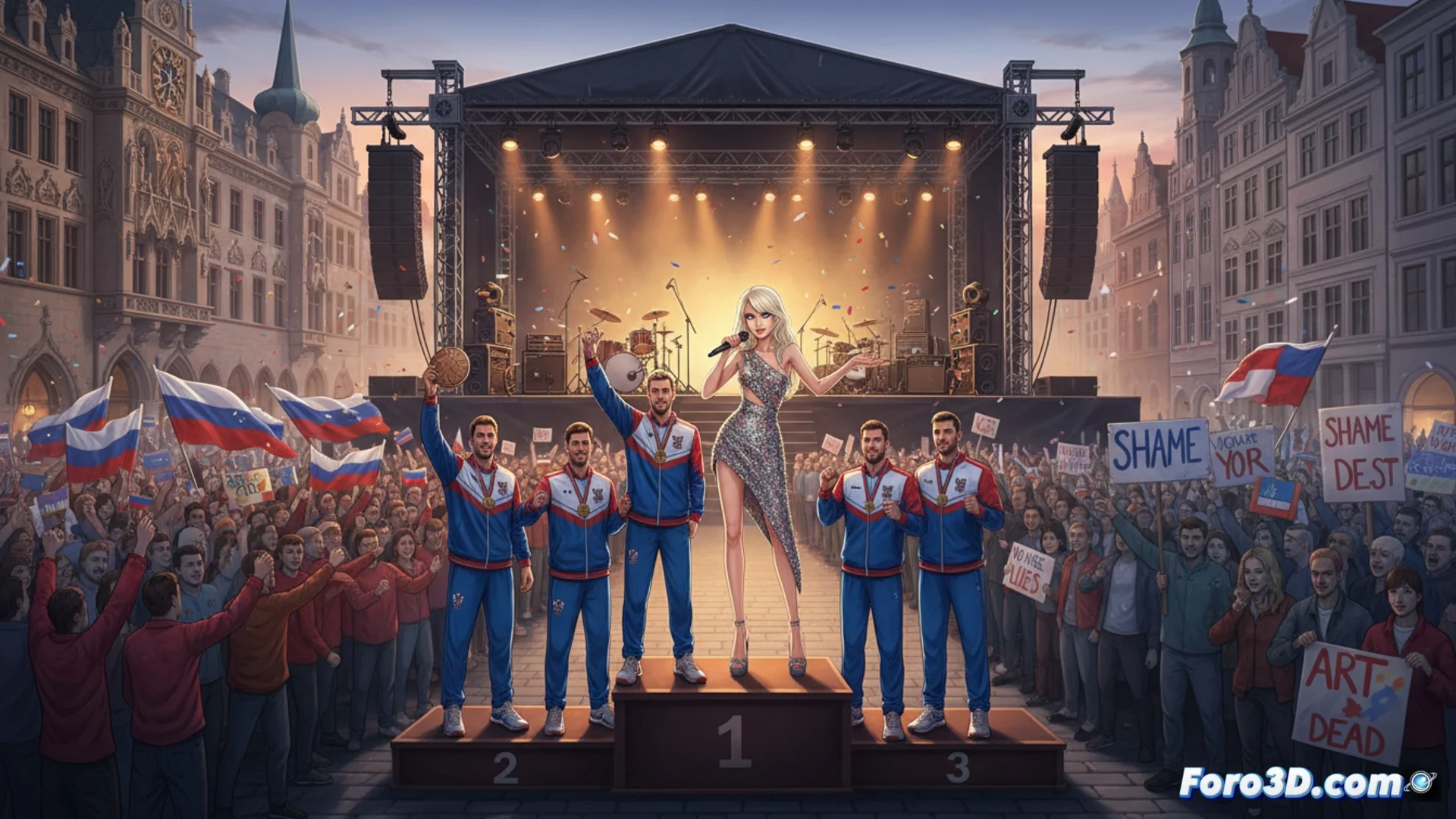
Croatia Celebrates Handball Bronze Amid Political Controversy
The triumphant return of the Croatian handball team with the bronze medal from the European Championship was quickly overshadowed by a dispute between institutions. What should have been a unanimous tribute to sporting success turned into a political battlefield 🏛️⚔️.
A Controversial Singer at the Center of the Conflict
The players and their federation requested that the singer Marko Perković Thompson, a figure linked to nationalism, participate in the welcome event in Zagreb. However, the City Hall of the capital, controlled by the opposition, refused to organize an event with him, arguing that his ideology fractures society.
Details of the initial blockade:- The request came from the athletes and their federation.
- The Zagreb city council rejected including the singer in the official program.
- The main reason was to avoid dividing the citizenry with controversial symbols.
The mayor accuses the Government of instrumentalizing sport for political purposes.
The Central Government Takes Control of the Celebration
In response to the municipal refusal, the national Government, of opposing political affiliation, decided to intervene directly. It took on the task of organizing the tribute in Ban Jelačić Square, the city's main space, and included the artist in the event. The central authorities defended that they were acting within the law to respect the athletes' wish and celebrate an achievement they consider to be of the entire nation 🇭🇷.
Actions of the executive:- Organized the event in a public square under municipal jurisdiction.
- Justified its intervention as a state celebration.
- Prioritized the express wish of the bronze medalists.
The Political Rift Becomes Evident
The response from the Mayor of Zagreb, Tomislav Tomašević, was forceful. He accused the Government of instrumentalizing sport to gain political advantage and of violating local autonomy by imposing an event in a public space without consent. The executive countered that managing this type of celebration corresponds to the central government. Thus, the medal, instead of uniting, highlighted the deep political fracture that exists in the country. While the players displayed their bronze, the discussion focused on who had the right to organize the party and choose the music, leaving the sporting merit in the background 🥉🔇.