Antibiotic resistance is a growing problem in hospitals, farms, and wastewater treatment plants. A team from the University of California in San Diego proposes a different strategy: instead of eliminating resistant bacteria, it suggests disarming them. The idea is to use CRISPR technology to eliminate the genes that grant them resistance, propagating this change in specific bacterial populations.
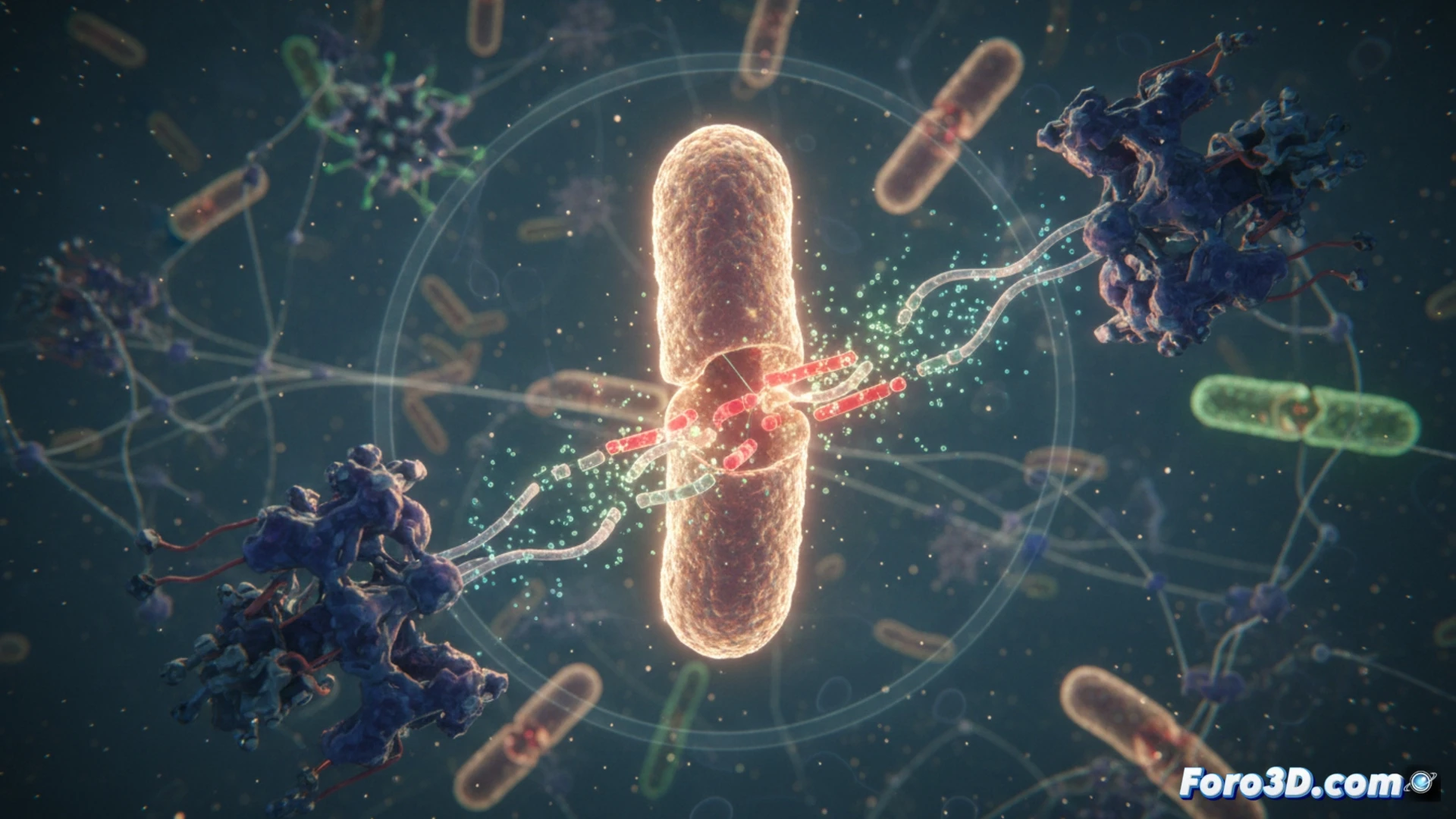
Bacterial gene drives: genetic engineering as a control tool 🧫
The approach is based on creating a bacterial gene drive. This system, inspired by natural mechanisms, uses CRISPR not only to cut the DNA of the resistance gene, but to ensure that the correcting sequence is inherited in a dominant manner. By releasing these tools in a controlled environment, such as a treatment plant, antibiotic susceptibility could be propagated in the bacterial population, reducing the global burden of resistance in a targeted way.
When bacteria cheat and science changes the cards on them ♟️
Bacterial evolution played its master card: resistance. Now, science responds with a board move: rewriting the rules of the game within the microbes' own genetic instruction manual. It's like, in the middle of a tournament, deciding to discreetly modify the video game's code so that your rival forgets how to shoot. An elegant solution, although it might make us think twice before complaining the next time a software update changes something without asking.