The recent escalation of tension between the United States, Israel, and Iran, with evacuations of diplomatic personnel and military deployments, transcends geopolitics. For 3D artists specialized in simulation or infographics, this context poses a visualization challenge. Recreating credible urban environments under conflict conditions, with dynamic lighting and destruction effects, requires specific technical mastery that is common in our forum discussions.
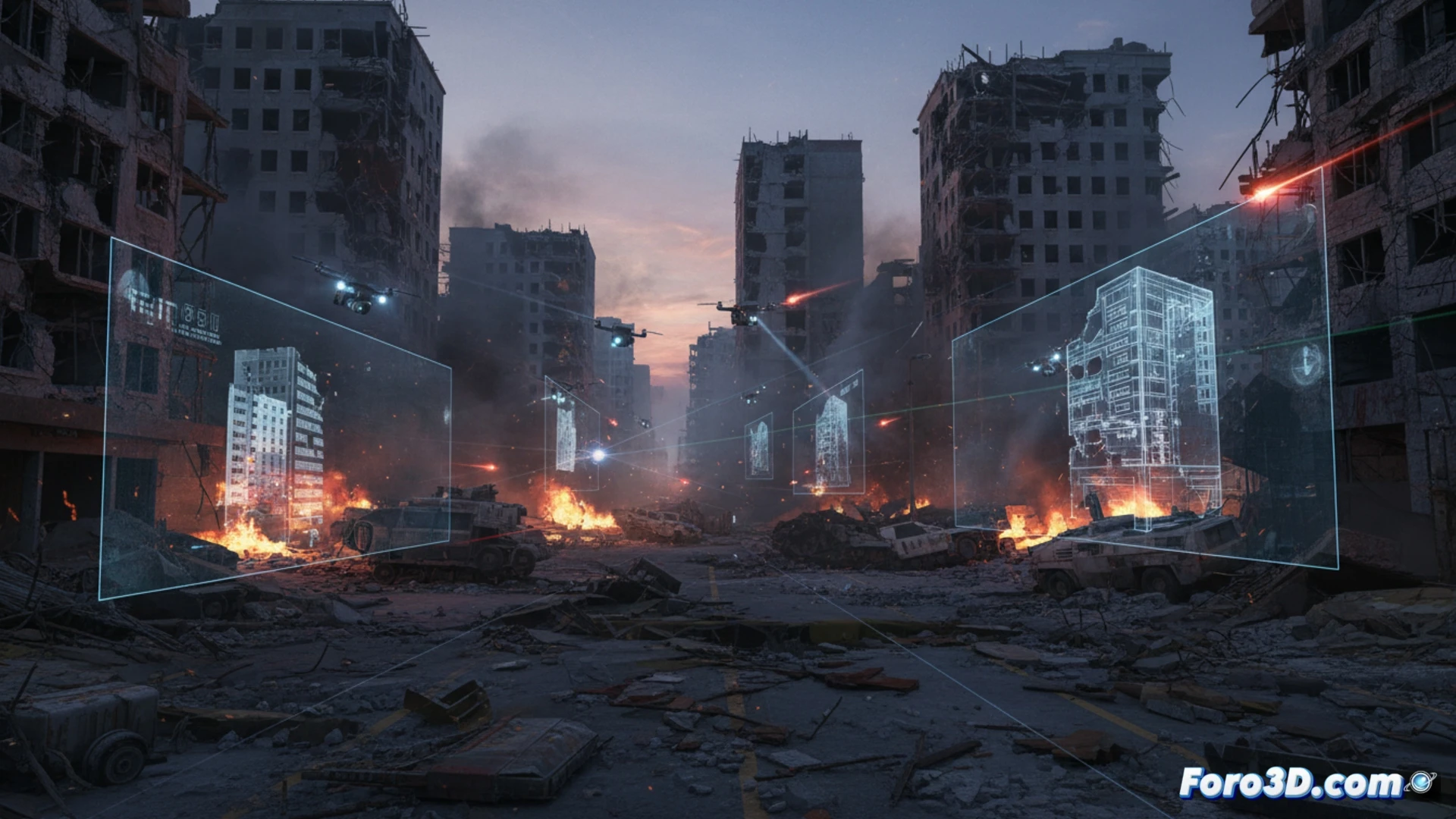
Techniques for War Environments: From Lighting to Particle Systems 💥
The credibility of these scenarios is built with layers of technical detail. Lighting, key to establishing the time of day or atmospheric state, requires advanced control of shaders and HDRIs. Destruction and visual effects, such as columns of smoke or fires, rely on robust particle systems and textures with displacement maps. The balance between high polygonization for architectural details and the use of procedural techniques to optimize performance is a constant debate in projects of this complexity.
When Your Render Takes Longer Than Geneva Negotiations ⏳
It's a moment for reflection. While diplomats celebrate rounds of conversations without clear progress, we can spend days adjusting a single particle system so that the smoke from a simulated explosion disperses convincingly. There is some irony in the fact that, sometimes, simulating a virtual conflict requires more negotiation with the software time than the attempt to avoid the real scenario. At least our renders don't issue ultimatums.