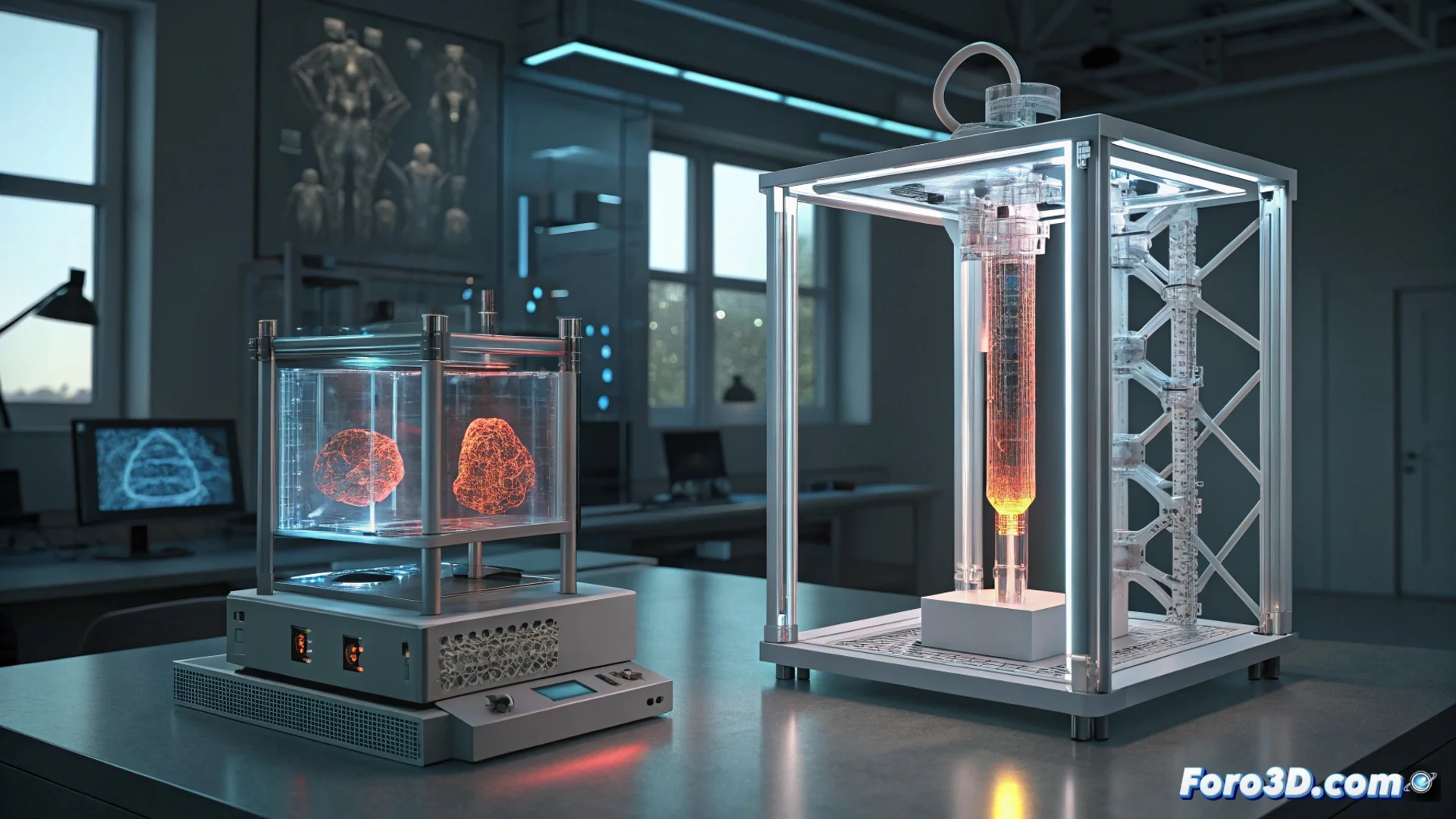
CompagOs Prints 3D Bone Models with Stem Cells to Study Diseases
The company CompagOs, a spin-off created in 2023 from ETH Zurich university, is generating three-dimensional replicas of human bone known as Bon3OID™. To achieve this, they use 3D bioprinting techniques that deposit human stem cells within a patented bio-ink. This special material causes the cells to transform into the cell types native to bone tissue and, additionally, attract others such as osteoclasts. In this way, they achieve a highly faithful emulation of the structure and function of a real bone in a controlled laboratory environment. 🦴
A System That Leaves Behind Flat Models and Animal Experimentation
This in vitro biomechanical environment is much more precise and can be consistently reproduced. Researchers have the ability to incorporate cancer cells or immune system cells into these models to simulate complex pathologies. The main goal is to detect bone anomalies, such as metastases or malformations, several months ahead of traditional imaging diagnostic methods. This platform aims to serve scientists and pharmaceutical companies to analyze how bone remodels and evaluate the efficacy of new drugs.
Main Advantages of the Bon3OID™ Platform:- Generates a realistic 3D environment that overcomes the limitations of two-dimensional cell cultures.
- It is a reproducible and ethical model that can reduce the need for animal testing.
- Allows modeling diseases by integrating different types of cells, such as tumor or immune cells.
While some debate whether bone is a living tissue, others are already printing it to act as such, with its own maintenance cells.
The Path to Clinical Validation and a Diagnostic Tool
CompagOs is working to clinically validate its technology and standardize how these models are produced. Its future goal is to commercialize the diagnostic tool Bon3OID™-DX by 2030. This in vitro system aspires to become a powerful platform for deeply understanding diseases that affect the skeleton and accelerating the discovery of effective therapies.
Phases of the Development Plan:- Clinical validation of the technology and manufacturing protocols.
- Standardize production to ensure uniformity and quality in the models.
- Launch to market the diagnostic tool Bon3OID™-DX toward the next decade.
Recreating Bone Complexity, Layer by Layer
CompagOs's initiative represents a significant advance at the intersection of bioengineering, 3D printing, and medicine. By recreating the cellular and mechanical complexity of bone, it opens a new avenue for researching and treating pathologies that are currently difficult to manage. Science, in this field, advances literally by building the tissue, bone by bone, from scratch. 🔬