The Dragons exhibition in Paris presents a deep vision of this figure in Chinese culture. It spans five millennia, from representations in jade and bronze to its use in calligraphy and imperial clothing. The exhibition, with pieces from the National Palace Museum in Taipei, challenges the Western view of the dragon as a destructive creature, showing its role as a symbol of vital energy, master of water, and cosmic harmony.
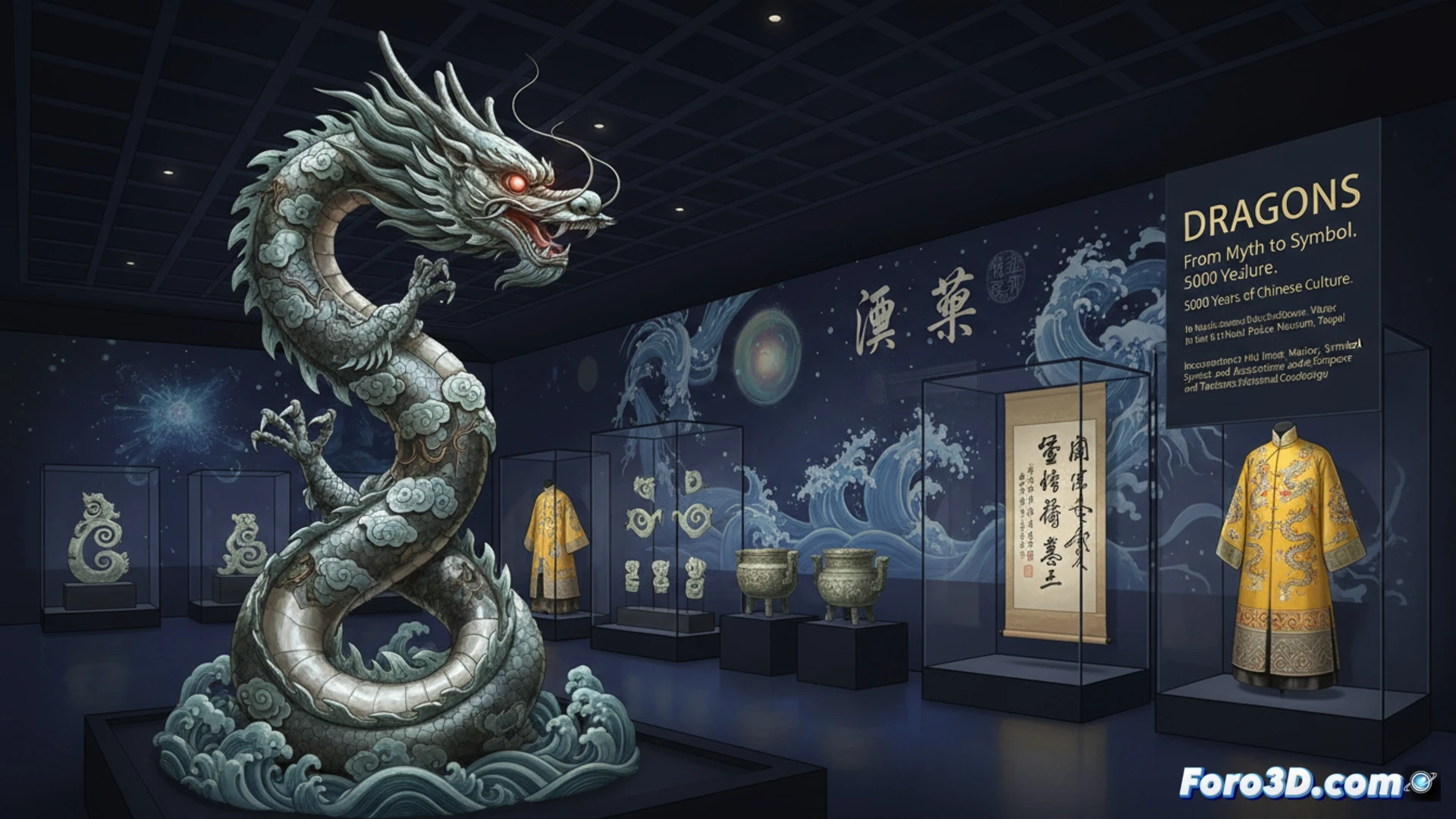
Rendering the Myth: The Technology Behind Contemporary Museography 💡
Exhibitions of this scale require precise technical development. Low lux lighting to protect ancient pieces, humidity and temperature control, and custom support design are fundamental. Signage and immersive projections that contextualize the objects rely on high-resolution digitization and 3D modeling work, processes that allow details to be shown without compromising the conservation of the originals.
Where is Smaug's Dragon? An Epic Localization Error 🤔
More than one distracted visitor might search, among the silks and bronzes, for some trace of a Western dragon lying on piles of gold coins. The disappointment is understandable: after five thousand years of history, one expects a dragon's resume to include at least one burned castle. But here there are only benevolent creatures that control the rain. Not a single looting manual among all the imperial paraphernalia. A lesson: check the mythological wiki before going.