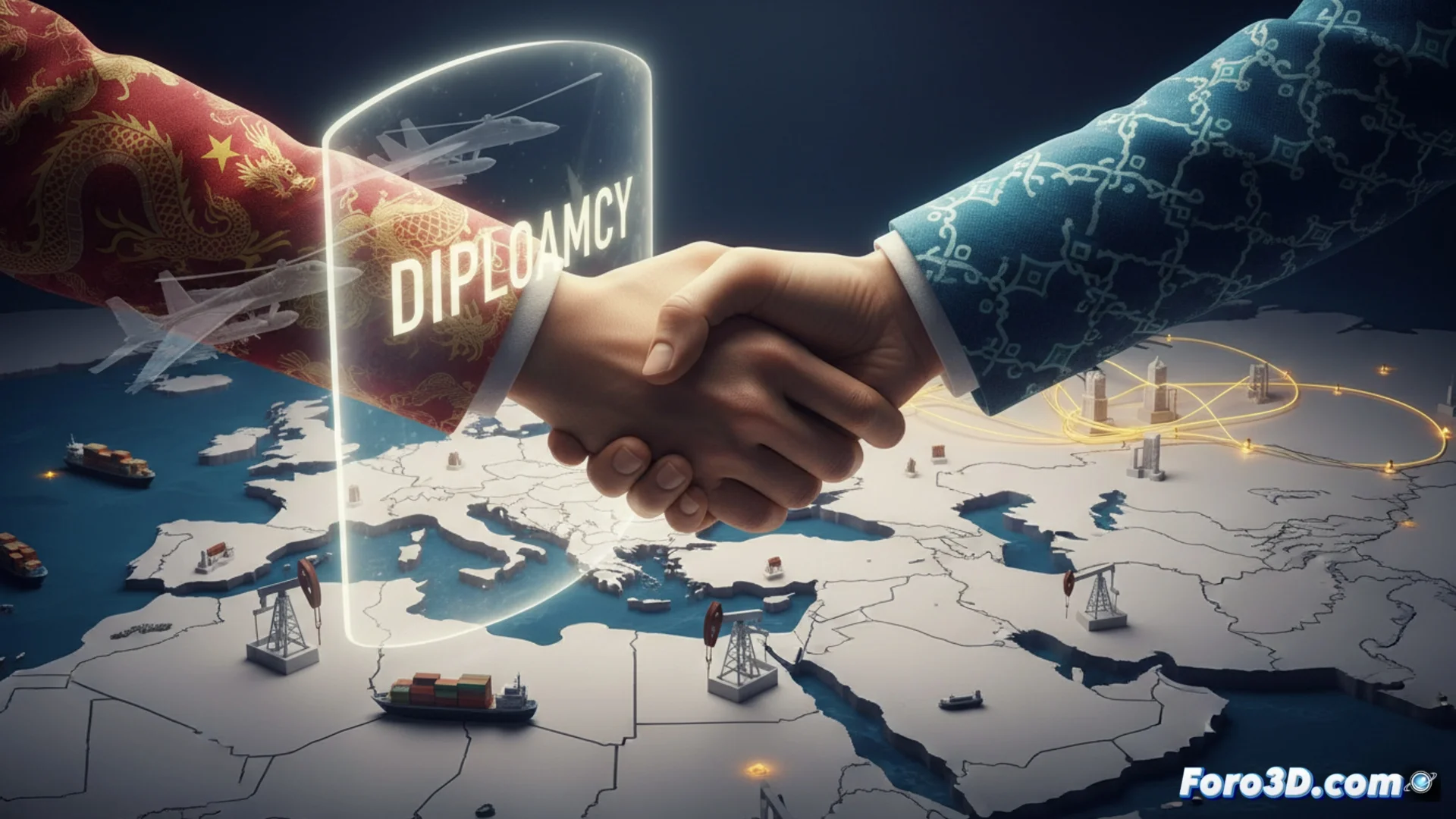
China Maintains Strategic Ties with Iran and Condemns U.S. Threats
The People's Republic of China has established a strategic alliance with the Islamic Republic of Iran. Consistently, the Chinese government rejects any warnings or military actions from the United States toward Iranian territory. Beijing urges to halt the escalation and seek a solution through diplomatic channels, while pointing out Washington's actions as contrary to international legal order 🌍.
A Pragmatic Support that Avoids Military Commitment
Geopolitical experts point out that it is unlikely that China will decide to involve its armed forces if the United States attacks Iran. Beijing's role in the Middle East region is defined more by countering U.S. unipolar initiatives and safeguarding its own economic interests and regional stability, than by offering a military defense guarantee to Tehran. Its level of support has been, so far, calculated and with clear limits.
The Pillars of China's Strategy:- Active Diplomacy: Oppose aggressions through international forums and promote dialogue.
- Deep Economic Cooperation: Expand ties in trade, energy, and infrastructure to bypass sanctions.
- Distance from Direct Confrontation: Avoid being drawn into an armed conflict with a power like the United States.
Sometimes, the best way to defend an ally is to ensure you don't have to do it personally.
The Materialization of Support: Economy and Politics
Chinese support is not just words. It has materialized in firm political backing against the international sanctions regime and in tangible strengthening of bilateral collaboration. This approach allows China to protect its vital interests in the region, which include energy supply and New Silk Road projects, while maintaining a position of non-alignment in direct military terms.
Key Areas of Bilateral Cooperation:- Trade Exchange: Maintain and expand the flow of goods between both nations.
- Energy Security: Ensure access to Iran's oil and gas resources.
- Political Coordination: Support each other in multilateral organizations like the UN.
A Calculated Stance for a Complex Scenario
In short, China's stance on the conflict between Iran and the United States is pragmatic and calculated. It prioritizes the diplomatic route and economic power as tools of influence, rejecting unilateral threats. By doing so, it manages to protect its strategic interests and contribute to a certain regional stability, without assuming the enormous risks that a military involvement would entail. This strategy reflects a principle of realpolitik where influence is exercised more through agreements and development than through force deployments 💼.