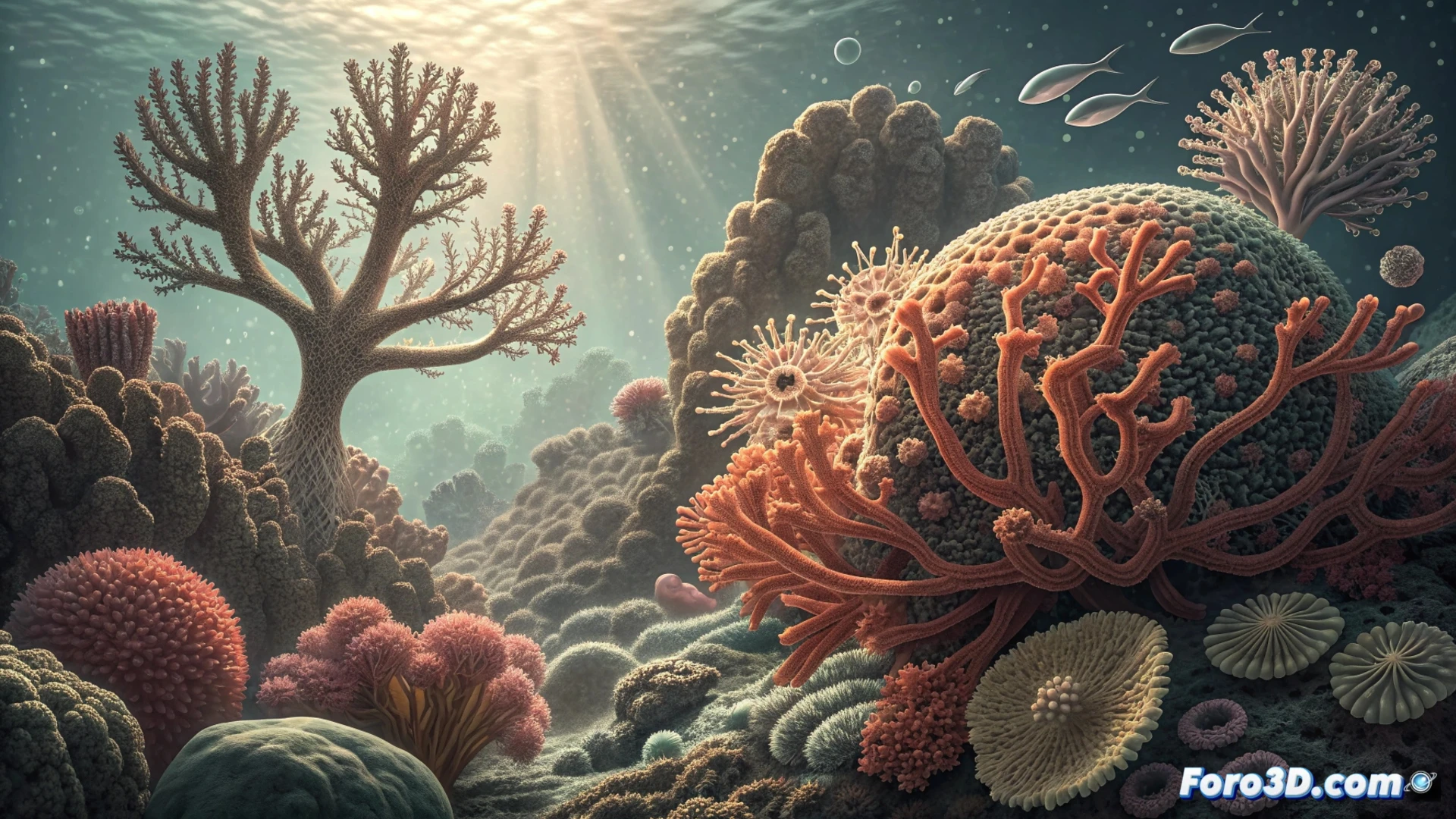
Coral reefs exhibit complex collective behavior. Far from being isolated organisms, corals communicate by releasing chemical compounds into the water. This system allows them to act in a synchronized manner, as in massive spawning events, where all colonies release their gametes at the same time. They also coordinate defenses against threats, demonstrating a form of swarm intelligence based on chemistry.
Bioinspired Modeling for Sensor Networks and Communication 📡
This decentralized chemical communication mechanism serves as a model for the development of autonomous sensor networks. Algorithms that simulate signal diffusion and polyp response thresholds can optimize wireless sensor network (WSN) protocols. The goal is to create systems where nodes, without central control, make collective decisions based on local signals, improving energy efficiency and network resilience against failures or targeted attacks.
The First Underwater Group Chat? Corals Already Had It 💬
While we were discussing the IRC protocol, corals had been using the QRC protocol (Collective Response Chemical) for millions of years. No servers, no moderators, and most importantly, no can anyone help me? messages. A polyp detects a threat, releases its message into the water, and within minutes, the entire reef is in defensive mode. A lesson in efficiency: zero push notifications, and spam, literally, is carried away by the current.