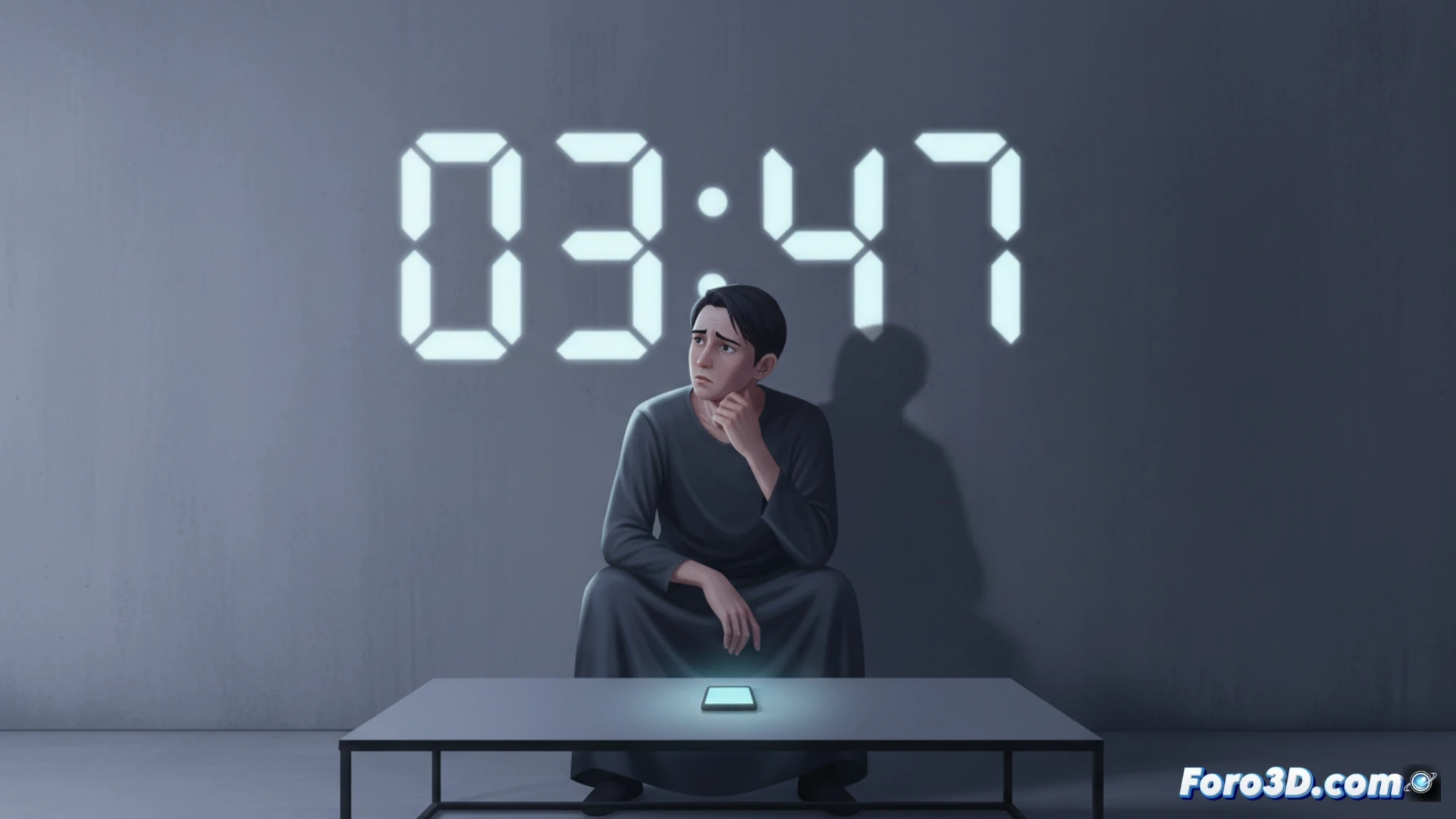
Check Your Screen Time: A Digital Awareness Experiment
Before continuing, take a pause. 🛑 Go to your device settings and locate the Screen Time or Digital Wellbeing section. Observe the exact figure of minutes or hours you've spent today on social platforms. Don't assume, check it with real data. This is the first step to quantify your daily interaction.
The Gap Between What You Think and What Happens
How much did you think you'd used? For most, reality exceeds the estimate. It's not about deliberate deception, but that the online experience is fragmented into micro-sessions: a few minutes here, a few there. The mind doesn't add up these fragments, but the platforms do. Their goal isn't for you to stay for hours straight, but to return many times. 🔄
First challenge: check the discrepancy- Open your phone's settings and look for the activity report.
- Note down the total time spent on social networks today.
- Compare this number with your initial intuition.
Platforms don't need long sessions. They need many small ones.
Explore Your Response to the Absence of Stimulus
For the second step, conduct a simple behavioral experiment. Place your phone face down, close browser tabs, and stay five minutes without checking any device. Use a timer if needed. Then, reflect. 🤔
Observe without judging:- Did an automatic impulse to check the screen arise?
- Did you think you might miss something important?
- Did the stillness or silence make you uncomfortable?
This mild tension is not random. When you interrupt a pattern reinforced by variable rewards (like unpredictable notifications or new content), the brain expects the stimulus. When it doesn't arrive, a signal appears. It's not clinical addiction, it's learned conditioning.
Visualize the Accumulation of Time
Go back to today's usage figure. Now, project it long-term. Imagine that time repeats every workday. Multiply it by four weeks and then by twelve months. No need for mathematical precision, an approximation is enough. Finally, convert the total to hours and then to full days. What seemed like scattered moments transforms into visible and considerable blocks of time. ⏳
Temporarily Modify Your Digital Environment
The fourth challenge involves acting on external triggers. Without needing to close accounts, disable all non-essential notifications from your social apps for the rest of the day. Frame it only as a one-day trial. Alerts act as external calls that reduce friction to enter: you don't access by your own decision, but because something notified you. By removing them, you recover that entry barrier and, with it, a portion of control.
Actions for environmental change:- Access the notification settings for each app.
- Disable all except the absolutely crucial ones (like direct messages from close family).
- Observe how your access pattern changes during the day.
The Experiment You Replicate Daily Without Realizing It
This article doesn't aim for you to abandon social networks. It seeks to make visible, on a small scale, what happens automatically in your routine: attention fragmentation, intermittent rewards, and the difficulty of maintaining focus without a constant flow of novelties. The key difference is that here the process is observed consciously. 🧠
The Fundamental Question to Regain Autonomy
After seeing your data, experiencing the pause, and noticing the discomfort, ask yourself this: Do you use social networks because you consciously decide to, or because the digital environment is designed to make you feel that need? No need to answer now. You can return to your apps after reading, but you'll do so knowing the mechanisms that activate them, the time they consume, and the sensation caused by interrupting them. This knowledge changes something essential. The next time you open an app, you can ask yourself if it's a choice or an automatic reaction