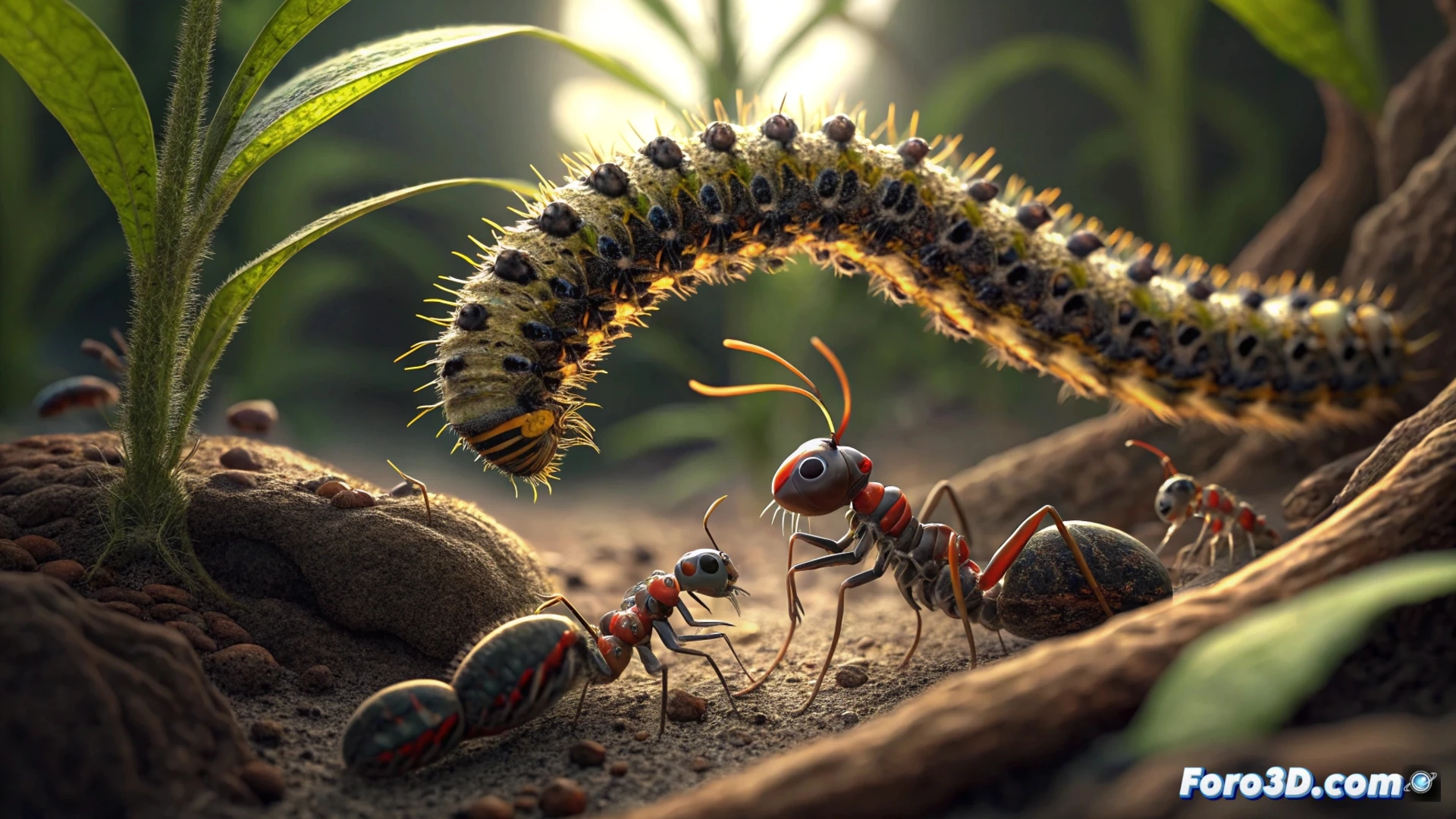
A study in Annals of the New York Academy of Sciences reveals a case of interspecies communication. Some caterpillars, to ensure their survival, have developed the ability to emit rhythmic vibrations that imitate those of a queen ant. This language allows them to integrate into the colony, receiving protection in exchange for sugary secretions. The finding indicates that rhythmic communication might be more common in nature than estimated.
From biology to swarm robotics: communication protocols by patterns 🤖
This natural system operates like a communication protocol based on temporal patterns. Caterpillars do not emit a continuous sound, but sequences with regular pauses and specific alternations, similar to a code. In swarm robotics or IoT, low-consumption protocols are being researched that use vibratory or intermittent light patterns to identify legitimate members in a network. Understanding how an external agent (the caterpillar) authenticates itself in a closed system (the colony) through rhythms can inspire handshake algorithms for autonomous devices that need to integrate into pre-existing groups.
The first beatboxer parasite in history 🎵
The scene is clear: a caterpillar, instead of hiding, starts marking the beat with its body to impress the ants. It doesn't sing, doesn't dance, but it has an internal rhythm that tells it act like the queen. It's the natural equivalent of sneaking into a private party by humming the password you overheard by chance. Just like that, it goes from being a potential snack to an honored guest who only pays the bill with sodas. A trick that, it must be acknowledged, has more style than asking for permission.