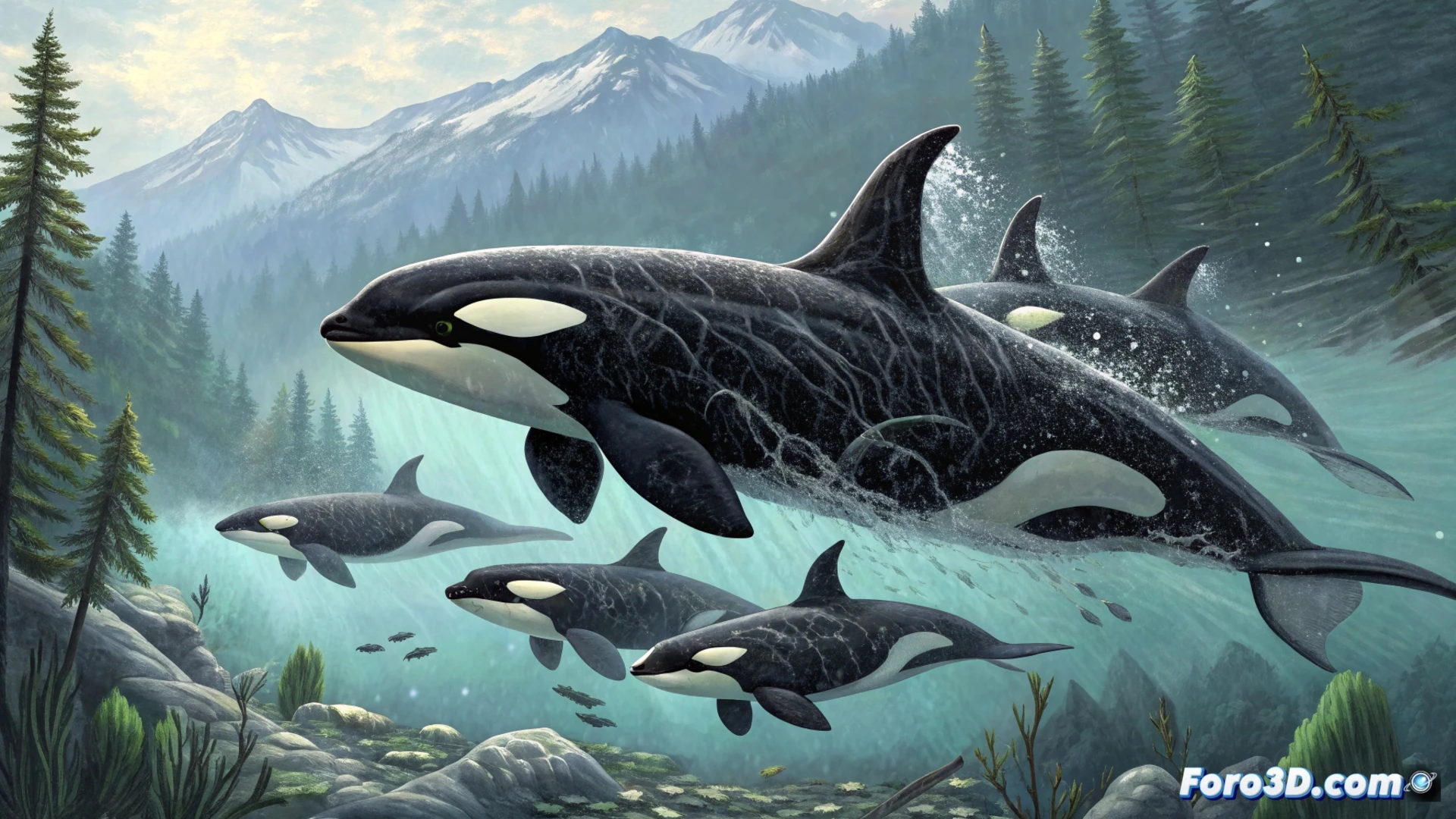
In the North Pacific, two ecotypes of orcas exhibit opposite behaviors. The residents form stable family groups for life, while the transients have more dynamic pods. The discovery of resident orca fins with tooth marks on a Russian island suggests attacks by transient orcas. This points to possible cannibalism, a pressure that could explain the residents' need to maintain such cohesive and numerous social structures.
Modeling Group Dynamics: From Swarm Algorithms to Defense Strategies 🤖
This observed behavior in nature has a parallel in the development of swarm intelligence algorithms. These systems, inspired by bird flocks or fish schools, optimize decision-making and defense through group cohesion. Analyzing the dynamics of orca pods, where the family unit acts as a deterrent shield, provides a biological model to refine multi-agent systems. Programming these agents to prioritize group integrity over individual action reflects the evolutionary strategy of resident orcas.
The Ultimate Team Building: If You Separate, You Get Eaten 💀
Imagine a group dynamic where negative feedback is not a performance review, but a bite from your colleague. Resident orcas have taken the concept of teamwork to an extreme level: their family gathering is not to plan vacations, but to avoid being the meal of the day. It could be said that they have developed the oldest technical support system: a disconnection error (straying from the group) leads to a fatal restart by the competition.